The High-Stakes Art of Black Car Paint Correction.
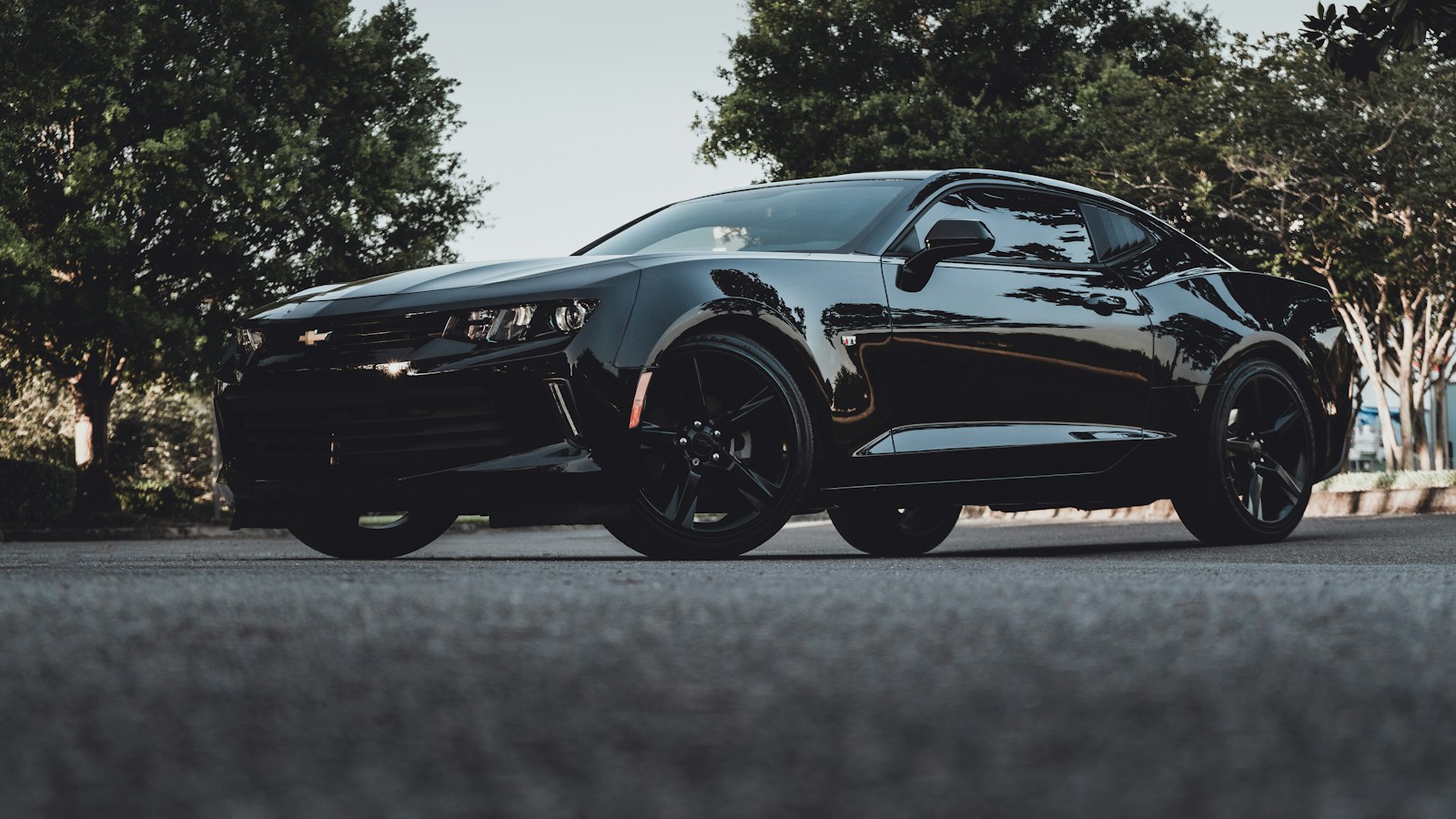
Few sights in the car world match the breathtaking visual impact of a freshly polished jet-black car. When flawless, black paint acts like an optical mirror, displaying deep reflections and flawless body lines. However, black paint is notoriously unforgiving. Because dark pigments absorb light while clear coats reflect it, every tiny scratch, swirl mark, water spot. And hologram stands out with glaring clarity. Maintaining and restoring black paintwork is widely regarded by expert detailers as the ultimate test of machine polishing mastery.
A specialised black car paint correction service requires advanced techniques, clinical cleanliness. And specialised non-filling abrasive compounds. Dark Japanese and European clear coats are often sensitive and soft. This makes them vulnerable to micro-marring from aggressive cutting pads or abrasive buffing residue. Detailers who treat black paint like standard white or silver clear coats frequently leave behind unsightly buffer trails and machine hazing. Achieving true optical clarity on black paintwork demands tiny precision, progressive pad cycling. And multi-angle inspection under specialised high-CRI lighting.
Managing Soft Clear Coats, Sticky Paint. And Pad Marring.
A common hurdle encountered on black cars&mdash. mainly models from Subaru, Toyota, Mazda. And certain German makers&mdash. is soft or 'sticky' clear coat chemistry. Sticky clear coat absorbs excessive heat during polishing, causing compounds to roll into gummy beads rather than fracturing smoothly. When detailers attempt to wipe away the oily polishing residue, standard microfibre towels can instantly re-mar the freshly leveled surface.
Detailers overcome sticky black paint by adjusting machine oscillation speed, using non-petroleum water-based micro-abrasive mixes. And using plush, edgeless 500+ GSM microfiber towels dampened with mild panel wipes. also, detailers employ closed-cell European foam finishing pads with tailored cell densities that release polishing heat rapidly. This prevents clear coat swelling and ensuring a razor-sharp, distortion-free mirror reflection.
Optical Physics and Defect Visibility on Dark Pigments.
The reason black cars reveal swirl marks so aggressively lies in basic optics. Pigments in dark car paintwork absorb almost all visible light wavelengths across the colour spectrum. When light strikes a defect-free black car, the incoming light passes through the clear coat, is absorbed by the black basecoat. And only the specular reflection from the top surface bounces back to your eyes. This creates deep, liquid-like depth.
However, when tiny swirl marks and scratch channels exist in the clear coat, the sharp, fractured edges of these scratch grooves act as thousands of tiny prisms. Rather than passing through to the dark pigment below, incoming light is scattered in every direction. On white or silver cars, light-coloured pigment masks this scattered light. On black paintwork, this white scattered light clashes harshly against the dark background. This creates a hazy, greyish veil of spiderweb swirls that ruins the car's appearance.
Pad Cycling Discipline and Surface heat Regulation.
Managing heat is one of the most critical factors when polishing sensitive black clear coats. Excessive machine friction causes soft clear coats to swell. When paint swells, minor scratch channels temporarily close up, leading an inexperienced detailer to believe defects have been removed. Hours later, as the panel cools to room heat, the clear coat contracts. And the defects reappear.
expert detailers prevent paint swelling by working in small 40cm x 40cm sections and cycling between six to eight clean polishing pads throughout the car. Rather than reusing a hot, compound-saturated pad, fresh cooled pads maintain firm cell structure and consistent abrasive action. detailers continuously check surface heat using non-contact infrared thermometers. This keeps panels under 45 degrees Celsius to guarantee true, permanent defect correction.
The Importance of Non-Filling Compounds and Solvent Audits.
A common pitfall in low-cost detailing is the use of glaze-heavy compounds containing silicone oils, mineral sealants. And cosmetic fillers. These heavy oils seep into scratch channels, temporarily hiding defects rather than removing them. To the untrained eye, the car looks shiny upon collection. But after three or four car washes, the fillers rinse away. This leaves the original swirl marks visible once again.
expert black car paint correction uses only water-based, filler-free fine micro-abrasives. Following each polishing pass, detailers wipe panels down with specialized alcohol solvent solutions. This dissolves all lubricating carrier oils, revealing the raw, true clear coat beneath. Only when the paint looks completely flawless under direct LED inspection lights without any polishing residue is the job considered complete.
Managing Ultra-Soft Japanese and European Clear Coats.
car paint hardness varies dramatically between car makers. Japanese brands such as Subaru, Honda. And Mazda frequently feature ultra-soft clear coats designed for rapid assembly line baking. While soft clear coats correct easily, they are notoriously difficult to finish without leaving tiny buffer trails and compound hazing.
Polishing soft black clear coats requires specialized open-cell European foam finishing pads and non-petroleum water-based micro-abrasives. detailers use short-throw orbital machines running at moderate oscillation speeds, applying minimal downward hand pressure. This delicate approach allows fine abrasives to burnish the paint smoothly without generating pad heat that causes soft paint to swell or mar.
Microfiber Towel Dynamics and Scratch-Free Residue Removal.
Removing compound residue from black paintwork is a high-risk step where swirl marks are easily re-introduced. Standard microfiber towels with sewn polyester hems act like fine sandpaper across delicate black clear coats. This leaves straight-line scratch marks every time the panel is wiped.
expert detailers use ultra-plush, edgeless microfiber towels with densities of 600 to 800 GSM (grams per square meter). The towels are misted with specialized alcohol panel prep sprays to lubricate the wipe. detailers fold towels into quarters, rolling the leading edge upward to capture polishing residue without dragging grit across the freshly finished surface.
Multi-Angle High-CRI Dark Bay Lighting Disciplines.
True paint correction requires clinical lighting control. Bright overhead fluorescent lights flood paint with diffuse illumination, washing out panel contrast and hiding fine spiderweb scratches. Master detailers inspect black cars inside specialized dark bays illuminated by adjustable-spectrum point-source LED lamps.
By shining focused beams at 30-degree, 45-degree. And 90-degree angles, detailers view clear coats from every perspective. Warm light reveals shallow wipe marks. While cool daylight reveals deep rotary trails. Inspecting every square inch under focused point-source lighting guarantees that black paint is completely flawless before ceramic care is applied.
Multi-Spectrum Swirl Finder Optics and Color heat Analysis.
Properly inspecting black paintwork requires specialized illumination engineered to reveal specific defect depths. Standard diffused overhead shop lights illuminate panels evenly. This creates a false impression of smoothness while concealing fine buffer trails and spiderweb scratches. expert dark bays use adjustable-spectrum LED swirl finder lights with CRI ratings exceeding 96.
Warm white illumination (3,000K) replicates late afternoon sunlight, emphasizing fine micro-marring and circular wipe marks on dark paintwork. Cool white light (6,500K) penetrates deep into clear coats, highlighting rotary buffer trails, holograms. And heavy compounding haze. Inspecting every square inch of bodywork under alternating color spectrums guarantees that dark paintwork is 100% defect-free before protective coatings are sealed over the surface.
Permanent Ceramic Sealing to Lock in Jet-Black Mirror Clarity.
Once black paintwork has been polished to mirror perfection, sealing the finish under a hardened protective barrier is vital. Bare black clear coat is so sensitive that even a gentle wash with a clean microfiber mitt can re-introduce fine micro-scratches if the surface is unsealed.
Detailers apply multi-layer 9H or 10H ceramic or graphene coatings over corrected black paintwork. The rigid quartz matrix fills tiny clear coat pores. This creates an ultra-slick, high-surface-tension barrier that repels water and grit. This protective glass shell acts as a sacrificial shield, resisting wash marring and preserving deep jet-black clarity for years of daily driving.
Microfiber GSM Ratings and Scratch-Free Buffing Protocols.
On sensitive black car clear coats, improper towel buffing is the leading cause of swirl re-introduction. Cheap consumer microfiber towels with hard sewn polyester edges and low fabric densities act like fine abrasive sandpaper on soft black clear coats. This leaves straight-line marring every time the panel is wiped.
Certified detailers use only ultra-plush, edgeless microfiber towels featuring fabric densities of 500 to 800 GSM (grams per square meter) and a 70/30 polyester-to-polyamide split. The deep microfiber pile traps tiny polishing dust deep within the weave. This prevents bits from dragging across the soft paint. Detailers fold towels into four working squares, flipping to a fresh, clean face with every wipe to ensure a swirl-free finish.
Summary: Achieving and Preserving Black Car Perfection.
Restoring and maintaining a black car requires patience, precision. And craftsman-level polishing technique. By removing heavy swirl marks through measured compounding and burnishing the clear coat through fine jewelling, expert detailers unlock the breathtaking liquid-mirror gloss that makes black cars legendary.
Sealed beneath a certified ceramic coating and maintained with careful wash hygiene, your black car will continue turning heads and commanding admiration wherever you drive.
Black Car Ownership Plan and care Tips.
Black cars look amazing when clean. Deep paint looks like dark water. Reflections shine like a mirror. You feel proud every time you park. Good care keeps black paint looking wet and deep.
Be gentle when washing dark paint. Dust shows fast on black panels. Never wipe dry dust off black paint. Dry wiping causes instant swirl marks. Always rinse panels with water first.
Use thick snow foam on black cars. Let foam loosen road grit. Rinse with low pressure. Wash panels with light hand pressure. Let the soft mitt glide on soapy water. Never scrub hard on black paint.
Dry with care. Use warm air blowers to dry crevices. Blot flat panels with plush towels. Dark paint dries fast in warm air. Keep towels clean and soft.
Seal your black paint with ceramic coating. Hard coatings resist wash swirls. The mirror finish stays deep for years. You turn heads on every street. Enjoy the ultimate black car shine.
Safe Home Wash Guide for Dark cars.
Always wash your black car in the shade or late afternoon. Direct sun heats black paint fast, causing soap to dry and leave water spots. Wait until panels feel cool to the touch.
Rinse the car from top to bottom. Foam the car with a high-lubricity pH-neutral shampoo. Let the foam run down panels, carrying grit with it. Rinse the foam off thoroughly.
Use two wash buckets with dirt guards. Fill one with soapy water and one with clean water. Wash the roof first, then the bonnet. And work downward. Flip your wash mitt often. Never use circular motions.
Rinse panels with clean running water. Use the sheeting method: take the nozzle off your hose and let a gentle stream of water flow over panels. The water sheets off. This leaves only tiny drops behind. Dry the rest with a plush towel.
Daily Habits to Keep Black Paint Flawless.
Park away from sprinkler zones. Sprinkler water contains high mineral content that etches dark paint in minutes under hot sun. If water spots appear, wipe them with a mild mineral remover right away.
Keep clean microfiber towels and quick detailer in your car. Clean bird droppings as soon as you spot them. Soak the spot with detailer and lift gently. Never scrub dried bird droppings on black paint.
Summary: Keeping Black Paint Mirror Clean and Swirl-Free.
Black paint looks stunning when clean. Deep gloss shines like wet glass. Clear reflections turn heads on every street. You feel proud every time you park. Good care keeps black paint looking wet and deep.
Be gentle when washing dark paint. Dust shows fast on black panels. Never wipe dry dust off black paint. Dry wiping causes instant swirl marks. Always rinse panels with water first.
Use thick snow foam on black cars. Let foam loosen road grit. Rinse with low pressure. Wash panels with light hand pressure. Let the soft mitt glide on soapy water. Never scrub hard on black paint.
Dry with care. Use warm air blowers to dry crevices. Blot flat panels with plush towels. Dark paint dries fast in warm air. Keep towels clean and soft.
Seal your black paint with ceramic coating. Hard coatings resist wash swirls. The mirror finish stays deep for years. You turn heads on every street. Enjoy the ultimate black car shine.
The Precision Correction Protocol for Dark cars.
Correcting black paintwork safely follows a meticulous, step by step method designed to remove defects without introducing new marring.
- Extensive Lighting Diagnostic: The car is positioned in a specialized dark bay equipped with adjustable-frequency LED inspection lights, halogen floodlights. And direct point-source swirl finders to reveal every sub-surface defect.
- Panel-Specific Test Spots: Before polishing the entire car, detailers test multiple pad and compound blends on a 50cm x 50cm section of the bonnet to determine the exact cutting and refining recipe tailored to the car's unique paint hardness.
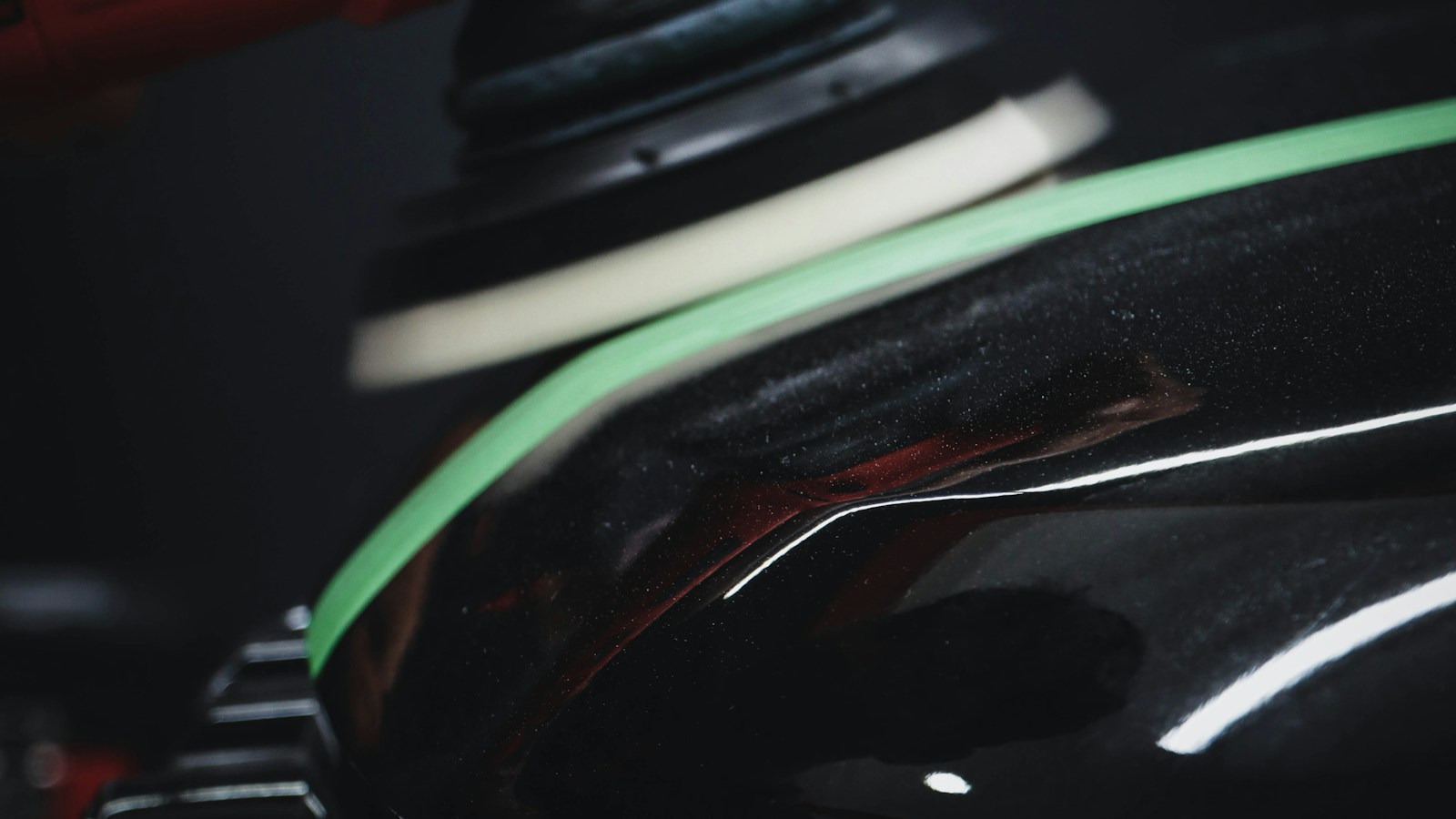
- Rotary or Dual-Action Compounding: Deep swirl marks and etching are safely leveled using short-throw or large-throw orbital machines with wool or microfibre cutting discs, carefully managing surface heat below 45 degrees Celsius.
- Dual-Stage Refining and Jewelling: The surface undergoes intermediate foam refining followed by an ultra-fine jewelling pass that burnishes the clear coat, removing buffer trails and bringing out absolute jet-black depth.
- Solvent Stripping and True Reflection Audit: All residual lubricating carrier oils are thoroughly dissolved using panel preparation sprays to verify that the defects have been permanently removed rather than temporarily masked by cosmetic fillers.
Pad and Compound Pairing for Black car Clear Coats.
Selecting the correct pad density and abrasive mix is essential for achieving swirl-free results on sensitive dark paintwork.
| Polishing Phase. | Recommended Pad Type. | Compound Technology. | Primary Objective. |
|---|---|---|---|
| Defect removal. | Microfiber / Micro-Wool Disc. | fine Micro-Abrasive Cut. | Level severe swirl marks, bird etchings &. scratches. |
| Intermediate Refining. | Medium Closed-Cell Yellow Foam. | Sub-Micron Polishing Emulsion. | remove compounding haze &. micro-marring. |
| Ultra-Fine Jewelling. | Ultra-Soft Black Finishing Foam. | Zero-Cut Finishing Burnishing Glaze. | Deliver hologram-free reflection &. deep jet-black wet look. |
| Surface Inspection. | Plush Edgeless 500 GSM Towel. | Pure Alcohol Solvent Panel Spray. | Dissolve lubricating oils to reveal true bare clear coat. |
Frequently Asked Questions.
Why does my black car look scratched again just weeks after polishing?.
If your car was polished using cheap glazes or filler-heavy waxes, those fillers evaporate or wash away after two or three rainstorms, exposing the original scratches beneath. A expert correction physically levels the clear coat and seals it under ceramic care. This ensures permanent results.
Can you ceramic coat a black car immediately after paint correction?.
Yes, in fact, applying ceramic or graphene coating immediately following paint correction is highly recommended. Because black clear coat is so sensitive to wash marring, a hardened ceramic coating provides an essential protective shield against everyday micro-scratches.
How should I wash a black car to avoid introducing new swirl marks?.
Always use the two-bucket method with grit guards, a plush microfiber wash mitt, high-lubricity pH-neutral foam shampoo. And dry the car using a filtered warm-air blower or ultra-plush twisted-loop drying towels without dragging them across dry panels.
Daily Driver Care Routine and Quick Tips.
Clean cars look sharp. Smooth paint shines in the sun. Clean wheels turn heads on the road. Good habits keep cars in top shape. You feel proud of your car each day. Smart drivers care for their cars with pride.
Wash your car often. Park under cool shade. Keep birds off the hood. Clean sap off doors fast. Use soft mitts on all panels. Rinse soap with clean water. Dry with soft towels. Your car stays slick and bright on every drive.
Look after cabin trims each week. Wipe seats with a soft damp rag. Vacuum floor mats on weekends. Keep windows clean inside and out. Clear glass keeps you safe on the road. Enjoy your fresh ride every single day.
Looking for pro Car Detailing in Armidale?.
Detailing Mates delivers 5-star mobile car detailing, paint restoration. And care across Armidale NSW. Explore our dedicated service packages:
- Ceramic Coating Armidale &ndash. 10H graphene quartz paint care with years of durability
- Paint Correction Armidale &ndash. Precision multi-stage swirl mark and scratch removal
- Car Steam Cleaning Armidale &ndash. High-temp interior extraction, clean &. stain removal
- Full Car Detailing Packages &ndash. Comprehensive mobile interior &. exterior transformations
Book Your Armidale Detailing Service Online or visit our workshop at 95 Rusden St, Armidale NSW 2350.