
Table of Contents
- Table of Contents
- 1. Introduction: The Unveiling of Automotive Potential
- 2. The Psychology of the Transformation: Why We Love a Good “Car Before and After”
- 3. Case Study 1: The Family SUV’s Ultimate “Car Before and After”
- 4. Case Study 2: The Pre-Owned Gem’s “Car Before and After” Polish
- 5. The Science Behind a Dramatic Exterior “Car Before and After”
- 6. Unveiling the Interior “Car Before and After” Magic
- 7. Case Study 3: The Sports Car’s Concours-Level “Car Before and After”
- 8. Why Professional Detailing Creates the Best “Car Before and After”
- 9. Conclusion: Your Car’s Transformation Awaits
- 10. Frequently Asked Questions (FAQs)
- Introduction: The Unveiling of Automotive Potential
- The Psychology of the Transformation: Why We Love a Good “Car Before and After”
- Case Study 1: The Family SUV’s Ultimate “Car Before and After”
- The ‘Before’: A Well-Loved Veteran of Daily Life
- The Meticulous Process: A Systematic Restoration
- The ‘After’: A Showroom-Fresh Family Chariot
- Case Study 2: The Pre-Owned Gem’s “Car Before and After” Polish
- The ‘Before’: Hidden Flaws Beneath a Superficial Shine
- The Process: Uncovering and Perfecting
- The ‘After’: Better Than the Day It Was Bought
- The Science Behind a Dramatic Exterior “Car Before and After”
- Decontamination: The Non-Negotiable First Step
- Paint Correction: The True Metamorphosis
- Protection: Locking in the Perfection
- Unveiling the Interior “Car Before and After” Magic
- Beyond the Vacuum: Deep Cleaning and Sanitization
- Restoring Materials: From Leather to Plastic
- Case Study 3: The Sports Car’s Concours-Level “Car Before and After”
- The ‘Before’: Already Great, but Lacking Perfection
- The Process: The Pursuit of Ultimate Gloss
- The ‘After’: A Resplendent Work of Art
- Why Professional Detailing Creates the Best “Car Before and After”
- Conclusion: Your Car’s Transformation Awaits
- Frequently Asked Questions (FAQs)
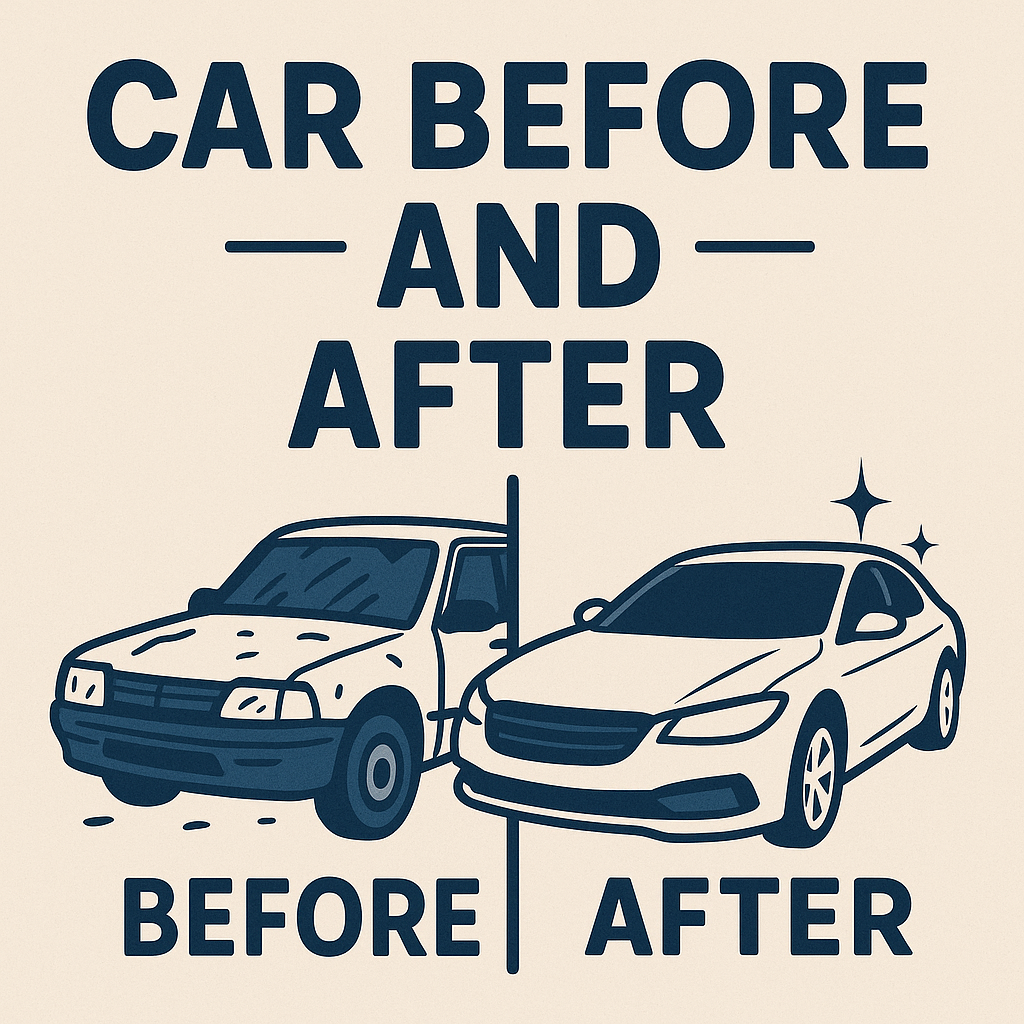
There is a unique and profound satisfaction in witnessing a dramatic transformation. This universal appeal is precisely why the car before and after phenomenon is so captivating for automotive enthusiasts and everyday drivers alike. These visual stories are more than just pictures; they are definitive proof of the incredible potential that lies dormant within almost every vehicle on the road. They showcase a journey from a state of neglect, wear, and tear to one of pristine, showroom-quality brilliance. Consequently, a compelling before-and-after gallery is the ultimate testament to a detailer’s skill, demonstrating the tangible, jaw-dropping results that professional care can achieve.
This article delves deep into the world of automotive metamorphosis. We will not only show you what is possible but also explain how it is possible. Through a series of detailed case studies, we will walk you through the meticulous processes that create these stunning transformations. Moreover, we will explore the science behind paint correction, the art of interior rejuvenation, and the advanced protection methods that lock in that “after” perfection. Prepare to see beyond the dirt and grime and discover the resplendent vehicle that is waiting to be unveiled. This is the definitive guide to understanding and achieving the ultimate car before and after result for your own vehicle in Australia.
The appeal of a dramatic reveal is deeply rooted in human psychology. It taps into our appreciation for order over chaos, restoration over decay, and potential fulfilled. A neglected car—covered in swirl marks, with a stained and cluttered interior—represents disorder. The “after” image, in contrast, showcases meticulous order, precision, and renewed value.
Furthermore, these transformations are inspiring. They give vehicle owners hope that their own car, no matter its current condition, can be restored to a state of beauty. It is a powerful marketing tool, to be sure, but it is also a genuine source of motivation for owners to reinvest in the maintenance and care of their significant asset. This emotional connection is what makes a well-documented car before and after project so much more impactful than a simple list of services. It tells a story of redemption, and it is a story that every car owner wants for their own vehicle.
Family vehicles are the unsung heroes of the road. They endure daily school runs, weekend sports, family road trips, and the inevitable spills and messes that come with a life well-lived. This case study focuses on a typical five-year-old SUV that has served its family faithfully but is showing significant signs of its hard work.
The ‘Before’: A Well-Loved Veteran of Daily Life
The exterior paint, a dark metallic blue, appeared dull and lifeless, even when clean. Under direct sunlight, a dense network of swirl marks and light scratches was visible, caused by countless trips through automated car washes. The lower panels were dotted with tar, and the wheels were caked in thick, baked-on brake dust. Inside, the story was similar. The light-coloured fabric seats were mottled with various stains from juice, snacks, and dirt. The carpets were embedded with crumbs and sand, and a faint, stale odour permeated the cabin. The plastic trim was dusty, and the high-touch areas like the steering wheel and door handles had a grimy sheen.
The Meticulous Process: A Systematic Restoration
The transformation began with a comprehensive exterior decontamination. This included a pH-neutral snow foam pre-wash, a two-bucket hand wash, and chemical treatments to dissolve the bonded iron and tar contaminants. Following this, a clay bar treatment rendered the paint surface perfectly smooth. The most time-consuming stage was the two-step paint correction. A heavier cutting compound was used first to remove the deeper scratches and swirl marks, followed by a fine finishing polish to restore a flawless, mirror-like gloss.
For the interior, the team started by removing all floor mats and thoroughly vacuuming every surface. A professional hot water extractor, combined with specialized fabric shampoos and stain removers, was used on the seats and carpets to lift years of embedded grime. All plastic and vinyl surfaces were deep cleaned and then treated with a UV-protectant dressing, restoring a rich, satin finish. Finally, the ventilation system was sanitized to eliminate the source of the stale odor.
The ‘After’: A Showroom-Fresh Family Chariot
The final result was nothing short of breathtaking. The blue metallic paint now shimmered with incredible depth and clarity, completely free of swirls. The wheels shone like new, and the entire exterior projected an aura of pristine care. Inside, the transformation was just as dramatic. The seats and carpets were spotless and uniform in colour, and the cabin smelled fresh and clean. The plastic trim was rich and dark, and every surface felt clean to the touch. This was the quintessential car before and after success story, proving that even the most heavily used vehicle can be restored to a like-new condition.
Buying a used car is a fantastic way to own a great vehicle at a reduced price. However, “dealership clean” is often a superficial state, achieved with shiny, silicone-based products that hide underlying issues. This case study examines a recently purchased luxury sedan that looked good on the lot but needed a true professional detail to be genuinely pristine.
The ‘Before’: Hidden Flaws Beneath a Superficial Shine
The car’s black paint looked shiny from a distance, but upon closer inspection, it was covered in buffer trails and holograms—scratches left behind by an improper polishing technique, likely from a rushed dealership prep. The interior leather seats looked clean but felt slightly sticky, a sign of a cheap, silicone-based dressing. A distinct, lingering smell of a deodorizing air freshener hinted at a previous odor issue, perhaps from a smoker.
The Process: Uncovering and Perfecting
Our first step was to strip away all the old, low-quality waxes and fillers from the paint. This revealed the true extent of the buffer trails. A meticulous, multi-stage paint correction was then performed, carefully refining the finish to remove all traces of the previous poor polishing job. For the interior, a deep leather cleaning process was initiated, using a pH-neutral cleaner and a soft brush to lift the grime and old dressing from the leather’s grain. Following this, a high-quality, matte-finish conditioner was applied to nourish and protect the material. To permanently eliminate the underlying odor, an ozone generator was run inside the sealed vehicle for several hours, which destroys odor-causing molecules.
The ‘After’: Better Than the Day It Was Bought
The transformation was subtle but profound. The black paint was now a true, deep, flawless abyss, reflecting with perfect clarity and free of any imperfections. The interior leather was clean, soft, and had a natural, luxurious matte finish. Most importantly, the artificial air freshener smell was gone, replaced by the clean, neutral scent of properly cared-for materials. This car before and after demonstrates the difference between a superficial clean and a genuine, professional restoration.
Achieving these results is not magic; it is a science. A deep understanding of surfaces, chemistry, and technique is required to safely and effectively transform a vehicle’s exterior.
Decontamination: The Non-Negotiable First Step
You cannot achieve a flawless finish by polishing a dirty surface. Decontamination is the foundation of every great detail. As detailed by experts in automotive finishing, such as those at Wikipedia’s page on car polishing, a perfectly clean substrate is essential. This involves removing both loose dirt (via washing) and bonded contaminants like industrial fallout, rail dust, and tar, which requires specific chemical removers and a clay bar.
Paint Correction: The True Metamorphosis
Paint correction is the process of removing a microscopic layer of the vehicle’s clear coat to level out imperfections. This is where the most dramatic visual change occurs. It is an abrasive process that must be performed with precision. Detailers use a variety of machine polishers, pads, and compounds of varying abrasiveness. The key is to remove the minimum amount of clear coat necessary to eliminate the defects, preserving the paint’s integrity for the future. The skill of the detailer is paramount in achieving a flawless, hologram-free finish.
Protection: Locking in the Perfection
After the paint has been corrected, it is perfectly pristine but also completely bare. A durable layer of protection is essential to shield the finish from the elements. This can range from a natural carnauba wax to a synthetic sealant or, for the ultimate in protection, a professional ceramic coating. This final step not only protects the paint but also enhances its gloss and creates a hydrophobic surface that repels water and dirt, making the car easier to clean and preserving that “after” look for months or even years.
An interior transformation is just as impactful as an exterior one, focusing on deep cleaning, sanitation, and restoring the original look and feel of the materials.
Beyond the Vacuum: Deep Cleaning and Sanitization
A simple vacuum can only remove loose debris. A professional interior detail goes much deeper. Hot water extraction (or steam cleaning) is the key to removing embedded dirt, oils, and stains from carpets and fabric upholstery. This process works by injecting hot water and a cleaning solution deep into the fibers and then immediately extracting the dirt-laden water, leaving the fabric clean and sanitized. Esteemed car care product manufacturers like Chemical Guys have extensive guides on the efficacy of these deep cleaning methods.
Restoring Materials: From Leather to Plastic
Different interior materials require different care. Leather is cleaned with a dedicated, pH-balanced formula to avoid drying it out, and then conditioned to restore its natural oils. Plastics and vinyl are deep cleaned to remove grime and then treated with a high-quality, non-greasy dressing that provides UV protection to prevent fading and cracking, restoring a factory-fresh, satin finish.
Some vehicles don’t need a heavy restoration; they need a final, perfecting touch to elevate them from great to extraordinary. This case study involves a modern, low-mileage sports car.
The ‘Before’: Already Great, but Lacking Perfection
The car was in excellent condition, garage-kept, and washed regularly. However, the owner was a perfectionist and could see very light “love marks” and faint swirl marks under intense light. The paint lacked that final degree of wetness and gloss that separates a clean car from a show-winner.
The Process: The Pursuit of Ultimate Gloss
This job was not about heavy correction but about refinement. After a thorough decontamination, a very fine “jeweling” polish was used with a soft finishing pad on a dual-action polisher. This process is designed not to remove defects, but to burnish the paint to an incredibly high level of gloss, maximizing its clarity and reflectivity. The entire vehicle, including wheels and glass, was then prepped and coated with a professional-grade ceramic coating to lock in the finish and provide years of protection.
The ‘After’: A Resplendent Work of Art
The result was a finish that was dripping with gloss. The car looked like it was encased in glass. The ceramic coating created insane hydrophobic behavior, with water flying off the surface. This ultimate car before and after was a testament to the power of final-stage refinement, achieving a level of perfection that surpasses even factory standards.
While DIY detailing is a rewarding hobby, achieving professional-level results requires a significant investment in tools, products, and, most importantly, knowledge and experience. A professional detailer has access to industrial-grade equipment like powerful extractors and a wide array of polishers. They understand the nuances of different paint systems and how to safely correct them. Crucially, they have invested thousands of hours honing their craft. Attempting advanced procedures like heavy paint correction without this experience can easily lead to permanent paint damage. For a guaranteed, safe, and stunning transformation, a professional is the only choice.
The car before and after stories you have seen here are not exceptions; they are examples of the standard of excellence that professional detailing can achieve. Your vehicle, regardless of its current state, holds the same potential for a stunning metamorphosis. Professional detailing is an investment in your car’s value, longevity, and your personal pride of ownership. It restores beauty, enhances hygiene, and protects your asset from the harsh Australian environment.
Are you ready to write your own vehicle’s transformation story? At Detailing Mates, we specialize in creating these jaw-dropping results. Contact us today to discuss how we can unveil the true potential of your car.
1. Can every car have a dramatic “car before and after” transformation? Yes, almost every car can be dramatically improved. The extent of the transformation depends on the initial condition. While some permanent damage like deep scratches or clear coat failure cannot be “detailed” away, you would be astonished at what can be achieved on even the most neglected vehicles.
2. How long does it take to achieve a significant “car before and after” result? A true transformation takes time. A comprehensive service that includes multi-stage paint correction and a full interior detail is a labor-intensive process. Expect it to take anywhere from one to three full days, depending on the vehicle’s size, condition, and the level of service chosen.
3. What is the most surprising part of a “car before and after” detail? For many clients, the most surprising part is the restoration of the paint’s colour and clarity. They often do not realize how dull and faded their paint has become until they see the “after” result, which reveals the true, rich colour they had forgotten was there.
4. Is a professional needed for a good “car before and after”? For a truly dramatic and safe transformation, especially one involving paint correction, a professional is highly recommended. They have the correct tools, products, and—most importantly—the experience to remove defects without damaging your vehicle’s paint, which is a very real risk for a DIY enthusiast.
5. How do I maintain the “after” in my “car before and after”? Maintenance is key. After a professional detail, the best way to maintain the results is to use proper, safe hand-washing techniques (like the two-bucket method) and high-quality, pH-neutral products. For long-term ease of maintenance, investing in a ceramic coating makes washing faster and safer, helping to preserve that “after” look for years.

