
Table of Contents
- Table of Contents
- 1. Introduction: The Evolution of Automotive Cleaning
- 2. The Fundamental Principles: What is Professional Car Steam Cleaning?
- 3. The 7-Step Professional Car Steam Cleaning Process
- 4. Beyond the Cabin: The Versatility of Exterior Car Steam Cleaning
- 5. The Health Imperative: Why Car Steam Cleaning is Essential for Australian Families
- 6. Why Professional Car Steam Cleaning is the Superior Choice
- 7. Conclusion: The Gold Standard in Vehicle Hygiene and Detailing
- 8. Frequently Asked Questions (FAQs) About Car Steam Cleaning
- Introduction: The Evolution of Automotive Cleaning
- The Fundamental Principles: What is Professional Car Steam Cleaning?
- The Power of “Dry” Vapour Technology
- Thermal Shock: The Science of Sanitization
- The 7-Step Professional Car Steam Cleaning Process
- Step 1: Comprehensive Interior Assessment and Preparation
- Step 2: Deep Debris Removal and Thorough Vacuuming
- Step 3: Steam Application on Hard Surfaces (Plastics, Vinyl, Console)
- Step 4: Steam Treatment for Soft Surfaces (Fabric, Upholstery, Carpets)
- Step 5: Specialized Techniques for Sensitive Materials (Leather, Alcantara)
- Step 6: Final Detailing of Glass, Vents, and Crevices
- Step 7: Post-Clean Inspection and Air Out
- Beyond the Cabin: The Versatility of Exterior Car Steam Cleaning
- Engine Bay Degreasing: The Safe Approach
- Wheels, Brakes, and Door Jambs
- The Health Imperative: Why Car Steam Cleaning is Essential for Australian Families
- Combating Allergens and Respiratory Irritants
- Creating a Hygienic Space for Children and Pets
- Why Professional Car Steam Cleaning is the Superior Choice
- A Cost-Benefit Analysis: Professional vs. DIY
- The Risks of Inexperienced Operation
- Conclusion: The Gold Standard in Vehicle Hygiene and Detailing
- Frequently Asked Questions (FAQs) About Car Steam Cleaning
For decades, cleaning a car’s interior meant a simple vacuum and a wipe-down with chemical sprays. While this approach can improve appearances superficially, it does little to address the deep-seated grime, allergens, and bacteria that accumulate within a vehicle’s cabin. In Australia’s diverse climate, our cars become mobile ecosystems, trapping dust, pollen, and moisture. To achieve a level of clean that is not just visible but truly hygienic, a more advanced method is needed. This is where the revolutionary process of professional car steam cleaning emerges as the definitive solution for the modern vehicle owner.
This exhaustive guide will serve as your ultimate resource on this powerful technology. We will explore the scientific principles that allow steam to clean, sanitize, and deodorize more effectively than any traditional method. Furthermore, we will walk you through the meticulous, step-by-step process used by professionals to rejuvenate every surface inside—and even outside—your vehicle. The goal is to move beyond the conventional understanding of “clean” and introduce a new standard of automotive hygiene. Consequently, you will discover why professional car steam cleaning is not just a service, but an essential component of responsible vehicle maintenance in the 21st century.
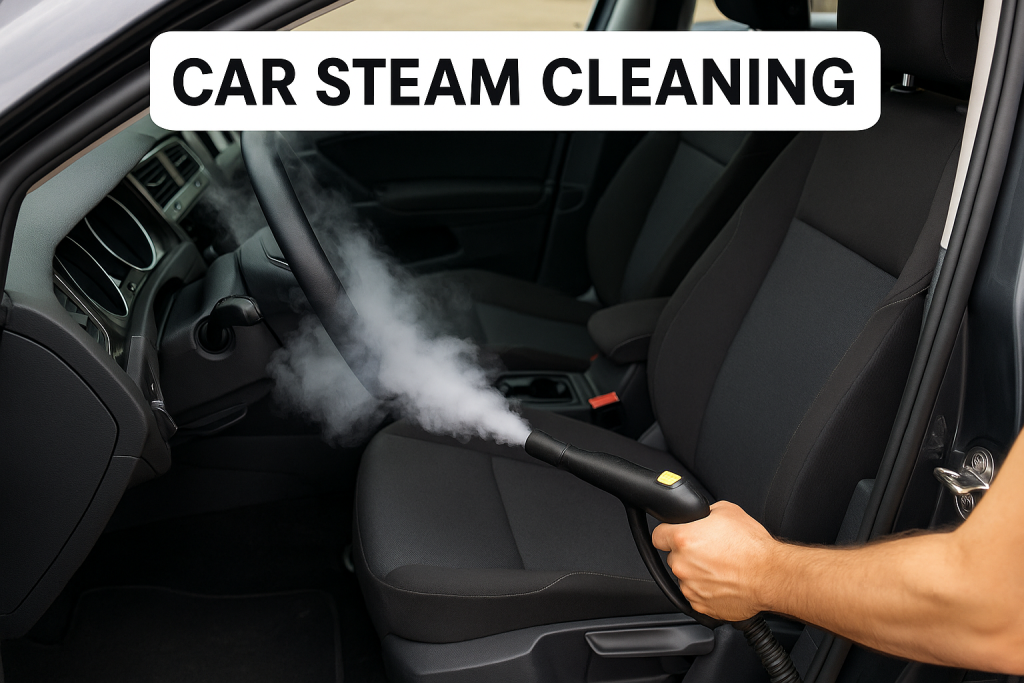
At its core, car steam cleaning is a process that uses heated water vapor under pressure to break down dirt, kill germs, and refresh surfaces. However, professional-grade equipment and techniques elevate this simple concept into a sophisticated science.
The Power of “Dry” Vapour Technology
A key distinction of professional steam cleaners is their ability to produce “dry” steam. They heat water to temperatures far exceeding 150°C, creating a superheated vapour with a very low moisture content (typically only 5-6%). This is critically important for vehicle interiors. Unlike a cheap kettle-type steamer that produces wet, condensing steam, this dry vapour cleans thoroughly without saturating fabrics. This efficacy prevents the risk of mould or mildew growth and ensures that seats and carpets are touch-dry and ready to use shortly after the service is completed.
Thermal Shock: The Science of Sanitization
The intense heat of the steam is a potent, natural sterilizing agent. When this high-temperature vapour makes contact with a surface, it induces “thermal shock” in microorganisms. As confirmed by numerous studies on thermal disinfection, temperatures above 70°C are highly effective at killing most bacteria, viruses, and mould spores. A professional steam cleaner operates at more than double this temperature, providing instant sanitization and killing 99.9% of germs on contact. This is achieved without any harsh chemical disinfectants, making it an incredibly powerful yet safe process.
A truly professional service is not a haphazard spray-and-wipe. It is a meticulous, systematic ritual designed to deliver consistent, high-quality results.
Step 1: Comprehensive Interior Assessment and Preparation
Before any steam is applied, a thorough inspection is conducted. The technician identifies problem areas, such as specific stains or heavily soiled patches. All personal belongings, loose items, and floor mats are carefully removed from the vehicle to provide clear access to all surfaces.
Step 2: Deep Debris Removal and Thorough Vacuuming
The foundation of any great interior detail is the removal of all loose dirt and debris. A powerful, professional-grade vacuum with various crevice tools and brushes is used to meticulously clean every inch of the cabin, including under the seats, between the console and seats, and in all map pockets and compartments. This step ensures the steam can work directly on embedded grime rather than loose dirt.
Step 3: Steam Application on Hard Surfaces (Plastics, Vinyl, Console)
The technician begins with the hard surfaces. Using a detail nozzle, the steam blasts away the dust, body oils, and sticky residue from the dashboard, centre console, door panels, and cup holders. The heat and pressure lift the grime out of textured plastics and tight seams, which is then immediately wiped away with a clean microfiber towel. This process leaves a perfectly clean, non-greasy, factory-fresh finish.
Step 4: Steam Treatment for Soft Surfaces (Fabric, Upholstery, Carpets)
This is where the transformative power of car steam cleaning is most evident. Using a triangular brush attachment, the technician works systematically across fabric seats and carpets. The steam penetrates deep into the fibres, dissolving stains and emulsifying embedded dirt. For stubborn stains, the steam acts as a potent pre-treatment, loosening the stain’s grip and making it far easier to remove.
Step 5: Specialized Techniques for Sensitive Materials (Leather, Alcantara)
Cleaning sensitive materials like leather requires expertise. For leather, a lower pressure setting is used, and the nozzle is wrapped in a microfiber towel. The gentle heat opens the pores of the leather, releasing trapped dirt and oils which are then safely wiped away. This is immediately followed by applying a premium, pH-balanced conditioner to nourish the leather. For Alcantara, a similar gentle approach is used to lift dirt without damaging the delicate fibres.
Step 6: Final Detailing of Glass, Vents, and Crevices
The final interior stage focuses on the details. Steam is used to clean and sanitize air conditioning vents, killing mould and bacteria that cause unpleasant odours. It provides a streak-free clean on interior windows and infotainment screens (with careful application) and is perfect for cleaning intricate areas like speaker grilles, seat adjustment controls, and window switches.
Step 7: Post-Clean Inspection and Air Out
Once the process is complete, the technician performs a final inspection under bright light to ensure a uniform and perfect result. The vehicle’s doors are then left open for a short period to allow any minimal residual moisture to evaporate completely, leaving the interior fresh, dry, and sanitized.
While primarily known for its interior benefits, the power of steam is also incredibly useful for delicate and hard-to-reach areas on a vehicle’s exterior.
- Engine Bay Degreasing: The Safe Approach: Modern engine bays are filled with sensitive electronics, sensors, and plastic covers. Blasting them with a high-pressure water washer is extremely risky. Steam, however, is the perfect solution. Its low moisture content and powerful thermal action safely melt away grease and oil without the risk of flooding electrical components.
- Wheels, Brakes, and Door Jambs: Steam is fantastic for breaking down stubborn, baked-on brake dust from intricate wheel designs and brake calipers. It also gently and effectively cleans the often-neglected door jambs, hinges, and boot shuts.
Your car is an enclosed space where allergens and germs can become highly concentrated. This makes the cabin’s hygiene a significant health consideration.
Combating Allergens and Respiratory Irritants
For the millions of Australians who suffer from allergies or asthma, a car’s interior can be a major trigger zone. As noted by organizations like the National Asthma Council Australia, dust mites are a primary cause of year-round allergies. Car steam cleaning kills dust mites on contact and removes other common allergens like pet dander, pollen, and mould spores from deep within the upholstery and carpets.
Creating a Hygienic Space for Children and Pets
Children and pets are notorious for creating messes, but they are also more vulnerable to the germs and bacteria that can thrive in a vehicle. Studies have shown that areas like the steering wheel and cup holders can harbor more bacteria than a public toilet seat. Steam cleaning provides peace of mind by thoroughly sanitizing every surface your loved ones come into contact with, all without leaving behind any chemical residue.
While DIY steamers are available, they simply cannot compare to the results and safety of a professional service.
A Cost-Benefit Analysis: Professional vs. DIY
A cheap household steamer lacks the temperature and pressure to effectively sanitize or lift deep stains. It will often produce wet steam that soaks fabrics, potentially causing more harm than good by promoting mould growth. While a professional service has a higher upfront cost, it guarantees a safe, effective, and truly hygienic result that protects the value of your vehicle. The cost of repairing a water-damaged electronic module or replacing a sagging headliner from a DIY mishap far outweighs the investment in a professional service.
The Risks of Inexperienced Operation
A professional technician is trained to handle sensitive materials and electronics. They know the correct distance, pressure, and attachments to use on everything from leather to dashboard screens. Inexperienced use can lead to damaging delicate surfaces, forcing moisture into sensitive electronics, or failing to properly dry the interior. Professional car steam cleaning is a service where expertise truly matters.
Car steam cleaning represents the pinnacle of modern automotive care. It transcends mere cleaning and enters the realm of deep sanitization and restoration. By using the scientifically proven power of high-temperature, low-moisture vapour, it offers a solution that is more effective, healthier, safer, and more environmentally friendly than any traditional method. It is the only process that can simultaneously remove the toughest stains, eliminate the most persistent odours at their source, and kill 99.9% of germs and allergens.
Investing in a professional steam cleaning service is an investment in your health, your comfort, and the longevity of your vehicle. It is a commitment to a higher standard of clean. To experience this transformative service for yourself, contact the specialists at Detailing Mates and discover the profound difference a truly sanitized vehicle can make to your driving experience.
1. Can car steam cleaning damage my vehicle’s electronics? When performed by a trained professional, the risk is virtually zero. Professionals use “dry” steam and know how to direct the vapour to clean around sensitive areas like infotainment screens, dashboards, and switchgear without forcing moisture into them.
2. How does car steam cleaning handle pet hair and odors? Steam is exceptional for pets. The heat kills odour-causing bacteria from pet accidents or general muskiness. While it doesn’t remove hair itself (that’s done in the vacuuming stage), it helps to loosen stubborn, woven-in hairs from fabric, making them easier to extract.
3. Is car steam cleaning safe for tinted windows? Yes. High-quality, professionally installed window tint is applied to the interior of the glass and is designed to withstand the heat from the sun, which is often greater than the heat from a steam cleaner during a quick pass. A professional will use the correct technique to ensure it is completely safe.
4. What’s the difference between shampooing and car steam cleaning? Shampooing uses chemical detergents and large amounts of water, which are then extracted. This can leave behind chemical residue and takes a long time to dry. Car steam cleaning uses minimal water (as vapour) and no harsh chemicals, sanitizing surfaces and drying much faster.
5. How do I prepare my car for a professional car steam cleaning? The best way to prepare is to remove all personal belongings from the cabin, including the boot and glove box. This allows the technician to access every area efficiently and ensures none of your personal items are misplaced or damaged during the process.

