Introduction to Three-Stage Paint Correction.
car clear coats are subjected to continuous outdoor and machine punishment across Australia. Intense sunlight rays, airborne industrial fallout, mineral deposits from hard water. And improper washing habits take a severe toll on paintwork. Over time, clear coat surfaces develop thousands of multi-directional scratch channels known as swirl marks, alongside deeper random isolated scratches, oxidation. And bird dropping etchings. While light polishing can restore surface gloss temporarily, cars suffering from severe defects require a step by step, multi-step machine restoration. A expert three-stage paint correction service is the gold standard in car paint care, designed to safely remove up to 90 percent of clear coat marks and restore a true showroom reflection.
Unlike rapid single-stage gloss enhancements that rely on chemical fillers or soft finishing polishes, three-stage paint correction is a rigorous, subtractive machine process. Each single stage uses a tailored blend of machine polishers, specialised backing plates, abrasive compounding pads. And liquid micro-abrasive mixes to methodically level clear coat peaks down to the depth of the lowest defect valleys. By taking a measured, three-phase approach, car detailing detailers remove severe marring without risking clear coat burn-through or excessive thickness depletion. The end result is optical clarity, vibrant colour saturation. And an immaculate mirror reflection that transforms tired paintwork back into factory-fresh condition.
Digital Paint Depth Profiling and Clear Coat Margins.
Modern factory car paint systems consist of an electrocoat primer, a pigmented colour basecoat. And an ultra-thin protective clear coat top layer. Across contemporary European, Japanese. And Australian-market cars, total paint thickness typically ranges from 90 to 140 microns, with the clear coat accounting for only 35 to 50 microns. This top layer contains critical sunlight inhibitors that protect underlying pigment from fading, chalking. And premature clear coat failure. Because paint correction physically removes a minute fraction of clear coat, establishing safe operating boundaries is paramount.
Before any rotary or dual-action machine polisher touches the car, expert detailers conduct full digital paint depth profiling. using high-precision electromagnetic and eddy-current gauges, readings are logged across steel, aluminum. And composite panels. detailers identify low-thickness zones, previous repaints. And thin edge sections along body swage lines and panel corners. A safe three-stage correction targets the removal of only 2 to 4 microns of clear coat. This leaves over 90 percent of the protective barrier intact to maintain structural integrity and UV defence for years to come.
Rotary vs Dual-Action Mechanics in Stage-One Compounding.
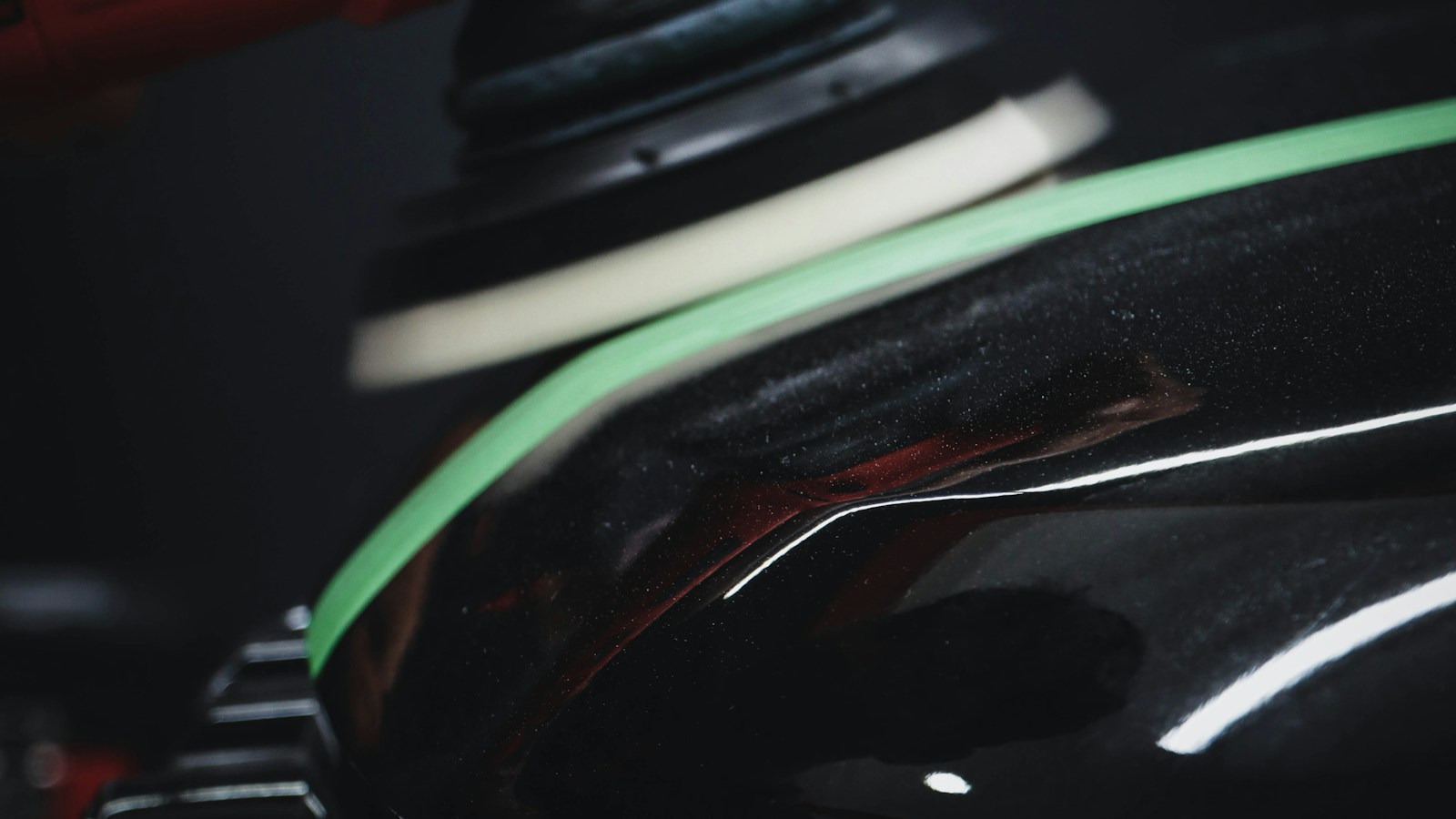
The choice of machine drive mechanism in stage-one compounding fundamentally dictates cutting efficiency and paintwork safety. Direct-drive rotary polishers generate continuous circular motion around a fixed central axis. Because the pad spins at a constant speed regardless of downward operator pressure, rotary machines generate concentrated machine friction. This friction softens the clear coat surface. This allows dense wool cutting pads to rapidly shear away deep scratch channels and severe mineral etchings.
However, the rotational physics that make rotary polishers efficient also introduce risks. Rotary machines generate big localized heat. If an inexperienced operator lingers over panel ridges or applies excessive edge pressure, clear coat burn-through can happen in seconds. also, the circular rotation creates tiny shearing marks known as rotary buffer trails or holograms. expert detailers balance rotary cutting with large-throw random orbital dual-action machines. Dual-action polishers combine free rotation with a 15mm or 21mm orbital throw, dispersing friction across a broader surface area to level clear coat evenly without burning paintwork.
Compound Carrier Lubricants and Pad Cleaning Discipline.
During heavy compounding, liquid cutting compounds rely on specialized carrier lubricants such as mineral spirits and water-based emulsions to keep abrasive bits suspended evenly across pad fibers. As compounding progresses over a panel, three critical transformations occur simultaneously: the abrasive bits fracture into finer shards, carrier lubricants begin evaporating under machine heat. And spent clear coat dust builds up within the pad pores.
If a detailer continues buffing with a clogged pad, the spent clear coat dust clumps together into hard tiny beads. These dry pellets cause pad scouring, dragging severe secondary scratches across the freshly leveled finish. expert detailers practice strict pad hygiene, using pneumatic air guns and machine pad spurs to blast away spent compound and clear coat residue after every 50cm x 50cm section. By working with clean, cooled pads, detailers ensure clean defect removal and zero unwanted scouring.
Micro-Marring removal and the Art of Jewelling.
Stage two and stage three focus on refining the tiny haze left by heavy compounding. Stage two uses medium-density closed-cell foam pads paired with intermediate micro-polishing compounds. These foam pads distribute gentle, even pressure, removing compounding haze while building surface clarity.
Stage three, known in the detailing industry as jewelling or burnishing, is where true artistic mastery occurs. Operating at low machine speeds with zero downward hand pressure, detailers use ultra-soft, zero-cut open-cell foam pads and finishing glazes. The tiny polishing bits gently burnish the clear coat surface, smoothing out the finest micro-scratches. This step maximizes light reflection, giving dark paintwork rich colour depth and lighter metallic shades dazzling clarity that turns heads everywhere.
High-Precision Electronic Paint Thickness Profiling.
Modern paint profiling relies on dual-sensor gauges that detect ferrous and non-ferrous metals automatically. Steel panels use electromagnetic induction. While aluminum doors and bonnets require eddy-current frequency testing. The gauge pulses rapid electronic signals through the clear coat and basecoat, gauging the distance to bare metal within 0.1 micron precision.
detailers map at least ten separate test points on every panel. A typical bonnet might measure 125 microns in the center. But drop to 95 microns along the front leading edge where wind aerodynamics and factory robotic spraying create thinner films. Identifying these variations before compounding prevents edge strikes and preserves the clear coat.
Backing Plate Cushioning and Heat Dispersion.
The backing plate is an essential machine interface between the machine motor and the polishing pad. Standard rigid plastic backing plates transfer motor vibrations directly to the clear coat. This creates uneven pressure spots that cause micro-marring. Detailers use precision-balanced polymer backing plates fitted with cellular foam dampeners.
These flexible backing plates absorb minor operator angle deviations. This allows pads to contour smoothly over curved door panels and swage lines. also, cooling channel vents molded into the plate pull ambient air through the center of the pad, cooling pad face heat by up to 10 degrees Celsius and extending compound working time.
The Mechanics of Abrasive Clumping and Pad Spur care.
During heavy cutting, liquid compounds suspend tiny aluminum oxide crystals within lubricating emulsions. As polishing continues, pad fibers collect spent clear coat dust and carrier oils. If pads are not spurred clean after every section, this residue dries into hard abrasive clumps.
These dried clumps drag across paintwork, causing severe curved scratches known as pigtails. expert detailers use high-pressure air nozzles or machine nylon pad spurs to blast away spent polish after every 50cm working square. Working with clean, cooled pads guarantees consistent defect cutting and zero secondary scratching.
New England Tablelands Climatic Impacts on Clear Coat Longevity.
cars operating across Armidale and the broader New England Tablelands endure severe seasonal heat swings. High-altitude solar rays during summer speeds up clear coat oxidation. While freezing winter nights produce heavy overnight frosts. When car panels undergo daily thermal expansion and contraction cycles, tiny stress fractures form along clear coat surface ridges.
also, country highway driving exposes front bumpers and bonnets to high-velocity road gravel, agricultural soil. And airborne eucalyptus resins. When these abrasive grit sit on soft clear coats, routine hand washing creates deep circular swirl marks and linear marring. A three-stage paint correction levels these micro-fractures, removing oxidized surface clear coat and restoring dense optical clarity that resists regional weather extremes.
Factory Clear Coat Thickness Benchmarks by maker.
Understanding factory paint variations across car makers is crucial for setting safe polishing parameters. German prestige cars such as BMW, Audi. And Mercedes-Benz traditionally feature ultra-hard ceramic-infused clear coats gauging between 40 and 55 microns over a 120-micron total paint stack. These hard clear coats tolerate aggressive micro-wool compounding pads without big micro-marring.
In contrast, Japanese makers including Subaru, Toyota. And Mazda engineer softer clear coats gauging between 30 and 40 microns. These softer paints correct quickly under light pressure. But are very susceptible to buffer hazing and pad scouring. expert detailers calibrate machine speed, pad cell density. And compound abrasiveness to match each car's specific clear coat hardness profile. This ensures maximum defect removal with minimal thickness loss.
The Physics of Pad Priming and Abrasive bit Breakdown.
Proper pad priming is the foundation of uniform defect removal in multi-stage paint correction. When dry compounding pads are spun across dry clear coat, initial friction is concentrated along pad edges. This creates localized heat spikes that can cause clear coat marring. expert detailers prime new pads by massaging liquid micro-abrasive compound deep into every cell of the pad face before touching paintwork.
As the machine polisher operates in overlapping passes, abrasive aluminum oxide crystals undergo progressive machine breakdown. Initially gauging 5 to 7 microns in diameter to cut away scratch channels, the crystals shatter under machine friction into sub-micron bits gauging under 1 micron. This built-in fine action allows the compound to transition smoothly from heavy cutting to fine refining in a single pass, preparing the surface for stage-two finishing.
Long-Term care Following Three-Stage Correction.
Investing in a expert three-stage paint correction transforms your car into an car work of art. To ensure this flawless mirror finish lasts for years, owners must commit to proper care practices. Washing with cheap sponges, using automatic car washes. Or wiping dusty paint with dry rags will quickly re-introduce swirl marks.
Always practice the two-bucket wash method with grit guards, use high-lubricity pH-neutral car wash shampoos. And dry panels with plush microfiber towels or filtered warm air blowers. saving the corrected clear coat with a expert ceramic or graphene coating provides an essential sacrificial barrier that preserves mirror reflections permanently.
Expert Paint Correction Action Plan and Key Takeaways.
Paint care is an art. Clean cars make every drive fun. Good paint turns heads on the road. You feel proud of your car. Proper care saves you time and cash. Smart drivers treat their cars with pride.
Wash your car with care. Use clean wash mitts on every panel. Two buckets keep dirt away from paint. Rinse dirt off before you wash. Soft soap lifts road grime fast. Clean water rinses soap off clean. Dry panels with soft microfibre towels. Never wipe dry paint with dirty rags.
Keep your car parked under cover. Shade stops hot sun damage. Trees drop sticky sap on clear coats. Birds leave bad marks on paint. Wash bird marks off right away. Quick care keeps your clear coat safe.
Check your paint twice a year. Feel panels with clean hands. Rough spots mean dirt is stuck on paint. Smooth paint reflects sunlight like glass. Good polish restores deep gloss. Rich shine lasts for years with good care. You win on every drive.
Book your detail with skilled pros. Quality work protects your investment. High gloss increases resale value. Clean paint stays bright in all weather. Enjoy driving a car that looks brand new every single day.
Step by Step Home Car Care Guide.
Washing your car at home is simple. Do not rush the job. Park in the shade first. Cool metal keeps soap from drying fast.
Rinse the car with clean water. Start from the top and spray down. Use a foam gun if you have one. Let thick foam sit on paint for five minutes. Foam lifts road dust off the clear coat.
Fill two clean wash buckets. Put a dirt guard in each bucket. Wash one panel at a time. Dip your wash mitt in soap. Wipe the panel in straight lines. Never wash in circles. Rinse your mitt in the clean water bucket before taking more soap.
Rinse each panel with fresh water. Use a soft towel to dry panels. Dry cars look clean and bright. Put your gear away clean. Enjoy your fresh car on the road.
Quick care Tips for Corrected Paint.
Always keep a bottle of quick detail spray in your boot. Keep two clean soft towels ready. When bird lime lands on your bonnet, do not wait. Spray the spot with detail spray. Let it sit for thirty seconds. Lift the spot off gently with a soft towel. Do not rub hard. This simple habit keeps your clear coat free from acid burns.
Avoid drive-through car washes with stiff plastic brushes. Those brushes hold dirt from past cars. They spin fast and grind dirt into paint. Stick to hand washing at home or visit expert hand detailers. Your mirror finish will stay crisp and clear for years.
Summary: Safe Car Care Tips for Smooth Paint.
Clean cars look great. Smooth paint shines like glass. You enjoy every drive. Clean panels stay bright. Good care saves you cash. Smart owners wash with pride.
Look after your paint each week. Use two buckets to wash. Soft mitts keep paint safe. Fresh water rinses dirt clean. Soft towels dry panels fast. Never wash in direct sun.
Park your car in the shade. Clean bird marks off fast. Tree sap harms clear coats. Quick care keeps paint smooth. Good polish restores deep gloss. Enjoy your clean car on the road.
Wash wheels first with care. Clean rims look sharp. Soft brushes reach deep in wheel spokes. Rinse brake dust away with cool water. Clean wheels make your whole car stand out.
Check panels once a month. Run clean fingers over paint. If paint feels rough, wash it clean. Keep your car looking brand new. You win on every drive.
The Three-Stage Machine Polishing Workflow.
Executing an authentic three-stage paint correction requires strict machine discipline and clinical cleanliness across every stage of the process.
- Stage 1: Heavy Defect Compounding. The primary cutting phase uses a high-torque rotary polisher or large-throw dual-action machine paired with open-cell micro-wool or dense microfiber cutting pads. fine or precision-engineered sub-micron aluminum oxide compounds cut away severe swirl marks, water spot etching. And surface scratches. This stage levels the clear coat but leaves behind uniform micro-haze and light pad scouring.
- Stage 2: Intermediate Defect Refining. The secondary refining stage switches to a medium-density closed-cell foam pad and intermediate finishing compound. detailers work in tight overlapping cross-hatch passes to remove compounding haze, micro-marring. And rotary buffer trails left from stage one. This step restores colour depth and begins building sharp optical reflection.
- Stage 3: Ultra-Fine Jewelling and Gloss Finishing. The final finishing stage uses an ultra-soft finishing foam pad operating on a short-throw dual-action machine with a non-abrasive or ultra-fine jewelling glaze. Operating at low oscillation speeds with minimal downward pressure, this step burnishes the clear coat to optical perfection. This creates a jaw-dropping wet-look gloss free of holograms or machine marks.
Comparative Analysis: Single-Stage vs Three-Stage Correction.
Understanding the technical differences between single-stage enhancements and multi-stage corrections enables car owners to choose the appropriate restoration level for their car.
| Correction Parameter. | Single-Stage Polish. | Two-Stage Correction. | Three-Stage Service. |
|---|---|---|---|
| Defect Removal Rate. | 50% &ndash. 65% (Light swirls). | 75% &ndash. 85% (Moderate marring). | 85% &ndash. 95% (Severe defects &. deep scratches). |
| Clear Coat Removal. | <. 1.0 micron. | 1.5 &ndash. 2.5 microns. | 2.5 &ndash. 4.0 microns (Monitored via gauge). |
| Labour Time Required. | 4 &ndash. 6 Hours. | 8 &ndash. 12 Hours. | 16 &ndash. 24+ Hours (Multi-day process). |
| Optical Clarity / Gloss. | Enhanced Gloss. | High Clarity Finish. | Concours Mirror Reflection. |
| Recommended Coating Base. | Polymer Sealant / Wax. | Ceramic Coating (3&ndash. 5 Year). | expert Ceramic or Graphene Coating. |
Frequently Asked Questions.
Will three-stage paint correction remove deep stone chips and key scratches?.
No. Paint correction levels the clear coat layer. If a scratch or stone chip has completely penetrated through the clear coat into the pigmented basecoat or primer, machine polishing cannot restore missing paint. However, multi-stage polishing rounds the sharp edges of deep scratches. This makes them greatly less noticeable.
How often can a car undergo a three-stage paint correction?.
Because three-stage correction removes between 2 and 4 microns of clear coat, it should only be performed once or twice during a car's lifetime. Following a full correction, car owners should immediately apply a expert ceramic or graphene coating and practice proper two-bucket washing techniques to preserve the finish permanently.
How do detailers check for hidden defects during correction?.
detailers use high-CRI (Colour Rendering Index) LED inspection lights that replicate natural sunlight at varying angles. also, panels are wiped down with pure isopropyl alcohol or solvent-based panel wipes to dissolve residual polishing oils that could temporarily mask tiny swirls.
Daily Driver Care Routine and Quick Tips.
Clean cars look sharp. Smooth paint shines in the sun. Clean wheels turn heads on the road. Good habits keep cars in top shape. You feel proud of your car each day. Smart drivers care for their cars with pride.
Wash your car often. Park under cool shade. Keep birds off the hood. Clean sap off doors fast. Use soft mitts on all panels. Rinse soap with clean water. Dry with soft towels. Your car stays slick and bright on every drive.
Look after cabin trims each week. Wipe seats with a soft damp rag. Vacuum floor mats on weekends. Keep windows clean inside and out. Clear glass keeps you safe on the road. Enjoy your fresh ride every single day.
Looking for pro Car Detailing in Armidale?.
Detailing Mates delivers 5-star mobile car detailing, paint restoration. And care across Armidale NSW. Explore our dedicated service packages:
- Ceramic Coating Armidale &ndash. 10H graphene quartz paint care with years of durability
- Paint Correction Armidale &ndash. Precision multi-stage swirl mark and scratch removal
- Car Steam Cleaning Armidale &ndash. High-temp interior extraction, clean &. stain removal
- Full Car Detailing Packages &ndash. Comprehensive mobile interior &. exterior transformations
Book Your Armidale Detailing Service Online or visit our workshop at 95 Rusden St, Armidale NSW 2350.