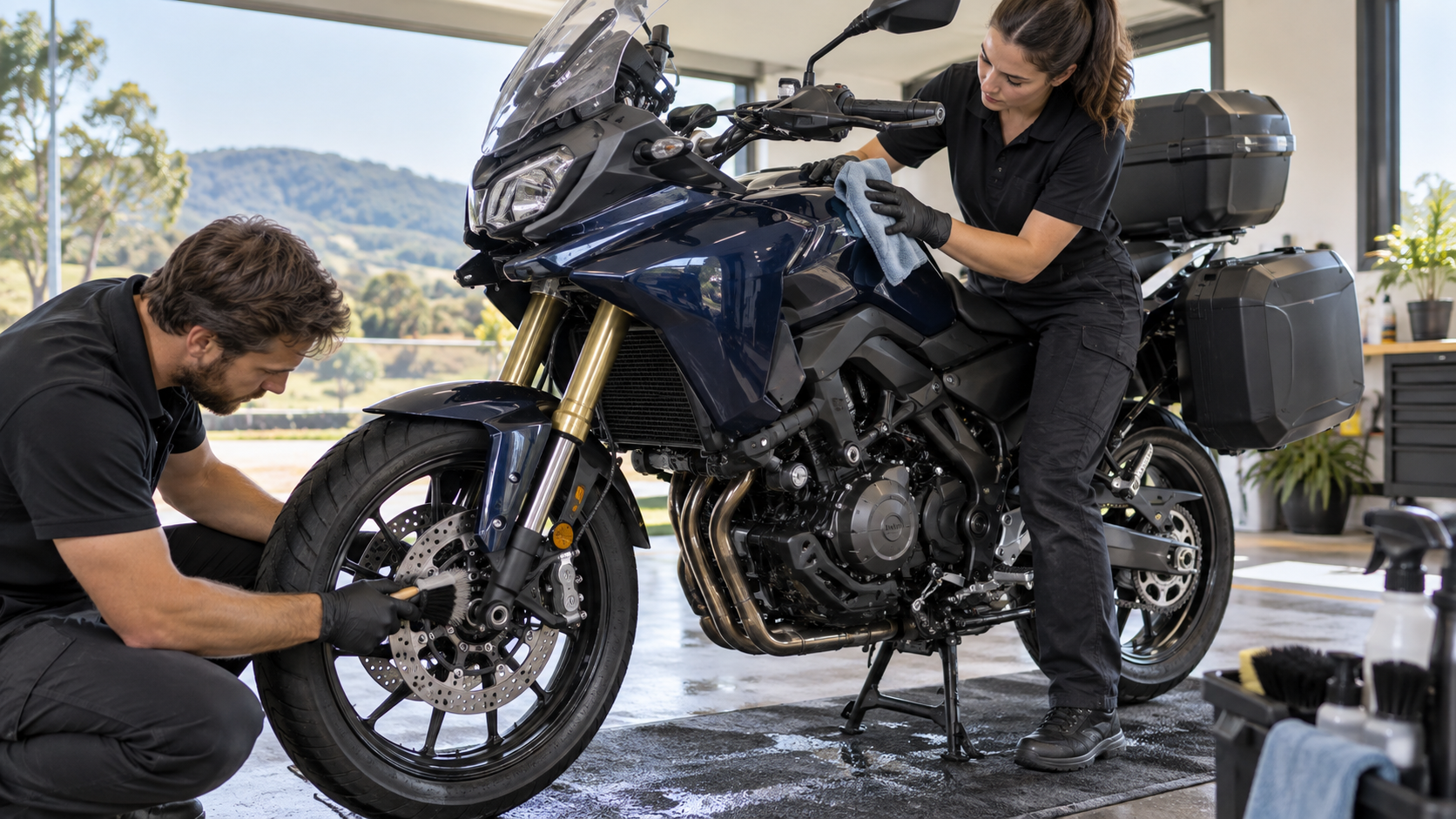
Motorcycle detailing Armidale is easiest to plan when the service is built around the actual contamination, material and use of the vehicle. A motorcycle concentrates painted, anodised, polished, rubber, plastic and mechanical surfaces into a compact space. That makes access rewarding but also raises the risk of pushing cleaner or water where it does not belong, so the safest process is deliberate and surface specific.
Motorcycle detailing Armidale is a condition-led service that identifies the affected surfaces, selects compatible tools and products, controls moisture, documents limits and provides aftercare suited to Australian conditions.
Contents
- Start only when the motorcycle is cool
- Record finish types and accessories
- Protect sensitive openings
- Pre-rinse with restraint
- Use dedicated wheel tools
- Handle the chain area carefully
- Clean engine surfaces by material
- Respect matte and satin finishes
- Treat the windscreen as optical plastic
- Dry recesses without spreading grime
- Inspect corrosion-prone details
- Complete a control-area handover
- Booking checklist
- Common questions
- Next step
Why this service needs its own process
A motorcycle concentrates painted, anodised, polished, rubber, plastic and mechanical surfaces into a compact space. That makes access rewarding but also raises the risk of pushing cleaner or water where it does not belong, so the safest process is deliberate and surface specific.
A useful quote begins with photos and a short history. Explain the vehicle type, how it is used, how long the issue has been present and what previous products or repairs may affect the work. According to Australian Consumer Law service guidance, Australian services should be supplied with due care and skill, which makes clear scope and realistic expectations important.
Start only when the motorcycle is cool
Hot exhausts, engines and brake components can flash-dry chemicals and create spotting. Allow the machine to cool fully and confirm it is stable before work begins.
For Motorcycle detailing Armidale, this stage should be completed before moving to record finish types and accessories. The technician should note what was observed, which surface was tested and whether the next step changes because of damage, moisture, access or previous treatment.
Quality check 1
Inspect the area in natural or neutral light, use a clean towel to check residue, and compare it with an untreated reference area. If the material changes colour, feel or sheen unexpectedly, stop and reassess rather than covering the result with dressing or fragrance.
Record finish types and accessories
Identify gloss paint, matte panels, wraps, polished metal, anodised parts, screens, luggage and aftermarket electronics. Product choice must follow the finish, not the colour.
For Motorcycle detailing Armidale, this stage should be completed before moving to protect sensitive openings. The technician should note what was observed, which surface was tested and whether the next step changes because of damage, moisture, access or previous treatment.
Quality check 2
Inspect the area in natural or neutral light, use a clean towel to check residue, and compare it with an untreated reference area. If the material changes colour, feel or sheen unexpectedly, stop and reassess rather than covering the result with dressing or fragrance.
Protect sensitive openings
Avoid forcing water toward air intakes, exhaust outlets, bearings, switches, instrument clusters and electrical connectors. Protection should not create a new hazard or be forgotten at handover.
For Motorcycle detailing Armidale, this stage should be completed before moving to pre-rinse with restraint. The technician should note what was observed, which surface was tested and whether the next step changes because of damage, moisture, access or previous treatment.
Quality check 3
Inspect the area in natural or neutral light, use a clean towel to check residue, and compare it with an untreated reference area. If the material changes colour, feel or sheen unexpectedly, stop and reassess rather than covering the result with dressing or fragrance.
Pre-rinse with restraint
Use controlled water flow to release loose grit rather than attacking seals with concentrated pressure. Work from cleaner upper surfaces toward wheels and lower mechanical areas.
For Motorcycle detailing Armidale, this stage should be completed before moving to use dedicated wheel tools. The technician should note what was observed, which surface was tested and whether the next step changes because of damage, moisture, access or previous treatment.
Quality check 4
Inspect the area in natural or neutral light, use a clean towel to check residue, and compare it with an untreated reference area. If the material changes colour, feel or sheen unexpectedly, stop and reassess rather than covering the result with dressing or fragrance.
Use dedicated wheel tools
Brake dust and road grime should not travel from wheels to painted bodywork. Separate brushes and towels reduce cross-contamination.
For Motorcycle detailing Armidale, this stage should be completed before moving to handle the chain area carefully. The technician should note what was observed, which surface was tested and whether the next step changes because of damage, moisture, access or previous treatment.
Quality check 5
Inspect the area in natural or neutral light, use a clean towel to check residue, and compare it with an untreated reference area. If the material changes colour, feel or sheen unexpectedly, stop and reassess rather than covering the result with dressing or fragrance.
Handle the chain area carefully
Degreasing overspray can reach tyres, brakes and painted surfaces. Chain cleaning and lubrication should follow the motorcycle maker’s guidance and remain separate from cosmetic dressing.
For Motorcycle detailing Armidale, this stage should be completed before moving to clean engine surfaces by material. The technician should note what was observed, which surface was tested and whether the next step changes because of damage, moisture, access or previous treatment.
Quality check 6
Inspect the area in natural or neutral light, use a clean towel to check residue, and compare it with an untreated reference area. If the material changes colour, feel or sheen unexpectedly, stop and reassess rather than covering the result with dressing or fragrance.
Clean engine surfaces by material
Coated cases, bare alloy and polished parts can react differently. Agitate gently, rinse thoroughly and avoid promising that staining or corrosion will disappear through cleaning alone.
For Motorcycle detailing Armidale, this stage should be completed before moving to respect matte and satin finishes. The technician should note what was observed, which surface was tested and whether the next step changes because of damage, moisture, access or previous treatment.
Quality check 7
Inspect the area in natural or neutral light, use a clean towel to check residue, and compare it with an untreated reference area. If the material changes colour, feel or sheen unexpectedly, stop and reassess rather than covering the result with dressing or fragrance.
Respect matte and satin finishes
Matte surfaces should not be polished into uneven gloss. Use finish-compatible cleaners and inspect from several angles after drying.
For Motorcycle detailing Armidale, this stage should be completed before moving to treat the windscreen as optical plastic. The technician should note what was observed, which surface was tested and whether the next step changes because of damage, moisture, access or previous treatment.
Quality check 8
Inspect the area in natural or neutral light, use a clean towel to check residue, and compare it with an untreated reference area. If the material changes colour, feel or sheen unexpectedly, stop and reassess rather than covering the result with dressing or fragrance.
Treat the windscreen as optical plastic
Some motorcycle screens scratch or haze with harsh products. Flush grit first, use a soft dedicated towel and avoid dry wiping.
For Motorcycle detailing Armidale, this stage should be completed before moving to dry recesses without spreading grime. The technician should note what was observed, which surface was tested and whether the next step changes because of damage, moisture, access or previous treatment.
Quality check 9
Inspect the area in natural or neutral light, use a clean towel to check residue, and compare it with an untreated reference area. If the material changes colour, feel or sheen unexpectedly, stop and reassess rather than covering the result with dressing or fragrance.
Dry recesses without spreading grime
Filtered air and clean towels help remove water around fasteners, fins and controls. Towels used on wheels or chain areas should never return to paint.
For Motorcycle detailing Armidale, this stage should be completed before moving to inspect corrosion-prone details. The technician should note what was observed, which surface was tested and whether the next step changes because of damage, moisture, access or previous treatment.
Quality check 10
Inspect the area in natural or neutral light, use a clean towel to check residue, and compare it with an untreated reference area. If the material changes colour, feel or sheen unexpectedly, stop and reassess rather than covering the result with dressing or fragrance.
Inspect corrosion-prone details
Fasteners, spoke junctions, brackets and hidden edges can hold moisture. Cleaning reveals their condition but corrosion treatment may require a separate specialist process.
For Motorcycle detailing Armidale, this stage should be completed before moving to complete a control-area handover. The technician should note what was observed, which surface was tested and whether the next step changes because of damage, moisture, access or previous treatment.
Quality check 11
Inspect the area in natural or neutral light, use a clean towel to check residue, and compare it with an untreated reference area. If the material changes colour, feel or sheen unexpectedly, stop and reassess rather than covering the result with dressing or fragrance.
Complete a control-area handover
Tyres, brake discs, grips, foot controls and the seat must be free from slippery dressing. Confirm protective covers are removed and controls operate normally.
For Motorcycle detailing Armidale, this stage should be completed before moving to start only when the motorcycle is cool. The technician should note what was observed, which surface was tested and whether the next step changes because of damage, moisture, access or previous treatment.
Quality check 12
Inspect the area in natural or neutral light, use a clean towel to check residue, and compare it with an untreated reference area. If the material changes colour, feel or sheen unexpectedly, stop and reassess rather than covering the result with dressing or fragrance.
Environmental and chemical controls
Professional vehicle care also includes runoff and product management. NSW EPA stormwater guidance explains why wash water should not be allowed to enter stormwater systems, while Safe Work Australia chemical information describes the role of safety data sheets in understanding chemical hazards, handling and storage.
Customers do not need to specify every chemical. They can, however, ask how sensitive surfaces are tested, how wastewater is managed, how the vehicle will dry and what needs to stay untouched after the service.
Motorcycle detailing Armidale booking checklist
- Provide clear daylight photos of the affected areas.
- Explain the vehicle’s use, storage and previous cleaning history.
- Remove valuables and identify any item that must remain in place.
- Ask for inclusions, exclusions and likely limitations in writing.
- Confirm access, weather planning, drying time and handover arrangements.
- Discuss unusual contamination before the appointment.
- Keep the invoice and aftercare instructions.
Questions Australian vehicle owners ask
Can a pressure washer be used on a motorcycle?
Only with restraint, suitable distance and awareness of bearings, seals, electronics and openings. High pressure is not a substitute for careful agitation.
Should motorcycle tyres be dressed?
No slippery dressing should be applied to tyre tread or any surface that could affect grip. Safety-critical areas must remain clean and residue free.
Can matte paint be polished?
Traditional polishing can create unwanted gloss patches. Matte finishes need products and methods designed for their appearance.
How long does motorcycle detailing take?
Time depends on fairings, luggage, wheel design, contamination, corrosion and protection requested. Access can make a small motorcycle surprisingly detailed work.
What should the owner check afterward?
Check controls, brakes, tyre surfaces, seat grip, mirrors and any removed luggage or accessories before riding.
Choosing the right level of service
A light maintenance visit and a corrective service solve different problems. The detailer should explain which stage creates the improvement, which defects or contamination may remain and whether drying or follow-up work is required. Price becomes meaningful only when two quotes include comparable labour and outcomes.
Review suitable options through Detailing Mates vehicle-care services in Armidale. Share the condition honestly so the booking allows enough time and the safest process can be prepared.
Aftercare and final inspection
Before handover, inspect the work in useful light and check all areas that were discussed. Surfaces should feel clean rather than greasy, controls should remain safe to use, and no pooled moisture or chemical residue should be left behind. Ask when the vehicle can return to normal use.
Aftercare should match the completed service. Avoid household chemicals, address new contamination early and return for review if moisture, odour, staining or finish changes reappear. Good maintenance protects the work without repeating an aggressive reset.
Field note: start only when the motorcycle is cool
Hot exhausts, engines and brake components can flash-dry chemicals and create spotting. Allow the machine to cool fully and confirm it is stable before work begins. At the follow-up, record whether the result remained stable after normal use. This helps separate a recurring source from a one-off contamination event and gives the next appointment evidence rather than guesswork.
Field note: record finish types and accessories
Identify gloss paint, matte panels, wraps, polished metal, anodised parts, screens, luggage and aftermarket electronics. Product choice must follow the finish, not the colour. At the follow-up, record whether the result remained stable after normal use. This helps separate a recurring source from a one-off contamination event and gives the next appointment evidence rather than guesswork.
Field note: protect sensitive openings
Avoid forcing water toward air intakes, exhaust outlets, bearings, switches, instrument clusters and electrical connectors. Protection should not create a new hazard or be forgotten at handover. At the follow-up, record whether the result remained stable after normal use. This helps separate a recurring source from a one-off contamination event and gives the next appointment evidence rather than guesswork.
Field note: pre-rinse with restraint
Use controlled water flow to release loose grit rather than attacking seals with concentrated pressure. Work from cleaner upper surfaces toward wheels and lower mechanical areas. At the follow-up, record whether the result remained stable after normal use. This helps separate a recurring source from a one-off contamination event and gives the next appointment evidence rather than guesswork.
Field note: use dedicated wheel tools
Brake dust and road grime should not travel from wheels to painted bodywork. Separate brushes and towels reduce cross-contamination. At the follow-up, record whether the result remained stable after normal use. This helps separate a recurring source from a one-off contamination event and gives the next appointment evidence rather than guesswork.
Field note: handle the chain area carefully
Degreasing overspray can reach tyres, brakes and painted surfaces. Chain cleaning and lubrication should follow the motorcycle maker’s guidance and remain separate from cosmetic dressing. At the follow-up, record whether the result remained stable after normal use. This helps separate a recurring source from a one-off contamination event and gives the next appointment evidence rather than guesswork.
Conclusion
Motorcycle detailing Armidale deserves a process designed for its own material, contamination and safety considerations. A documented inspection, controlled method, honest limits and practical aftercare produce more value than a generic package with a different title.