Table of Contents
- Introduction
- Featured Definition
- Why Steam cleaning car interior Services Matter in Australia
- How Steam cleaning car interior Detailing Works
- What Areas Can Be Steam Cleaned?
- Steam Cleaning vs Shampoo Extraction vs Basic Interior Cleaning
- Benefits of Steam cleaning car interior Packages
- Limits and Risks of Steam Cleaning a Car Interior
- Australia-Specific Interior Cleaning Problems
- Steam cleaning car interior Checklist Before Booking
- How to Choose a Car Interior Steam Cleaning Provider
- People Also Ask
- Expert Q&A
- Conclusion
Introduction
Steam cleaning car interior services are popular in Australia because drivers want a deeper clean for seats, carpets, mats, vents, cup holders, door trims, and high-touch areas. Unlike a quick vacuum and wipe, steam can help loosen grime from textured surfaces and tight spaces when used correctly.
From my experience reviewing detailing processes, steam works best as part of a complete interior detail. It is not a magic fix for every stain or smell. However, when paired with vacuuming, fabric-safe cleaners, extraction, brushing, and careful drying, it can make a tired cabin feel much cleaner and fresher.
Australian vehicles face tough conditions. Beach sand, red dust, sunscreen residue, food spills, pet hair, humidity, worksite grime, and hot interiors can all build up quickly. Therefore, a proper steam clean should be careful, practical, and matched to the vehicle’s materials.
Featured Definition
Steam cleaning car interior means using controlled hot vapour to loosen dirt, oils, stains, and grime from cabin surfaces. It can help clean fabric seats, carpets, mats, vents, plastics, cup holders, and door trims. However, sensitive materials and electronics need careful handling to avoid heat or moisture damage.
Why Steam cleaning car interior Services Matter in Australia
A car interior is a small enclosed space. Over time, it collects dust, skin oils, sunscreen, sweat, food crumbs, drink spills, pet hair, sand, mud, and odours. Because Australians often drive in hot weather, residue can bake into surfaces and become harder to remove.
Steam cleaning car interior services matter because they target more than visible dirt. Steam can soften grime in seams, textured plastics, seat rails, cup holders, air vents, and fabric fibres. As a result, it can be useful for daily drivers, family SUVs, rideshare vehicles, tradie utes, 4WDs, beach cars, and pre-sale vehicles.
However, the quality of the result depends on technique. Too much heat, too much moisture, or poor drying can create problems. Therefore, the best detailers use steam carefully rather than blasting every surface.
Australian consumers should also expect clear service descriptions. According to the ACCC’s consumer guarantees guidance, services should be provided with due care and skill and should be fit for the purpose discussed with the provider. In car detailing, that means the business should explain what the steam clean includes, what it may improve, and what may not fully disappear.
This is not legal advice. It is practical consumer guidance. If you are booking a detail, ask for the scope in plain English before work begins.
How Steam cleaning car interior Detailing Works
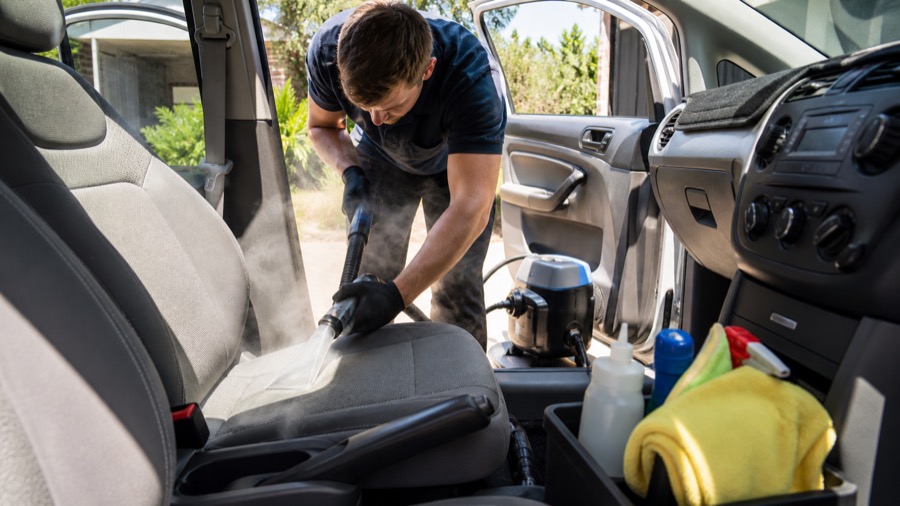
Steam cleaning car interior detailing uses heat and low-moisture vapour to help loosen dirt. The process is usually more controlled than soaking a surface with water. However, it still requires skill because heat and moisture can affect fabrics, trims, adhesives, screens, and electronics.
A professional process often starts with inspection. The detailer checks the seats, carpets, trims, headliner, vents, stains, smells, and high-touch areas. This helps them decide where steam is useful and where it should be avoided.
Next, loose debris is removed. This step is important. If a cabin full of sand, crumbs, pet hair, or dust is steamed too early, dry dirt can turn into mud or paste. Therefore, a good detailer usually vacuums, brushes, and blows out crevices first.
Then, the detailer may apply a suitable cleaner to certain areas. Steam helps activate and lift residue, while microfibre towels capture loosened grime. For fabric seats and carpets, steam may be paired with shampoo or extraction when deeper cleaning is needed.
Finally, the cabin is dried and inspected. This matters because moisture left in carpets, foam, or under mats can cause smells. In humid parts of Australia, such as Queensland, northern New South Wales, and the Top End, drying is especially important.
What Areas Can Be Steam Cleaned?
Steam cleaning car interior services can cover many areas, but not every surface should be treated the same way.
Fabric Seats
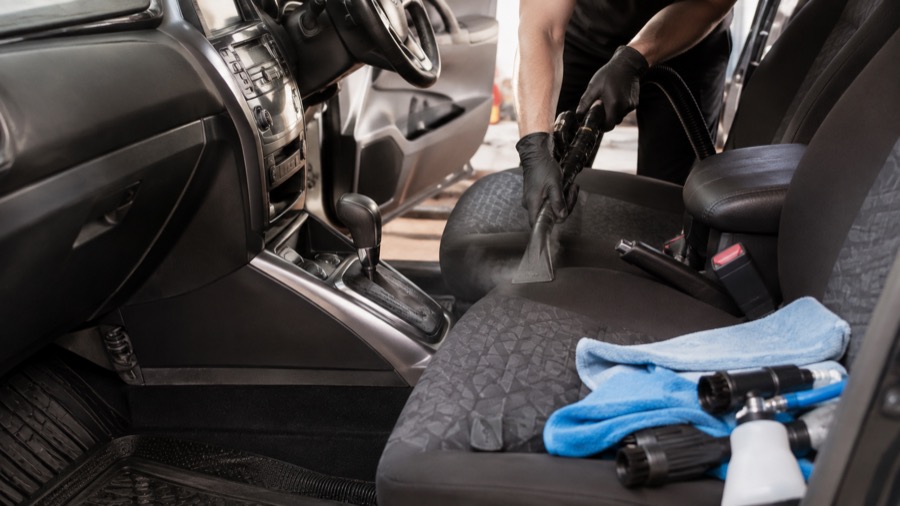
Fabric seats can benefit from steam because heat helps loosen body oils, sweat, light stains, and general grime. However, steam alone may not remove deep spills. For coffee, milk, soft drink, pet accidents, or old stains, a detailer may need fabric shampooing and extraction.
The key is controlled moisture. Over-wetting seat foam can cause delayed odours and slow drying. Therefore, professional steam cleaning should use light passes and towel removal, not soaking.
Carpets and Floor Mats
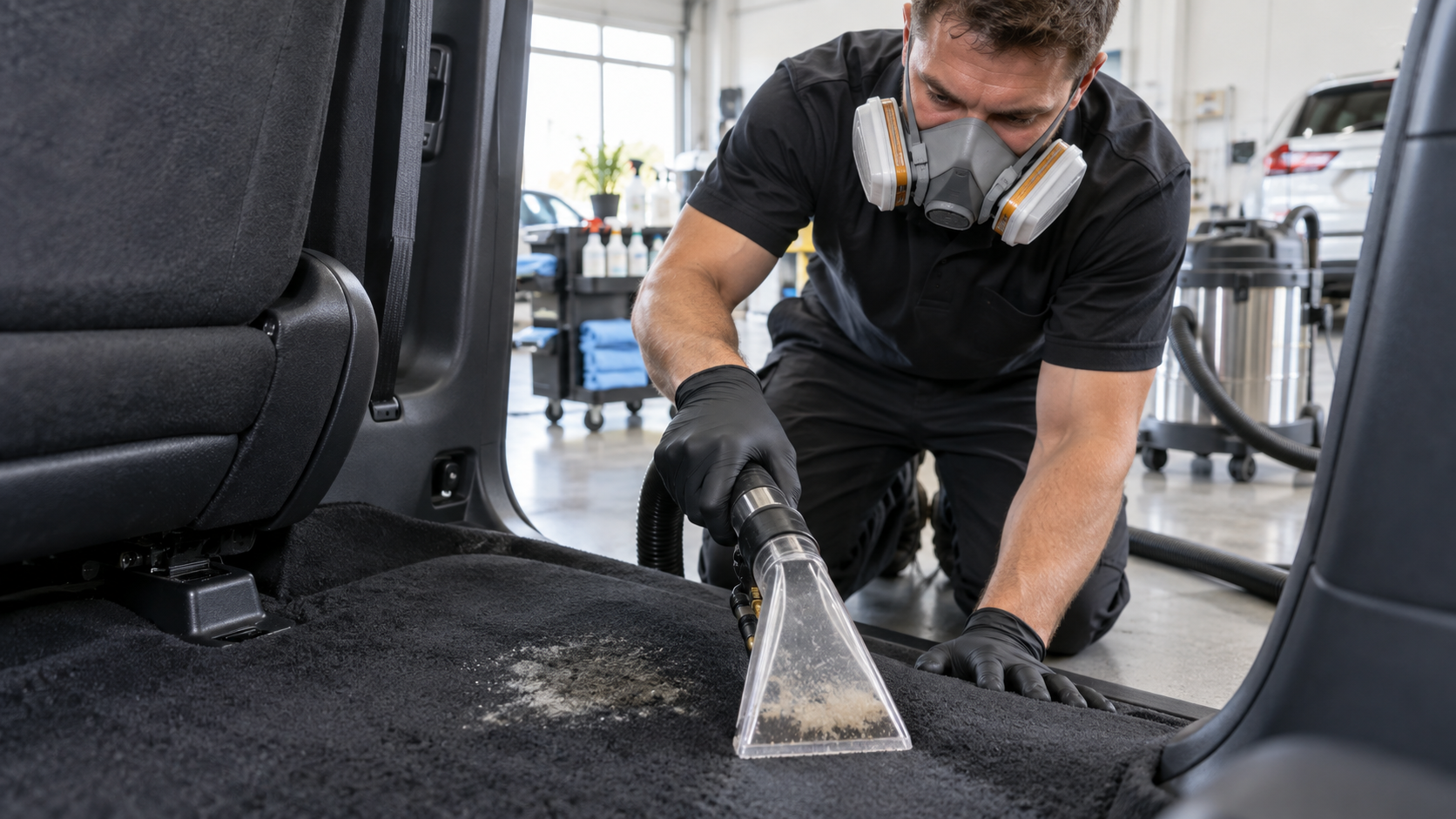
Carpets and mats collect sand, mud, grass, food crumbs, and dust. Steam can help loosen dirt from carpet fibres, especially after strong vacuuming. However, if the carpet is heavily soiled, shampoo extraction may be better.
Rubber mats can usually be cleaned more directly. Still, they should be dried before being placed back in the car. Damp mats can trap moisture against carpet.
Door Trims and Handles
Door trims collect fingerprints, sunscreen, dust, and shoe marks. Steam is useful around handles, switches, storage pockets, and textured areas. However, steam should not be forced into electrical switches.
A careful detailer uses a towel-wrapped nozzle or controlled short bursts. This cleans the surface while reducing moisture exposure.
Cup Holders and Centre Consoles
Cup holders are one of the best areas for steam cleaning. Sticky drink residue, coffee spills, crumbs, and dust often settle here. Steam softens residue, while brushes and towels remove it.
This is where many customers notice a big difference. A clean centre console makes the whole cabin feel fresher.
Air Vents and Tight Crevices
Steam can help clean dust and grime around vents, badges, buttons, seams, and trim gaps. However, it must be used carefully. Too much moisture inside vents or electronics is not ideal.
For vents, steam is often used with light pressure, brushes, and towels. The goal is to loosen visible dust and grime, not flood the system.
Leather and Vinyl
Leather and vinyl can sometimes be steam assisted, but they require caution. Too much heat can dry or stress leather, especially if it is old, cracked, or poorly maintained.
A safer approach is gentle leather cleaning, light steam where appropriate, and a suitable conditioner or protectant afterwards. If leather is damaged, detailing may improve cleanliness but will not repair cracks, colour loss, or tears.
Headliners
Most headliners should not be heavily steam cleaned. The headliner fabric is often bonded with adhesive. Too much heat or moisture can weaken that adhesive and cause sagging.
A professional may spot clean a headliner carefully, but heavy steam cleaning is risky. If your roof lining has stains or mould concerns, ask the detailer how they will treat it before agreeing.
Steam Cleaning vs Shampoo Extraction vs Basic Interior Cleaning
Steam cleaning car interior services are often confused with shampoo extraction or general interior detailing. They can overlap, but they are not the same.
| Cleaning Method | Best For | Main Benefit | Main Limitation |
|---|---|---|---|
| Basic interior clean | Light dust, crumbs, tidy-up jobs | Fast, affordable, good for regular maintenance | Limited stain and odour improvement |
| Steam cleaning | Grime in seams, cup holders, vents, trims, light fabric residue | Uses heat to loosen dirt with controlled moisture | Needs skill around electronics and sensitive materials |
| Shampoo extraction | Dirty fabric seats, carpets, mats, spills | Removes more dissolved soil from fabric | More drying time required |
| Full interior detail | Family cars, rideshare cars, pre-sale vehicles, neglected cabins | Combines vacuuming, steam, shampoo, wiping, and finishing | Costs more and takes longer |
The best option depends on the vehicle. For example, a dusty commuter car may only need basic cleaning and light steam. However, a family SUV with drink spills and food stains may need steam plus extraction. A rideshare vehicle with odour may need a deeper process again.
Benefits of Steam cleaning car interior Packages
Steam cleaning car interior packages can offer several practical benefits when done correctly.
Deeper Cleaning in Tight Areas
Steam can reach seams, crevices, cup holders, vents, seat rails, and textured plastics. These areas are hard to clean with a cloth alone. As a result, steam can create a more detailed finish.
Less Chemical Use in Some Areas
Because steam uses heat to loosen grime, some surfaces may need less chemical cleaner. This does not mean chemical-free in every case. Stains, oils, and odours may still need specific products. However, steam can reduce the need for heavy scrubbing.
Better High-Touch Area Cleaning
Steering wheels, gear selectors, door handles, seat belt buckles, buttons, and armrests collect skin oils and residue. Steam can help break down this build-up. Therefore, the cabin can feel cleaner, not just look cleaner.
Useful for Family and Rideshare Cars
Family vehicles and rideshare cars get used heavily. Steam cleaning can help refresh high-use areas and improve passenger comfort. It is especially useful when combined with regular vacuuming and fabric cleaning.
Improved Pre-Sale Presentation
A clean interior can improve first impressions when selling a car. Buyers often check seats, carpets, smell, cup holders, boot space, and steering wheel condition. Steam cleaning can help these areas present better.
However, sellers should stay honest. Detailing improves cleanliness and presentation. It should not be used to hide serious defects or misrepresent the vehicle.
Limits and Risks of Steam Cleaning a Car Interior
Steam cleaning car interior services are useful, but they have limits. Knowing these limits helps customers make better decisions.
Steam Does Not Fix Permanent Damage
Steam can remove or reduce dirt, grime, and some stains. However, it cannot repair torn fabric, cracked leather, faded plastics, burns, deep dye transfer, rust, or broken trims.
If a stain has chemically changed the material, it may remain visible. A good detailer should explain this before work starts.
Electronics Need Care
Modern cars contain screens, buttons, sensors, seat controls, speakers, USB ports, and wiring. Steam should not be forced into electronics. Instead, detailers should use controlled application and dry towels.
This is especially important in newer vehicles with digital displays and advanced driver features.
Over-Wetting Can Cause Odours
Although steam can be low-moisture, poor technique can still leave moisture behind. If seats, carpets, or underlays stay damp, odours may develop.
Therefore, drying is part of the job. In humid Australian climates, airflow and drying time matter.
Heat Can Affect Sensitive Materials
Old leather, loose trims, weak adhesives, delicate headliners, and poor previous repairs may react badly to heat. Therefore, inspection and testing are important.
Mould Needs Caution
If a car has visible mould, a normal steam clean may not be enough. Mould can indicate moisture problems and may require a specific remediation process. The WA Department of Health’s mould and dampness guidance explains that dampness and mould should be managed by addressing moisture sources and reducing exposure risks.
This is health and administrative information, not medical advice. If you suspect mould in a vehicle, tell the detailer before booking and consider whether specialist treatment is needed.
Australia-Specific Interior Cleaning Problems
Australia creates unique cabin cleaning challenges. Therefore, steam cleaning car interior services should consider local use patterns.
Beach Sand
Beach sand is one of the most common problems in Australian cars. It settles into carpets, seat rails, boot liners, child seat areas, and mat edges. Steam alone is not the first step. Strong vacuuming and brushing should happen first.
Once loose sand is removed, steam can help clean remaining grime around trims and cup holders.
Sunscreen Marks
Sunscreen is common in Australian vehicles, especially on door trims, leather, vinyl, and black plastics. It can leave pale, greasy marks. Steam may help soften residue, but the right cleaner is also important.
Some sunscreen stains can be stubborn. If they have sat in the sun for months, they may not fully disappear.
Red Dust
Red dust from regional roads, camping trips, worksites, and 4WD tracks can be difficult to remove. It works into carpets, seat stitching, vents, and seals. Steam can help loosen fine dust after dry cleaning, but patience is needed.
For 4WDs and utes, detailers may need extra time. Therefore, honest photos before quoting are useful.
Humidity and Odour
In humid areas, damp carpets or spills can smell quickly. Steam cleaning may help as part of the process, but drying and source removal are essential. Masking smells with fragrance is not a proper fix.
Food and Drink Spills
Family cars often have milk, juice, coffee, soft drink, melted chocolate, and snack residue. Steam can loosen sticky build-up in cup holders and seat gaps. However, deep spills may need extraction because residue can sit below the surface.
Pet Hair and Pet Odours
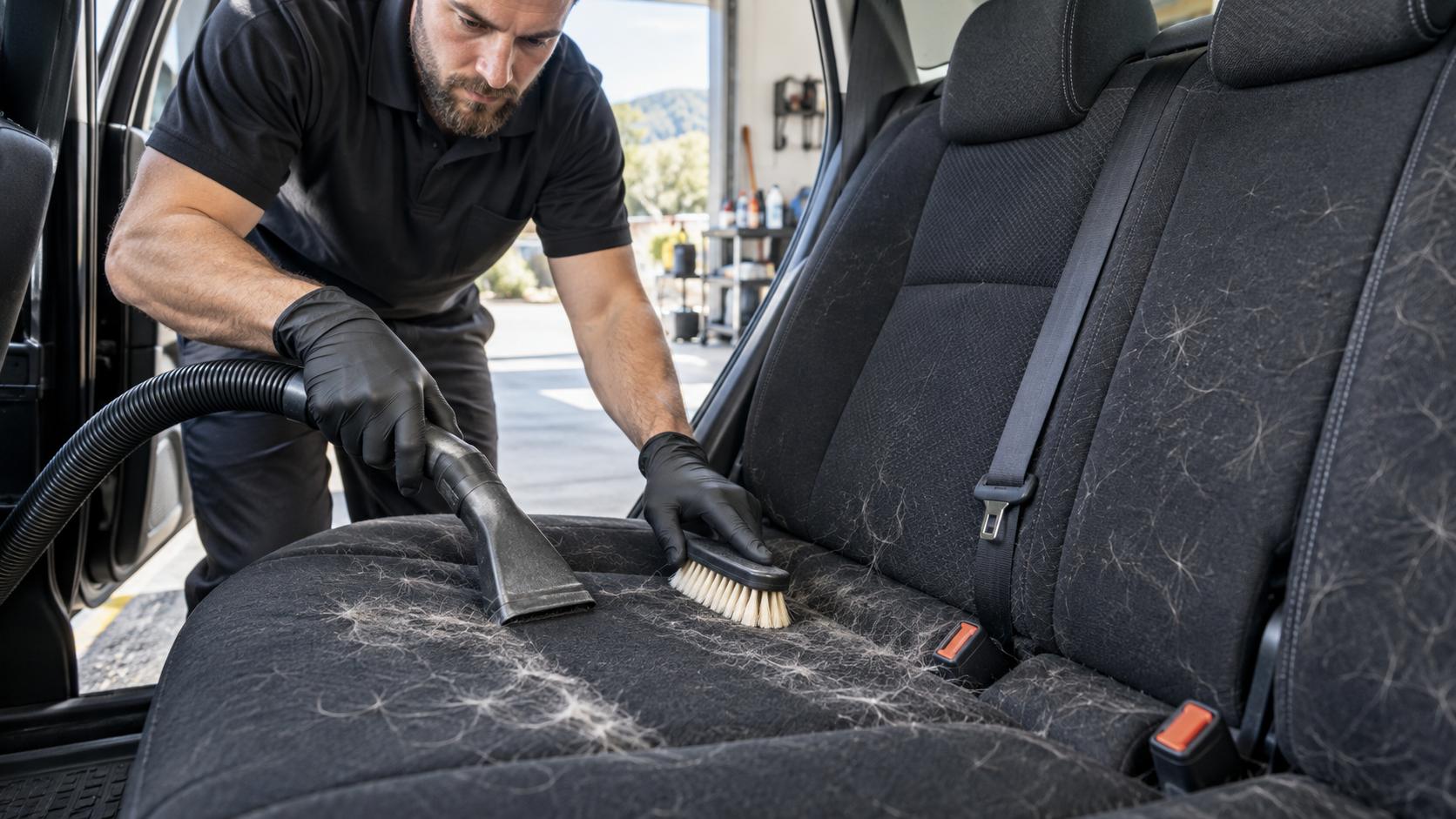
Pet hair can bind tightly to carpet and fabric. Steam may help loosen some residue, but mechanical removal is usually needed first. Pet odours may also require deeper treatment, depending on the source.
Environmental and Wastewater Considerations
Steam cleaning usually uses less water than traditional heavy washing, but detailing can still involve chemicals, dirty water, towels, and waste. Businesses should manage these responsibly.
The NSW EPA’s stormwater guidance states that stormwater drains are for rainwater and that chemicals, oils, paints, and litter should not enter them. For mobile and workshop detailers, this means wash water and cleaning residues should be considered carefully.
For customers, the practical takeaway is simple. Ask how the service manages runoff if exterior washing, engine bay cleaning, or heavy wastewater is involved. For interior-only steam cleaning, runoff may be limited, but dirty towels, chemical use, and extracted waste still need responsible handling.
This is general environmental information, not legal advice. Local council rules can vary by state, suburb, and business type.
Steam cleaning car interior Checklist Before Booking
Use this numbered checklist before booking a steam cleaning car interior service in Australia.
- Identify your main problem. Decide whether you need stain reduction, odour treatment, pet hair removal, sunscreen mark removal, sand removal, or general freshness.
- Send photos of the interior. Include seats, carpets, mats, boot, cup holders, door trims, stains, and any mould concerns.
- Ask what steam cleaning includes. Confirm whether the service covers seats, carpets, mats, vents, console, door trims, boot, and high-touch areas.
- Ask what is excluded. Pet hair, mould, heavy stains, vomit, urine, smoke odour, and headliner stains may require extra work.
- Confirm whether extraction is included. Steam and extraction are different. Deep fabric cleaning often needs extraction to remove dissolved soil.
- Discuss sensitive materials. Mention leather, Alcantara-style trim, suede-like surfaces, aftermarket electronics, loose headliner, or damaged trims.
- Ask about drying. Confirm how the provider prevents damp seats, wet carpets, and lingering moisture.
- Check mobile requirements. Ask whether the detailer needs power, shade, driveway access, water, or permission from a building manager.
- Request realistic expectations. Ask whether stains are likely to disappear, improve, or remain partly visible.
- Inspect the car after service. Check seats, mats, under mats, cup holders, glass, trims, boot, and smell before the job is closed.
How to Choose a Car Interior Steam Cleaning Provider
A good provider should explain process clearly. They should not promise that steam will remove every stain, kill every smell, or make every interior look new.
Look for a detailer who asks questions before quoting. They should want to know the car type, condition, materials, problem areas, and service location. If the car has mould, smoke smell, pet accidents, or heavy stains, they should discuss limitations.
Also, ask what equipment and methods are used. You do not need technical jargon. You simply need confidence that they know when to use steam, when to use extraction, and when to avoid heat.
A trustworthy detailer should be able to explain:
- Which surfaces are safe for steam
- Which surfaces need caution
- Whether fabric shampooing is included
- Whether extraction is included
- How drying is handled
- What happens if stains remain
- Whether mobile service is suitable
- How they protect electronics
- How they manage waste and residues
- How long the service may take
Time is another clue. A proper steam cleaning car interior service takes longer than a quick vacuum. A small clean car may be straightforward. However, a large SUV with sand, stains, pet hair, and child seat marks can take much longer.
Steam Cleaning for Different Vehicle Types
Different vehicles need different approaches. Therefore, the best steam cleaning car interior package should match how the car is used.
Family Cars
Family vehicles often need help with food crumbs, drink spills, sand, sunscreen, child seat marks, and sticky cup holders. Steam is useful around consoles, seat gaps, door trims, and high-touch surfaces. However, deep spills may require extraction.
Rideshare Vehicles
Rideshare cars need frequent cleaning because passengers notice odours, dust, fingerprints, and seat condition. Steam can refresh high-touch areas and help maintain a cleaner cabin. Regular light detailing may work better than waiting for the car to become heavily soiled.
Tradie Utes and Work Vehicles
Work vehicles collect dust, mud, sweat, food wrappers, adhesive residue, and tool grime. Steam can clean textured plastics, door trims, and consoles. However, heavy red dust and mud should be vacuumed and brushed first.
4WDs and Camping Vehicles
4WDs often return with sand, red dust, mud, and food residue. Steam can help detail tight areas, but the job may need extra time. Boot spaces, rear seats, rubber mats, and cargo areas should be included in the quote.
Prestige and European Cars
Prestige cars may have delicate leather, piano black trim, screens, suede-like materials, and sensitive electronics. Steam should be used carefully. In some cases, gentle hand cleaning is safer than aggressive steam use.
Steam Cleaning and Odour Removal
Many Australians search for steam cleaning car interior services because the car smells bad. Steam can help, but odour removal depends on the source.
If the smell comes from surface grime, food residue, or dirty mats, steam cleaning may improve it. If the smell comes from milk soaked into seat foam, mould under carpet, smoke in headliner fabric, or pet urine in underlay, deeper work may be needed.
A proper odour process may include:
- Source inspection
- Rubbish removal
- Vacuuming
- Steam cleaning
- Fabric shampooing
- Extraction
- Cabin filter replacement advice
- Drying
- Odour neutralising treatment
Fragrance alone is not enough. It may hide the smell for a short time, but the source can return.
Steam Cleaning and Stain Removal
Steam can help with stain treatment, but it is not always the main solution. Stains vary by cause, age, and material.
Fresh water-based spills are usually easier to improve. Old coffee, dye, ink, sunscreen, makeup, rust, and heat-set stains can be harder. Also, previous DIY cleaning can make stains worse if the wrong product was used.
A careful detailer treats stains gradually. They test the material, apply the right product, use controlled agitation, steam where useful, extract if needed, and reassess. This measured approach protects the material.
Customers should expect improvement, not guaranteed perfection. That is the honest view.
Steam Cleaning and Leather Interiors
Leather interiors need special care. Many modern car seats are coated leather, which means the protective coating is what you usually clean. Steam can help soften grime on some leather surfaces, but too much heat or pressure can dry the material or affect damaged areas.
If the leather is cracked, peeling, heavily worn, or has colour loss, steam cleaning will not repair it. It may clean the surface, but restoration is a separate service.
A safe leather process may include gentle vacuuming, leather-safe cleaner, soft brush work, careful towel removal, light steam only where suitable, and conditioning or protection if appropriate.
Steam Cleaning and Child Seats
Child seats are sensitive because they are safety equipment. Do not assume a car detailer can steam clean them in the same way as vehicle seats. Child seat straps, buckles, padding, and labels may have manufacturer-specific cleaning instructions.
If you need child seat cleaning, check the manufacturer’s manual first. Also, ask the detailer whether they clean child seats and what process they use. This is a practical safety step, not legal advice.
Cost Expectations in Australia
Prices for steam cleaning car interior services vary across Australia. Vehicle size, condition, service location, stains, pet hair, odours, and whether extraction is included all affect cost.
As a general estimate, a light interior steam refresh may cost less than a full deep interior detail. A larger SUV, 4WD, people mover, or heavily soiled car will usually cost more than a small hatchback.
Be cautious with very cheap offers if your car needs deep work. Steam equipment, skilled labour, drying time, stain treatment, and careful finishing all take time. A low price may be suitable for light maintenance, but not for serious stains or odours.
People Also Ask
Is steam cleaning car interior safe?
Yes, steam cleaning car interior surfaces can be safe when done correctly. However, electronics, headliners, delicate leather, screens, and damaged trims need caution. The safest results come from controlled steam, towel capture, and proper drying.
Does steam cleaning remove car smells?
Steam cleaning can reduce some smells caused by surface grime, food residue, and dirty fabrics. However, deep odours from smoke, milk, mould, or pet accidents may need extraction, source removal, cabin filter checks, or specialist treatment.
Can steam cleaning remove stains from car seats?
Steam can help loosen some stains, especially when used with the right cleaner. However, old stains, dye transfer, ink, sunscreen, and chemical damage may only improve partly. A professional should explain realistic results before starting.
Is steam better than shampooing a car interior?
Steam and shampooing do different jobs. Steam helps loosen grime with heat and controlled moisture, while shampoo extraction removes dissolved soil from fabric. For heavily dirty seats or carpets, both methods may be useful.
How long does a steam cleaned car interior take to dry?
Drying time depends on how much moisture is used, the weather, airflow, fabric thickness, and whether extraction was performed. A careful low-moisture steam clean may dry faster than a soaked shampoo job, but carpets and seats should still be checked.
Expert Q&A
1. Should I steam clean my car interior before selling it?
Yes, it can be a smart pre-sale step if the cabin has dirt, stains, smells, or sticky touchpoints. A clean interior can improve buyer confidence. However, steam cleaning should not be used to hide damage or misrepresent the vehicle’s condition.
2. Can steam cleaning damage car electronics?
It can if used carelessly. Steam should not be forced into switches, screens, ports, sensors, speakers, or seat controls. A professional uses short controlled bursts, towels, brushes, and safe distance to reduce risk.
3. Is steam cleaning good for cars with pets?
Yes, steam can help refresh pet-used interiors, especially around trims and fabrics. However, pet hair usually needs mechanical removal first. Pet odour or accidents may also need deeper treatment and extraction.
4. Can I steam clean my own car interior?
You can, but you need caution. Avoid soaking surfaces, blasting electronics, overheating leather, or steaming the headliner heavily. If the car has mould, strong odour, delicate materials, or expensive electronics, professional help is safer.
5. How often should Australians steam clean a car interior?
For most daily drivers, one or two deeper interior cleans per year may be enough. Families, rideshare drivers, pet owners, beach users, and work vehicles may need more frequent cleaning. This is an estimate, not a fixed rule.
Conclusion
Steam cleaning car interior services can make a major difference to how a vehicle looks, feels, and smells. When done well, steam helps loosen grime from seats, carpets, mats, vents, trims, cup holders, and high-touch areas. However, it works best as part of a careful detailing process, not as a one-step miracle.
For Australian drivers, the right approach depends on the vehicle’s use. A family SUV, rideshare car, tradie ute, 4WD, coastal hatchback, and prestige sedan all need different levels of care. Therefore, ask clear questions, share photos, confirm inclusions, and understand the limits before booking.
Most importantly, choose a detailer who uses steam carefully, protects sensitive materials, dries the cabin properly, and explains realistic outcomes. For a cleaner, fresher cabin suited to Australian conditions, explore professional car interior detailing services for Australian drivers.