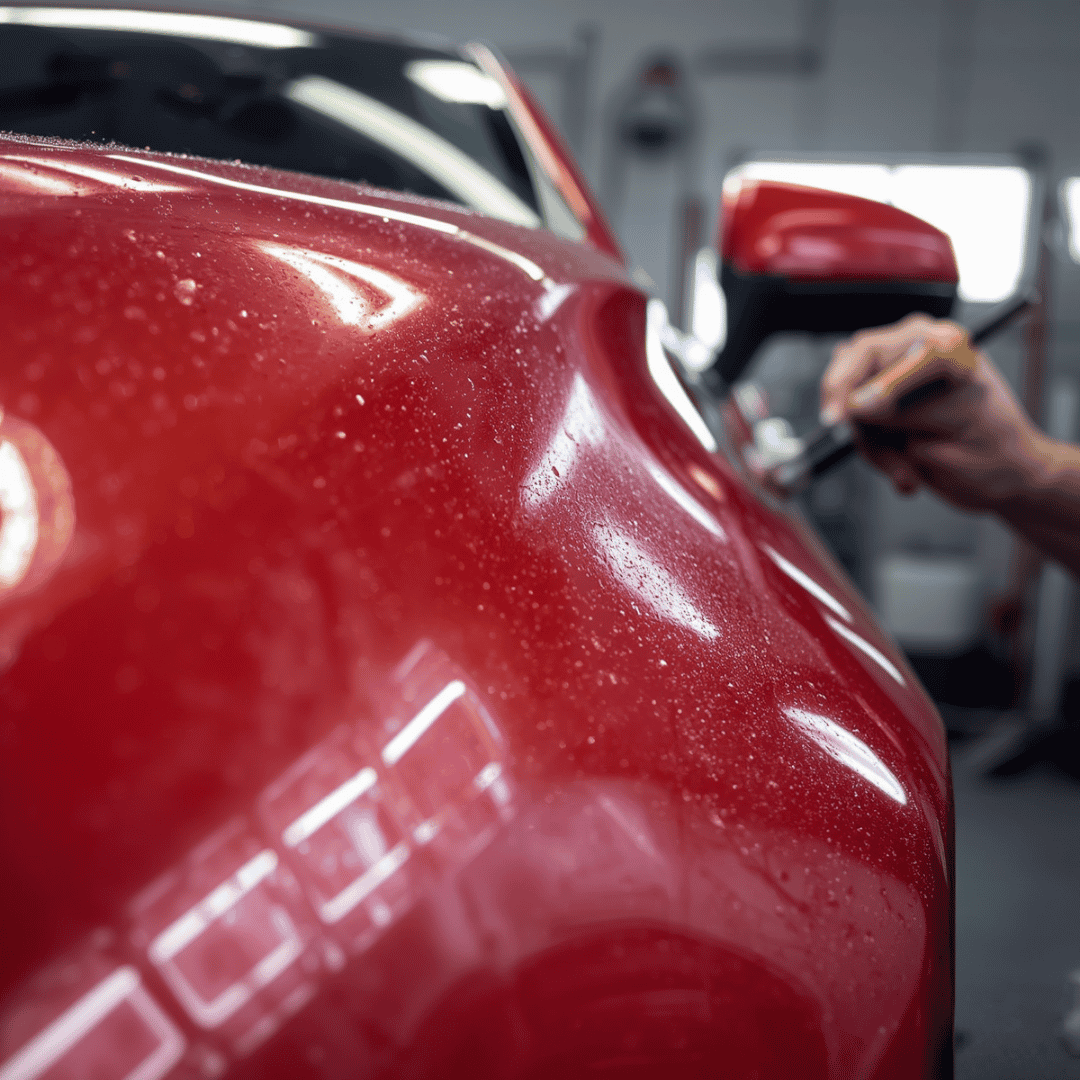
If you are searching for Top-rated paint correction Armidale, you are probably looking for a reliable way to remove swirl marks, dull paint, light scratches, water spots, oxidation, or machine holograms from your vehicle. From my experience, many Australian drivers only notice paint damage when sunlight hits the panels at the right angle. However, by that stage, the clear coat may already need professional correction, not just a quick wash or wax.
Armidale conditions can be tough on vehicle paint. The mix of strong Australian UV, dusty regional roads, changing weather, tree sap, bird droppings, road grime, and everyday washing habits can slowly reduce gloss. Therefore, paint correction is not only about making a car look shiny. It is about safely refining the clear coat so the paint reflects light cleanly again.
For vehicle owners in Armidale, NSW, the right detailing process matters. A good result depends on inspection, safe washing, decontamination, test spots, machine polishing, paint depth awareness, and aftercare. In this guide, you will learn what paint correction does, when it is worth it, what to ask before booking, and how to maintain the finish after the job.
Table of Contents
- What Is Top-rated Paint Correction Armidale?
- Why Paint Correction Matters in Armidale
- Paint Correction vs Polishing vs Waxing
- Common Paint Defects Australian Drivers Notice
- The Professional Paint Correction Process
- How to Choose a Top-rated Paint Correction Armidale Service
- Comparison Table: Local Mobile Detailer vs General Car Wash
- Paint Correction Levels Explained
- What Paint Correction Can and Cannot Fix
- Why UV, Dust, and Washing Habits Affect Paint
- Numbered Checklist Before Booking
- Aftercare Tips for Long-lasting Gloss
- People Also Ask
- Expert Q&A
- Conclusion
Featured Definition: Top-rated Paint Correction Armidale
Top-rated paint correction Armidale refers to a professional detailing service that removes or reduces swirl marks, oxidation, light scratches, water spots, and haze from a vehicle’s clear coat using safe machine polishing, proper preparation, and protective aftercare suited to Australian driving conditions.
What Is Top-rated Paint Correction Armidale?
Top-rated paint correction Armidale is a specialist car detailing process focused on improving the clarity, depth, and gloss of vehicle paint. Unlike a basic wash, paint correction works on the clear coat layer. This is the transparent protective layer over the coloured paint.
Over time, small defects build up in that clear coat. These defects scatter light. As a result, the car looks dull, grey, cloudy, or covered in spider-web marks under the sun.
A professional detailer uses abrasive compounds, polishes, pads, and machine polishers to level tiny imperfections in the clear coat. However, the goal is not to remove more material than needed. The best approach is controlled, measured, and paint-safe.
From my experience, the difference between an average polish and quality paint correction is preparation. If the car is not washed, chemically decontaminated, clay treated where needed, and tested properly, the finish can look better for a short time but still contain hidden defects.
Why Paint Correction Matters in Armidale
Armidale drivers deal with a mix of regional and Australian conditions. Vehicles may travel on sealed roads, rural roads, gravel driveways, and dusty areas. In addition, cars parked outside can face strong sunlight, bird droppings, tree fallout, sap, water spotting, and airborne contamination.
The Bureau of Meteorology explains that Australia has one of the highest levels of UV exposure, and UV radiation cannot be seen or felt. While BOM guidance is focused on human sun protection, the same climate reality helps explain why Australian vehicle paint needs thoughtful care and protection. Bureau of Meteorology UV Knowledge Centre
Therefore, Top-rated paint correction Armidale is useful for cars that look tired even after washing. It can also help before selling a vehicle, before applying ceramic protection, or after buying a used car with dealership wash marks.
However, paint correction should be done carefully. Every vehicle has a limited amount of clear coat. So, aggressive correction without inspection can create risk. A professional result balances improvement with long-term paint health.
Paint Correction vs Polishing vs Waxing
Many people use the words “paint correction,” “polishing,” and “waxing” as if they mean the same thing. However, they are different.
Paint correction removes or reduces clear coat defects through controlled abrasion. Polishing may be part of paint correction, but not every polish is a full correction. Waxing adds temporary shine and protection, but it does not properly remove defects.
Here is a simple comparison.
| Service | Main Purpose | Removes Swirls? | Protection Level | Best For |
|---|---|---|---|---|
| Basic wash | Removes loose dirt | No | Very low | Regular maintenance |
| Wax | Adds shine and short-term protection | No, may hide lightly | Low to moderate | Budget gloss boost |
| Machine polish | Improves gloss and light haze | Sometimes | Low unless sealed | Mild paint improvement |
| Paint correction | Removes/reduces paint defects | Yes, depending on depth | Needs sealant or coating after | Swirls, dullness, oxidation |
| Ceramic coating after correction | Protects corrected finish | No correction by itself | Higher | Long-term gloss support |
The key point is simple. If the paint already has swirl marks, wax will not solve the root problem. It may hide defects temporarily. However, once the wax wears down, the same marks usually return.
Common Paint Defects Australian Drivers Notice
A search for Top-rated paint correction Armidale often starts after a driver sees one of these problems.
Swirl Marks
Swirl marks are fine circular scratches visible under sunlight or LED inspection lights. They often come from poor washing, dry wiping, old sponges, dirty towels, or automatic brushes.
Although they look circular, many are actually random scratches that reflect light in a circular pattern. Paint correction can usually improve them significantly, depending on depth.
Water Spots
Water spots form when minerals dry on the paint. If left for too long, they can etch into the clear coat. In that case, washing alone will not remove them.
Oxidation
Oxidation makes paint look chalky, faded, or dull. It is more common on older vehicles, neglected paint, or cars exposed to strong sunlight for long periods.
Bird Dropping Etching
Bird droppings can be acidic. If they sit on hot paint, they may leave marks that require polishing. In severe cases, the mark may remain because the clear coat has been permanently etched.
Holograms
Holograms are machine polishing trails. They often appear after poor rotary polishing or rushed dealership preparation. They can be frustrating because the car may look good in shade but terrible in direct sunlight.
Light Scratches
Paint correction can reduce many light scratches. However, if a scratch catches your fingernail, it may be too deep for safe full removal. In that case, improvement is more realistic than complete removal.
The Professional Paint Correction Process
A good Top-rated paint correction Armidale service should follow a structured process. The exact steps vary by vehicle, paint type, and correction level, but the workflow below is common.
1. Paint Inspection
The detailer should inspect the paint under proper lighting. This reveals swirls, haze, water spots, buffer trails, and deeper scratches.
When available, a paint depth gauge can help measure paint thickness. This is especially useful on older vehicles, repainted panels, or cars with unknown history.
2. Safe Pre-wash
The first wash should remove loose dirt without dragging it across the paint. A pre-wash foam or rinse helps soften grime. This reduces the chance of adding new scratches before polishing starts.
3. Contact Wash
A safe contact wash uses quality wash mitts, clean water, and proper technique. For heavily contaminated vehicles, extra care is needed around lower panels, wheel arches, badges, and trims.
4. Chemical Decontamination
Iron fallout, tar, road film, and mineral deposits may need chemical removal. This is important because polishing over contamination can reduce results and increase marring.
5. Clay Treatment
Clay can remove bonded contaminants that washing cannot. However, clay can also mark soft paint if used carelessly. Therefore, it should be used only when needed and followed by polishing.
6. Test Spot
A test spot is one of the most important steps. The detailer tests a pad and polish combination on a small section first. Then, they check whether the method removes defects safely.
This avoids unnecessary aggressive polishing. It also helps create a process suited to that exact vehicle.
7. Cutting Stage
If defects are moderate or heavy, a cutting stage may be needed. This uses a compound and suitable pad to remove deeper clear coat defects.
8. Refining Stage
After cutting, the paint may need refining. This step improves clarity, reduces haze, and increases gloss.
9. Panel Wipe
A panel wipe removes polishing oils so the true finish can be inspected. It also helps sealants or coatings bond properly.
10. Protection
Paint correction should be protected. Options may include wax, sealant, or ceramic coating. Without protection, the corrected finish can degrade faster.
How to Choose a Top-rated Paint Correction Armidale Service
Choosing a Top-rated paint correction Armidale provider is not only about price. It is about process, honesty, tools, products, and aftercare.
Look for a detailer who explains what is possible and what is not possible. Also, ask whether the service includes decontamination, test spots, paint inspection, trim protection, and final protection.
You should also check how they talk about results. Be careful with anyone promising 100% scratch removal on every vehicle. That is not realistic. Some scratches are too deep to remove safely.
A trustworthy detailer will usually explain correction percentages. For example, a one-stage correction may remove or reduce many light defects, while deeper marks may remain. A multi-stage correction can go further, but it takes more time and removes more clear coat.
For service information and Australian car detailing support, you can visit professional paint correction and car detailing services in Australia.
Comparison Table: Local Mobile Detailer vs General Car Wash
For Armidale vehicle owners, the choice is often between a proper detailing service and a quick car wash. Both have a place, but they are not the same.
| Feature | Local Paint Correction Detailer | General Car Wash |
| Main goal | Restore gloss and reduce defects | Clean visible dirt quickly |
| Paint inspection | Usually included | Usually limited |
| Machine polishing | Yes, if booked | Usually no |
| Swirl mark removal | Yes, depending on service level | No |
| Decontamination | Often included or optional | Rarely thorough |
| Time required | Several hours to more than a day | Minutes to under an hour |
| Result depth | Higher clarity and gloss | Short-term cleanliness |
| Risk level | Lower when done by trained detailer | Can add swirls if methods are poor |
| Best for | Dull, scratched, oxidised paint | Regular basic cleaning |
Therefore, a car wash is not a replacement for Top-rated paint correction Armidale. A wash cleans the surface. Paint correction improves the finish.
Paint Correction Levels Explained
Not every car needs the same level of correction. In fact, choosing the right level is part of getting value.
Enhancement Polish
An enhancement polish is a light machine polish. It improves shine and reduces light haze. However, it will not remove heavy defects.
This option suits newer vehicles, well-maintained cars, or owners who want a cleaner finish without chasing every mark.
One-stage Paint Correction
A one-stage correction uses one polishing process to balance defect removal and finish quality. It is popular because it offers strong improvement without the time and cost of heavy correction.
For many daily drivers in Armidale, this is often the most practical choice.
Two-stage Paint Correction
A two-stage correction usually includes a cutting stage and a refining stage. It is better for moderate swirls, oxidation, and deeper visible defects.
However, it takes longer. It also requires more skill because the paint must be refined properly after cutting.
Multi-stage Paint Correction
Multi-stage correction is for heavily marked, high-value, or enthusiast vehicles. It may involve several pad and polish combinations.
Although the results can be impressive, this service is not always necessary for a daily driver. The best detailer will recommend it only when it makes sense.
What Paint Correction Can and Cannot Fix
Paint correction can deliver a major visual improvement. However, it has limits.
It can usually improve:
- Swirl marks
- Light scratches
- Paint haze
- Mild oxidation
- Water spotting
- Machine holograms
- Dull clear coat
- Light wash marring
It may not fully fix:
- Scratches through the clear coat
- Stone chips
- Peeling clear coat
- Failed paint
- Deep bird dropping etching
- Cracked paint
- Rust
- Poor previous respray work
This is why inspection matters. A responsible detailer will not chase deep defects if doing so would remove too much clear coat.
Why UV, Dust, and Washing Habits Affect Paint
Australian vehicle paint faces several common stress factors.
First, UV exposure can contribute to fading and oxidation over time. Again, Australia’s high UV environment makes protection and maintenance important. The Bureau of Meteorology encourages Australians to pay attention to UV forecasts because UV exposure can be high even when it does not feel hot. Bureau of Meteorology UV Index Forecast
Second, dust and grit can scratch paint during washing. This is common on vehicles used on rural roads or parked outside.
Third, poor washing habits create many defects. For example, using one bucket, a dirty sponge, or an old towel can grind dirt into the clear coat.
Finally, environmental contamination can bond to paint. Tree sap, road tar, iron fallout, and bird droppings can become harder to remove if ignored.
Therefore, Top-rated paint correction Armidale should always include aftercare education. A corrected finish will not stay perfect if it is washed incorrectly the next week.
Australian Consumer Expectations and Service Transparency
When booking any detailing service in Australia, clear communication matters. The Australian Competition and Consumer Commission explains that consumers have rights called consumer guarantees when buying products and services. For detailing customers, this makes honest descriptions, clear inclusions, and realistic expectations important. ACCC consumer rights and guarantees
This is not legal advice. It is practical administrative guidance for choosing a service. Before booking, ask what is included, what result is realistic, how long it will take, and what protection is applied after correction.
Good detailers do not need exaggerated claims. They should be able to explain their process clearly.
Environmental Care During Detailing
Paint correction often involves washing, rinsing, chemicals, and residue. Therefore, responsible water and chemical handling matters. The NSW Environment Protection Authority publishes water-related policies and guidelines to help businesses and the community protect water resources. For car care services, this supports the broader principle that wastewater and chemicals should be managed responsibly. NSW EPA water guidelines and programs
For mobile detailing, this may include careful product choice, controlled use of water, and avoiding unnecessary runoff where practical. Customers can ask how the detailer manages wash water, chemicals, and polishing residue.
Again, this is not legal advice. It is a practical reminder that professional detailing should consider the vehicle, the customer, and the surrounding environment.
Numbered Checklist Before Booking Top-rated Paint Correction Armidale
Use this checklist before you book.
- Check the paint under sunlight. Look for swirls, dullness, scratches, water spots, and holograms.
- Decide your goal. Do you want a gloss boost, sale preparation, ceramic coating preparation, or deeper correction?
- Ask for the correction level. Confirm whether it is an enhancement, one-stage, two-stage, or multi-stage service.
- Ask about preparation. A quality service should include safe washing and decontamination.
- Ask about a test spot. This shows the best pad and polish combination for your paint.
- Ask what cannot be fixed. Deep scratches, chips, and peeling clear coat may need repair, not polishing.
- Confirm protection. Ask whether wax, sealant, or ceramic coating is included.
- Ask about aftercare. The detailer should explain how to wash and maintain the finish.
- Check time requirements. Proper correction takes time. Very fast jobs may involve shortcuts.
- Review communication. Choose a provider who explains clearly and avoids unrealistic promises.
How Long Does Paint Correction Take?
The time required depends on vehicle size, condition, paint hardness, and correction level.
As an estimate, a light enhancement may take several hours. A one-stage correction can take most of a day. A two-stage or multi-stage correction may take longer, especially on large SUVs, utes, or heavily marked paint.
These are only general estimates. A proper quote should consider the actual vehicle condition.
How Much Does Paint Correction Cost in Armidale?
Prices can vary because paint correction is labour-intensive. Factors include vehicle size, paint condition, defect severity, service level, protection type, and whether the service is mobile or workshop-based.
A small hatchback with light swirls may cost less than a large 4WD with heavy oxidation and water spotting. Also, ceramic coating preparation usually requires more careful finishing than a simple gloss enhancement.
Instead of choosing the cheapest quote, compare what is included. A low price may exclude decontamination, proper correction, or protection.
Is Paint Correction Worth It Before Selling a Car?
Yes, paint correction can be worth it before selling if the paint looks dull or heavily swirled. A cleaner, glossier car can photograph better and create a stronger first impression.
However, it should be matched to the vehicle’s value. For a daily driver, a one-stage correction may be enough. For a premium vehicle, deeper correction may be justified.
The goal is not to hide problems. It is to present the vehicle honestly and improve its appearance where safe and practical.
Is Ceramic Coating Needed After Paint Correction?
Ceramic coating is not mandatory. However, it can help protect the corrected finish and make maintenance easier.
A coating does not make paint scratch-proof. It also does not stop stone chips. However, it can improve water behaviour, gloss retention, and cleaning ease when maintained properly.
For many Armidale drivers, a sealant may be enough. For owners who park outside or want longer-term protection, ceramic coating may be a good upgrade.
Maintenance After Top-rated Paint Correction Armidale
After correction, the way you wash the car matters. Poor washing can reintroduce swirl marks quickly.
Use a pH-balanced car shampoo, clean wash mitts, and soft drying towels. Avoid dishwashing liquid, dirty sponges, and dry wiping. Also, rinse the car first to remove loose grit.
If possible, park in shade and remove bird droppings quickly. Use a proper quick detailer or rinseless wash product rather than rubbing dry paint.
Protection should also be maintained. Wax may need regular reapplication. Sealants last longer. Ceramic coatings need correct washing and occasional maintenance products.
Signs Your Car Needs Paint Correction
Your car may need paint correction if:
- It looks dull even after washing
- You see circular marks in sunlight
- The paint feels rough after washing
- Water spots remain after cleaning
- The bonnet or roof looks faded
- The car has holograms from previous polishing
- You are preparing for ceramic coating
- You want better photos before selling
However, not every mark needs heavy correction. Sometimes a light enhancement is enough.
Why Experience Matters
From my experience, paint behaviour varies a lot. Some paints are soft and mark easily. Others are hard and need more work to correct. Dark colours often show defects more clearly, while white and silver can hide defects but still lose gloss.
That is why a test spot is important. It prevents guesswork.
A skilled detailer also understands edges, body lines, plastic trims, badges, repainted panels, and heat control. These details matter because machine polishing can cause damage if rushed.
Top-rated paint correction Armidale should feel careful, not aggressive.
People Also Ask About Top-rated Paint Correction Armidale
1. What does paint correction do to my car?
Paint correction removes or reduces fine defects in the clear coat, such as swirl marks, light scratches, haze, and oxidation. As a result, the paint reflects light more evenly and looks glossier.
2. Is paint correction safe for all vehicles?
Paint correction is generally safe when performed correctly. However, the detailer should inspect the paint first, especially on older cars, repainted panels, or vehicles with thin clear coat.
3. How long does paint correction last in Armidale?
The result can last months or longer depending on washing habits, parking conditions, road exposure, and protection. However, poor washing can bring swirls back quickly.
4. Can paint correction remove deep scratches?
Paint correction can improve many scratches, but deep scratches may not fully disappear. If the scratch catches your fingernail, safe full removal may not be possible.
5. Should I get ceramic coating after paint correction?
Ceramic coating is a good option if you want longer-lasting protection and easier washing. However, a sealant or wax may be enough for some vehicles and budgets.
Expert Q&A: Top-rated Paint Correction Armidale
1. What is the best correction level for a daily driver in Armidale?
For many daily drivers, a one-stage correction offers the best balance. It improves gloss and reduces visible defects without the time and cost of heavy multi-stage correction. However, heavily marked vehicles may need a two-stage process.
2. Why does my car still look scratched after washing?
Washing removes dirt, but it does not level clear coat defects. Swirls and scratches remain because they are physical marks in the clear coat. Therefore, machine polishing is usually needed to correct them.
3. Can paint correction damage my car?
Yes, it can if done incorrectly. Aggressive polishing, poor technique, excess heat, or repeated heavy correction can remove too much clear coat. This is why experience, inspection, and safe process control matter.
4. Is mobile paint correction suitable for Armidale?
Mobile paint correction can be suitable if the detailer has proper lighting, power access, shade, clean water control, and safe working conditions. However, weather, dust, wind, and direct sun can affect the process.
5. What should I do after paint correction to avoid new swirls?
Use a safe wash method. Rinse first, use clean mitts, avoid automatic brush washes, dry with soft towels, and never wipe dusty paint. Also, maintain the wax, sealant, or ceramic coating recommended by your detailer.
Conclusion
Top-rated paint correction Armidale is about more than shine. It is a careful process that restores clarity by reducing swirl marks, haze, oxidation, water spots, and light scratches in the clear coat. For Australian drivers, especially those dealing with strong UV, dust, changing weather, and regional road conditions, paint correction can make a major difference to how a vehicle looks and feels.
However, the best result comes from a balanced approach. Start with inspection. Choose the right correction level. Avoid unrealistic promises. Then protect the finish and maintain it with safe washing habits.
If your car looks dull, scratched, or tired even after washing, paint correction may be the right next step. A professional service can help restore gloss, improve depth, and prepare the paint for long-term protection.