Achieving a truly glass-smooth finish on car paintwork requires removing bonded surface contaminants that standard washing cannot dislodge. When car owners and detailing pros prepare vehicle panels for machine buffing or ceramic coating, choosing between automotive clay bar vs clay mitt options determines workflow efficiency, drop safety. And surface finish quality. In regional Australian spaces like Armidale and throughout northern New South Wales, vehicles collect industrial fallout, airborne tree sap. And unsealed road bitumen that embed tenaciously into clear coats. Understanding how old natural clay bars compare against modern polymer clay mitts enables vehicle owners to select the optimal mechanical cleaning tool for their garage.
automotive clay bar vs clay mitt differences centre on speed, reusability. And drop recovery. old poly-clay bars offer maximum contortion into tight badges and capture finer contaminants but must be discarded if dropped. Modern synthetic polymer clay mitts clean panels 3x faster and can be rinsed clean if dropped on the ground.
- The Science of Mechanical Paint cleaning: Shearing Action.
- old Poly-Clay Bars: Composition, Kneading. And Contortion.
- Modern Synthetic Rubber Polymer Clay Mitts: Surface Area and Speed.
- The Fatal Drop Scenario: Rinsing With Water vs Throwing Away.
- Marring and Micro-Scratch Risks: Soft vs Hard Paint factors.
- Comparison Table: car Clay Bar vs Synthetic Clay Mitt.
- The 8-Step Mechanical cleaning Protocol.
- Lubrication Chemistry: Dedicated Clay Lubes vs Soapy Water.
- Safe Work Australia Guidelines for Workshop Ergonomics and Slips.
- Armidale outdoor Factors: Tree Resin and Country Road Tar.
- People Also Ask About automotive clay bar vs clay mitt.
- Frequently Asked Questions on Claying Techniques.
- Conclusion: Choosing the Right Tool for Your Paint.
The Science of Mechanical Paint cleaning: Shearing Action.
Even after a thorough contact wash, car paintwork often feels gritty and rough under your fingertips. This roughness is caused by bonded contaminants that have welded themselves to the clear coat: tree sap droplets, industrial fallout, paint overspray. And airborne tar splatters.
Washing with sponges cannot dislodge these bonded particles because water and car soap flow over them. Mechanical cleaning tools use physical shear to solve this problem.
As the clay medium glides across lubricated paintwork, the tacky compound catches against tiny contaminants protruding above the clear coat surface. The tool shears the particle off at the surface line, restoring a completely flat, glass-smooth texture.
Smoothing the surface is essential prior to machine buffing or applying ceramic coatings. If you attempt to polish a dirty car, the spinning buffer pad catches bonded grit and drags it across the paint, causing severe micro-marring.
For flawless results, booking a pro expert mechanical paint cleaning service ensures all bonded dirt is removed safely without scratching.
old Poly-Clay Bars: Composition, Kneading. And Contortion.
Invented in Japan in the late 1980s, old car detailing clay bars are manufactured from engineered synthetic poly-resins blended with ultra-fine abrasives (such as calcium carbonate or silica).
A detailing clay bar is malleable, resembling dense modelling clay. The primary advantage of a clay bar is its ability to be folded, kneaded. And molded into custom shapes.
A detailer can flatten a piece of clay into a small disc to clean around intricate chrome emblems, door mirror seams, tight spoiler edges. And curved wheel spokes.
As the clay bar glides across lubricated paint, it captures dirt particles inside its resin matrix. When the surface of the clay becomes visibly soiled, the detailer simply folds and kneads the clay in half, exposing a fresh, sterile surface.
However, old clay bars possess limited surface area (typically seventy to one hundred grams), requiring thirty to forty-five minutes to clean an entire passenger vehicle.
Modern Synthetic Rubber Polymer Clay Mitts: Surface Area and Speed.
In recent years, material engineering has produced modern clay alternatives in the form of synthetic clay mitts, clay towels. And clay pads. These tools feature a microfibre wash mitt backing coated on one side with an advanced synthetic rubber polymer layer.
The rubber polymer layer contains specialized cross-hatched grooves that mimic the shearing action of old clay. The defining advantage of a clay mitt is surface area and working speed.
A clay mitt measures roughly twenty by fifteen centimetres. covering four to five times more surface area in a single pass than a old clay bar patty. A detailer can clean an entire bonnet or SUV roof in under two minutes.
An entire vehicle can be cleaned mechanically in fifteen to twenty minutes, cutting detailing labour times in half.
The Fatal Drop Scenario: Rinsing With Water vs Throwing Away.
The single most dramatic difference between an car clay bar and a clay mitt occurs when an accident happens: dropping the tool on the floor.
If you drop a old poly-clay bar onto a concrete workshop floor or driveway, it is instantly ruined. The sticky, absorbent resin grabs gravel, coarse sand. And metal filings from the floor like a magnet.
Because the clay bar absorbs grit into its core, it is physically impossible to rinse the gravel out. Rubbing a dropped clay bar across car paint will instantly carve catastrophic scratches into your clear coat. You must throw the dropped clay bar into the rubbish bin at once.
With a synthetic polymer clay mitt, a drop is not fatal. The synthetic rubber layer is non-porous and non-absorbent. If a clay mitt falls to the floor, you simply rinse it thoroughly under a high-pressure water hose, wipe the rubber surface clean with your fingers. And resume detailing at once.
Marring and Micro-Scratch Risks: Soft vs Hard Paint factors.
While clay mitts offer speed and drop safety, they carry a slightly higher risk of surface marring on delicate, soft clear coats. Synthetic rubber polymers are slightly more aggressive than fine-grade old clay bars.
On soft Japanese clear coats (such as Subaru, Honda. Or Mazda non-metallic blacks), a clay mitt can leave faint surface hazing or micro-marring that requires machine buffing to refine.
old fine-grade poly-clay bars are much gentler, making them the preferred choice for enthusiasts who want to clean paint without performing subsequent machine correction.
Detailers choose their tool based on paint hardness: clay mitts for hard German clear coats or vehicles scheduled for multi-stage cutting. And fine clay bars for soft finishes.
Comparison Table: car Clay Bar vs Synthetic Clay Mitt.
The table below summarizes the operational differences across key power criteria:
| power Feature. | old Poly-Clay Bar. | Synthetic Polymer Clay Mitt. |
|---|---|---|
| cleaning Speed. | Moderate. 30 to 45 minutes per vehicle. | Extremely Fast. 10 to 15 minutes per vehicle. |
| Recovery if Dropped. | Zero. must be discarded at once. | 100% Reusable. rinse clean with water hose. |
| Contortion into Tight Spaces. | great. molds into badges & crevices. | Moderate. bulky mitt struggles on tiny badges. |
| Expected Lifespan. | 3 to 5 vehicles (loads up with dirt). | 20 to 50 vehicles with proper rinsing. |
| Micro-Marring Risk. | Very Low (Fine grade is exceptionally gentle). | Low to Moderate on soft Japanese clear coats. |
The 8-Step Mechanical cleaning Protocol.
pro workshops execute an eight-step sequence to clean panels without inducing scratches:
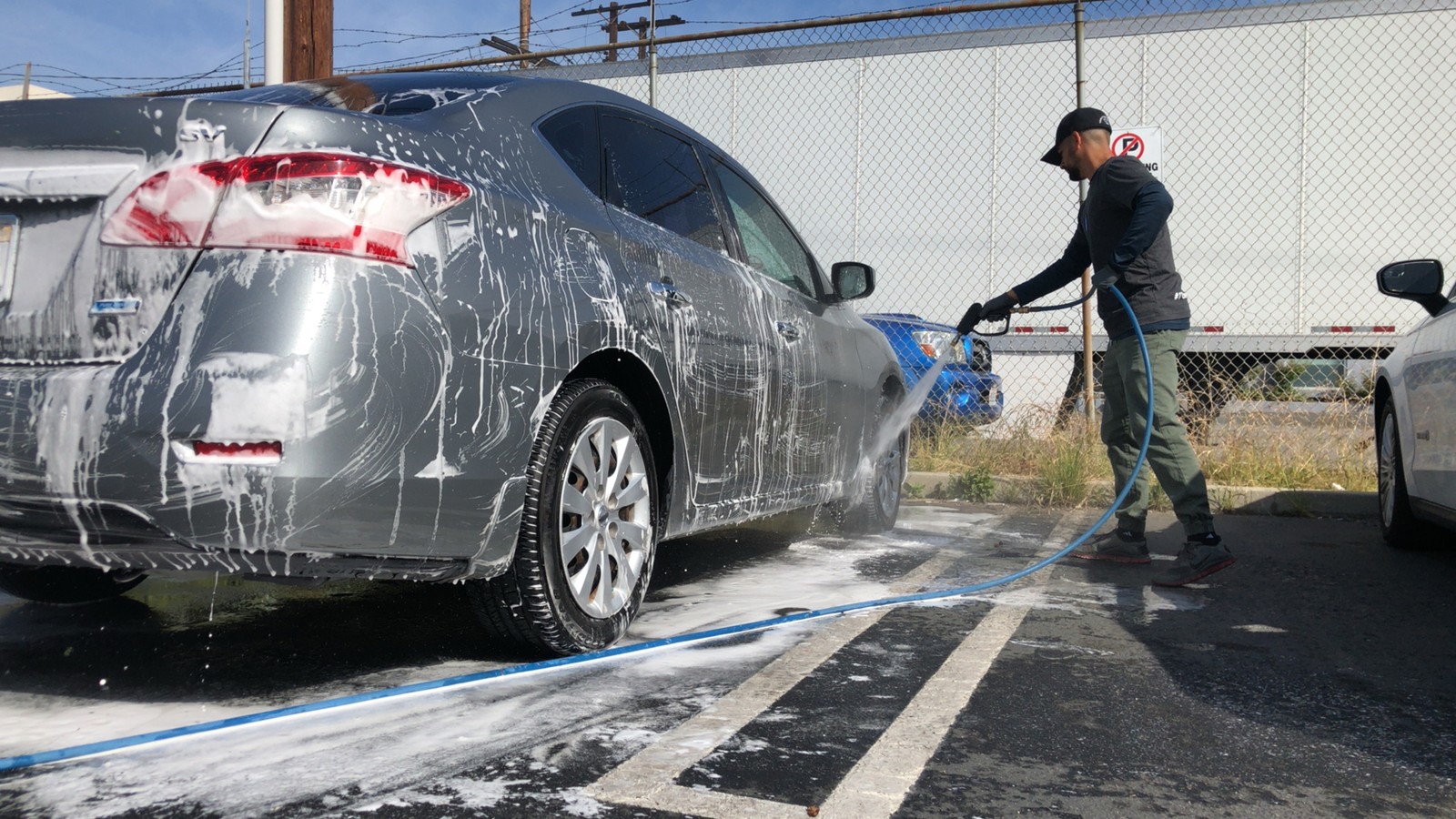
- Full Contact Wash and Rinse: Wash vehicle thoroughly to remove all loose surface grit, mud. And traffic film.
- Chemical cleaning First: Spray chemical iron and tar removers to dissolve metal and bitumen chemically before touching the paint with clay.
- Surface Lubrication Flooding: Generously mist a panel with dedicated clay lubricant or high-slickness car shampoo solution.
- Zero-Pressure Gliding Passes: Glide the clay bar or clay mitt across the lubricated panel in straight, overlapping lines using zero downward pressure.
- Sensory Audit: Listen and feel: the tool will initially feel rough and make an audible scratching sound as it hits bonded grit, then glide silently as the surface becomes glass-smooth.
- Tool Cleanse or Knead: If using a clay bar, fold and knead the clay to a clean face. if using a clay mitt, rinse the rubber face in a fresh water bucket.
- Microfibre Residue Wipe: Wipe away lubricating fluid with a clean, plush microfibre towel.
- The Plastic Baggy Test: Place your hand inside a thin plastic sandwich bag and glide your fingertips across the panel to verify 100% glass-smooth perfection.
Lubrication Chemistry: Dedicated Clay Lubes vs Soapy Water.
Lubrication is the absolute lifeblood of mechanical cleaning. Never rub a clay bar or clay mitt across dry paintwork. without lubrication, the clay will stick and drag, causing severe marring.
pro detailers use dedicated clay lubricants formulated with high slickness, water-soluble polymers. Dedicated lubes provide maximum glide and wipe clean with zero residue.
While some car owners use soapy water from their wash bucket, caution is advised. Many car wash soaps contain degreasers that break down synthetic clay bars, causing them to disintegrate into sticky, gooey messes.
If using soapy water with a clay mitt, ensure the shampoo is strictly pH-neutral and heavily lubricated.
Safe Work Australia Guidelines for Workshop Ergonomics and Slips.
Mechanical paint cleaning requires repetitive reaching, bending. And kneeling around vehicles. Detailers follow ergonomic standards enforced by Safe Work Australia.
pros use rolling mechanics creepers and adjustable detailers' stools when claying lower rocker panels and bumper fascias to prevent lumbar and knee strain.
Clay lubricants contain slick surfactants that create severe slip hazards when sprayed onto concrete floors. Detailing bays use non-slip rubber drainage grating to prevent slips, trips. And falls.
Operators wear nitrile gloves to prevent prolonged skin exposure to surfactants and lubricants, preventing contact dermatitis.
Armidale outdoor Factors: Tree Resin and Country Road Tar.
Operating a vehicle in Armidale and throughout northern New South Wales exposes paint to heavy organic tree resins and bitumen splatters.
Native eucalyptus and pine trees release sticky terpenes that bake onto vehicle roofs and bonnets under hot tableland sun. In summer, highway resurfacing projects kick up black bitumen tar that bonds tenaciously to lower sills.
A synthetic clay mitt paired with a chemical tar solvent makes short work of heavy regional dirt, shearing off baked eucalyptus sap and road tar in minutes.
pro detailers also consult Transport for NSW vehicle check rules to ensure all workshop procedures meet regional safety codes.
People Also Ask About automotive clay bar vs clay mitt.
Is a clay mitt as good as a clay bar?.
Yes, for general paint cleaning, a synthetic clay mitt performs just as well as a clay bar while working three times faster and surviving accidental drops. However, fine clay bars remain superior for tight badges and ultra-soft dark paints.
Does claying your car remove scratches?.
No, clay bars and clay mitts do not remove scratches or swirl marks. Clay only removes bonded contaminants sitting on top of the clear coat. Scratches are incisions into the clear coat that require machine buffing to remove.
Can you reuse a clay mitt?.
Yes, a synthetic polymer clay mitt can be reused on twenty to fifty vehicles. Simply rinse the rubber surface thoroughly under fresh running water between uses to wash away dislodged grit.
Does claying strip wax or ceramic coatings?.
Claying will strip old carnauba waxes and light spray sealants. However, a properly applied, fully cured 9H ceramic coating is chemically bonded and will not be stripped by fine claying, though claying an un-cleaned car can cause light marring.
Frequently Asked Questions on Claying Techniques.
How often should you clay your car?.
Vehicles driven daily in Australia should be clayed one to two times per year, typically before applying seasonal paint protection or performing annual machine buffing.
What is the "plastic bag test"?.
After washing your car, place your hand inside a thin plastic sandwich bag and glide your fingers across the paint. The plastic amplifies surface texture, allowing you to feel tiny bonded contaminants easily.
Can you use dish soap as clay lube?.
Never use dishwashing soap as clay lube. Dish soap dries out rubber seals, strips plastic trim oils. And rapidly dissolves synthetic clay bars into a sticky goo.
Should you polish after claying?.
Yes, it is strongly recommended to perform at least a light finishing polish after claying, as mechanical cleaning can cause minor micro-marring, particularly on soft clear coats.
Can you clay car windows?.
Yes! Clay bars and clay mitts work exceptionally well on exterior car glass, removing stubborn tree sap, insect residues. And mineral water scale before applying glass ceramic coatings.
Fast Weekend cleaning for Country Drivers.
Road tar and tree sap cling tight to car paintwork in summer. A synthetic clay mitt wipes away sticky sap in half the time of an old clay bar.
If you drop a clay mitt on the grass, just rinse it off with a hose. The tough rubber face rinses clean in seconds with zero trapped grit.
Glide the mitt over soapy panels with light hands. The paint turns silky smooth like fresh glass. Smooth paint is easy to wax and stays clean much longer.
Drive safe on dirt roads. Love your car every day. Clean paint lasts for years. Tree sap wipes right off the clear coat. Road tar melts away fast. Smooth panels shine bright in the sun. Wash day is quick and fun. Rims stay bright in the sun. Safe care brings peace of mind.
Keep your car clean. Rinse dirt with fresh water. Use soft towels. Dry panels with no streaks. Fast work brings peace of mind.
Clean paint turns heads. Clear coat stays deep and bright. Smooth panels do the job right. You save cash on paint work. You drive with pure joy every day.
A rubber clay mitt cleans large panels in minutes. Car roofs and bonnets take two minutes each. Use plenty of soapy water for smooth glide. The baggy test shows when panels are pure and flat. Smooth clear coat makes every wax job shine like glass.
clean paint before every new coat of wax. Clean paint bonds tight to sealants. Your car stays protected from sun and road grit all year round.
Mechanical claying is the ultimate bridge between washing and buffing. It prepares clear coats for flawless ceramic coating bonding. Clean panels feel like polished ice under your fingertips. You skill true pride of ownership every time you wash your pride and joy.
Pair synthetic clay mitts with quality lubricants for effortless glide. Smooth passes remove baked tree sap, road film. And industrial fallout in seconds. Your car emerges with brilliant clarity and glass-smooth elegance.
Smooth paint sheds road dirt easily during weekly washes. Sealants and ceramic coatings bond securely to pure clear coat. Enjoy glass-smooth perfection on every road trip across Australia.
Clean paint stays deep and glossy. Rubber clay mitts make paint care fast and fun. You enjoy showroom smoothness on every single panel of your pride and joy.
Conclusion: Choosing the Right Tool for Your Paint.
Mechanical paint cleaning is the foundational secret behind that silky, glass-smooth showroom feel that car enthusiasts crave.
When choosing between an automotive clay bar vs clay mitt, balance your priorities: choose a synthetic clay mitt for unmatched speed, large surface areas. And drop-safe peace of mind. Or select a old fine clay bar for tight emblems and delicate, soft clear coats.
For motorists across Armidale and northern New South Wales, incorporating proper mechanical cleaning ensures your vehicle is perfectly prepared for brilliant, long-lasting surface protection.