finding a dried bird dropping baked onto your vehicle bonnet under intense summer sun is every car owner's dread.When addressing unsightly paint damage. Knowing proper bird dropping paint etch repair is key to remove stubborn acid marks without unnecessarily stripping factory clear coat.Across regional New South Wales. Including Armidale and the New England Tablelands. Local bird populations and high-altitude UV radiation combine to create aggressive chemical paint burns. Learning the chemical biology of uric acid damage and how technicians use controlled heat and dual-action compounding restores mirror reflections safely.
bird dropping paint etch repair is a specialised paint restoration procedure that remediates uric acid chemical burns and heat fractures in vehicle clear coat. By combining controlled infrared heat reflow with precision dual-action machine compounding, technicians level out etched craters and restore clear, undistorted optical reflections.
- The Chemistry of Bird Droppings. Uric Acid and Thermal Expansion.
- Classifying Paint Etch Severity. Topical vs Sub-Surface Fractures.
- Armidale Regional Wildlife and Sun Exposure Stress.
- The Heat Reflow Technique. Mobilizing Clear Coat Polymers.
- Dual-Action Machine Compounding for Etched Craters.
- Micro Wet-Sanding for Severe Fractured Paint Etchings.
- Paint Depth Gauge Diagnostics and Strike-Through Prevention.
- Comparison Table. Bird Dropping Damage Levels and Repair Techniques.
- The 10-Point bird dropping paint etch repair Checklist.
- Sacrificial shield. Ceramic Coatings and Paint Film.
- Workplace Safety and Environmental Workshop Compliance.
- People Also Ask About bird dropping paint etch repair.
- often Asked Questions on Bird Etch Removal.
- Conclusion. Erasing Unsightly Paint Etchings for Good.
The Chemistry of Bird Droppings: Uric Acid and Thermal Expansion
Many drivers believe bird droppings cause paint damage purely through acidic corrosion. In reality, the destruction is caused by a lethal combination of chemical acidity and thermal tool stress.
Birds do not produce urine. instead, they excrete nitrogenous waste as focused uric acid crystals with a corrosive pH ranging from 3.0 to 4.5.When deposited on a vehicle. The white paste adheres tenaciously to the clear coat.
The real damage occurs when the vehicle is parked under direct sunlight. Solar radiation heats the vehicle panel to over 60 degrees Celsius.As the metal bonnet expands. The clear coat softens and expands outward around the dropping.
At the same time, the sun bakes the bird dropping into a rock-hard crust. In the evening, the panel cools down and contracts.The cooling clear coat attempts to contract back into place. However, the rigid dried crust prevents normal contraction.
The clear coat molecules are trapped in a deformed, wrinkled state.This tool wrinkling, combined with acid etching eating into the resin, creates a milky. Wrinkled crater that washing cannot remove.
Classifying Paint Etch Severity: Topical vs Sub-Surface Fractures
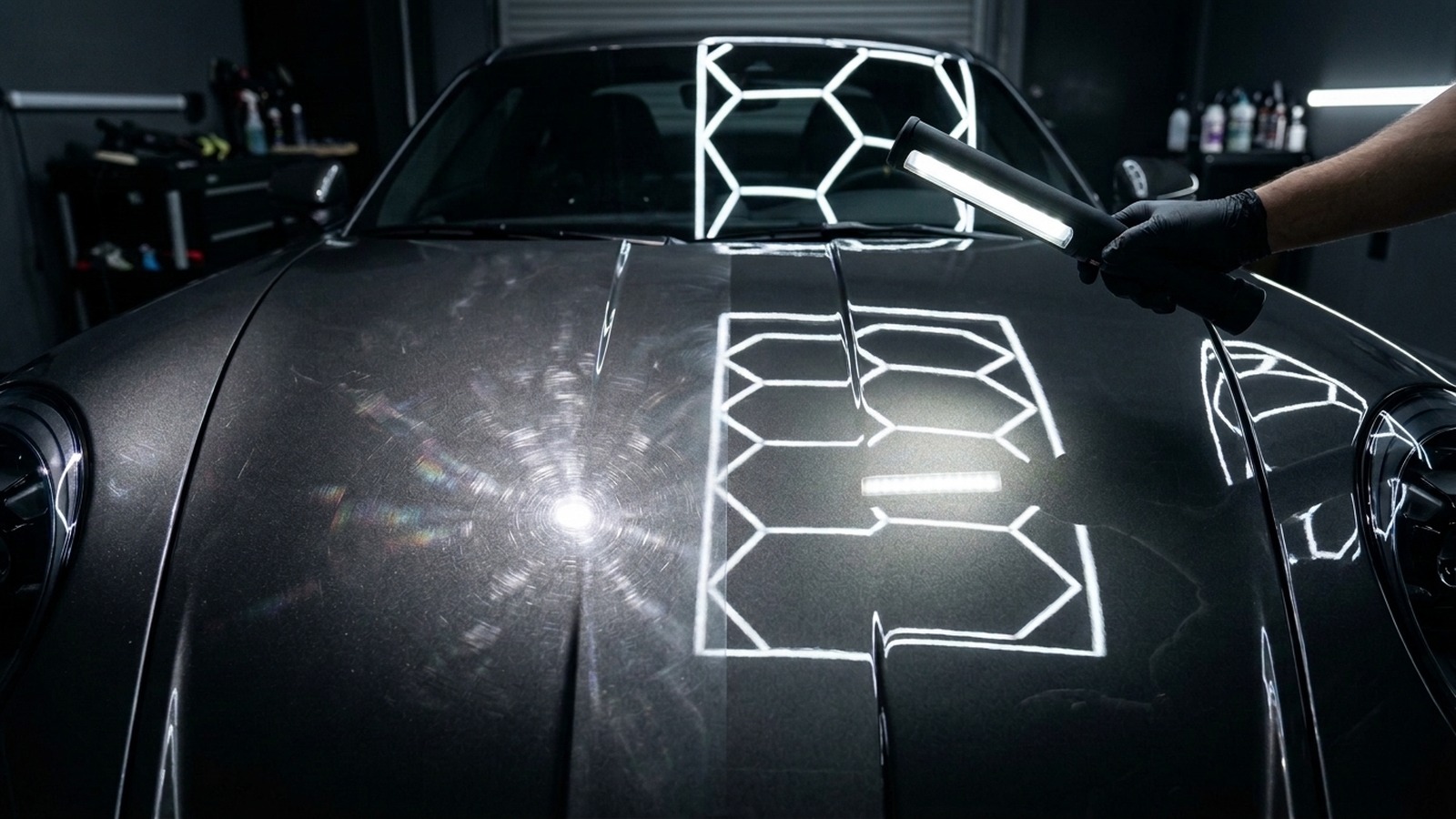
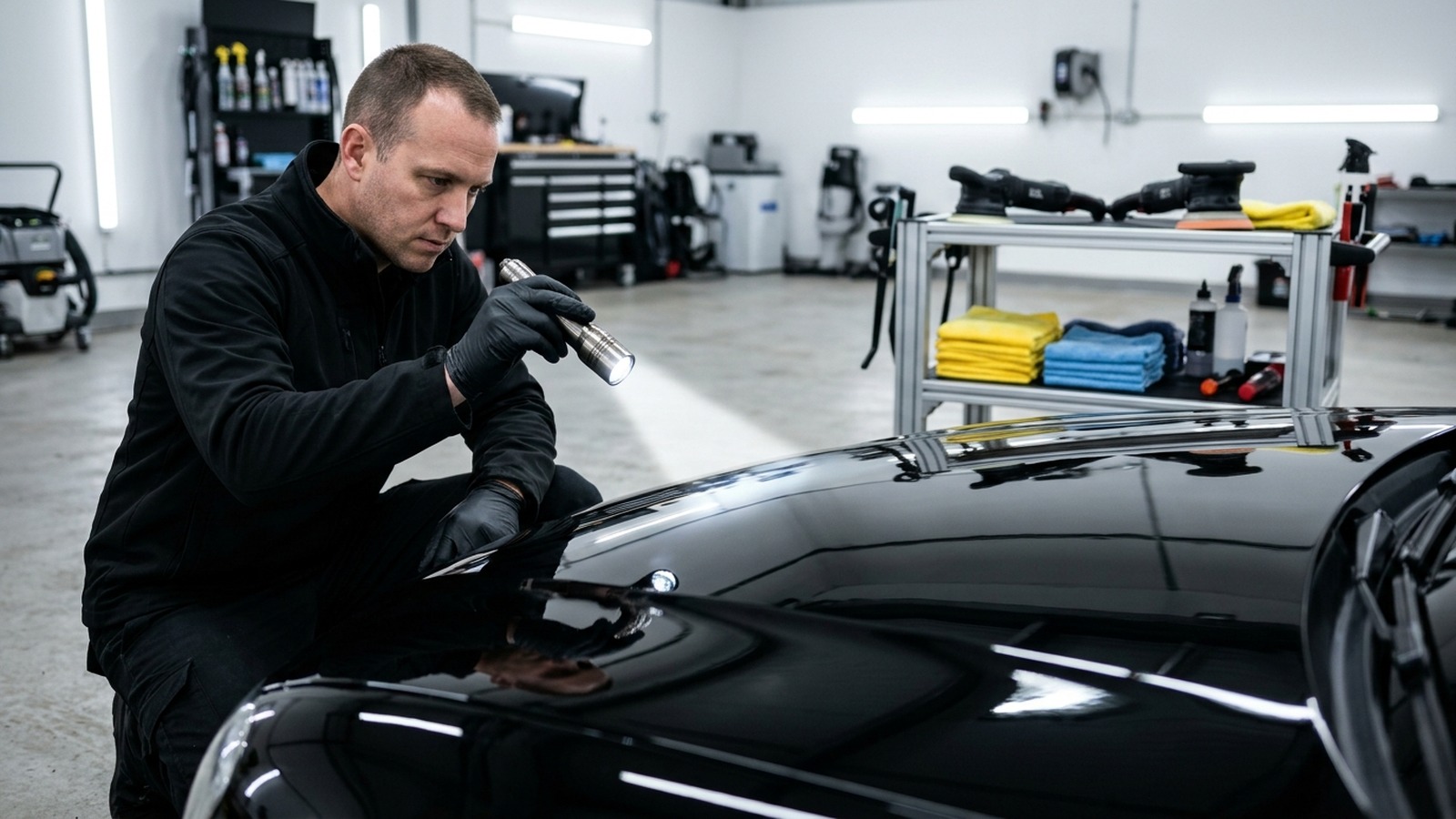
Professional detailers inspect bird etchings under high-CRI check lights to determine damage severity before touching paint.
Stage 1. Topical Surface Etching.The acid has created a faint. Dull milky silhouette on the upper clear coat.The texture feels slightly rough. However, no physical crater has formed. This stage can be eliminated with a mild machine polishing pass.
Stage 2. Deep Wrinkled Etching.Thermal expansion has wrinkled the clear coat. Leaving a raised perimeter and distorted reflection. clearing Stage 2 etchings requires controlled heat reflow followed by dual-action compounding.
Stage 3. Fractured Clear Coat Failure.The focused acid has chemically burned fully through the clear coat. Creating micro-cracks or crazing that reach the base colour layer. Polishing cannot repair Stage 3 failure. the cracked panel requires respraying.
knowing these stages ensures detailers never promise 100% removal on fractured clear coats that require paint shop refinishing.
Armidale Regional Wildlife and Sun Exposure Stress
Vehicles driven and parked in Armidale face severe bird dropping risks due to regional bird populations and high-altitude solar exposure.
Armidale and the New England Tablelands are home to large populations of native birds, including currawongs, magpies, cockatoos. Also, rosellas.When these birds feed on native gum tree sap cones and wild berries. Their droppings carry high amounts of corrosive organic acids and staining pigments.
also, Armidale sits at 1,000 metres elevation. This atmospheric UV intensity is remarkably high. On warm summer days, a bird dropping can bake into clear coat and cause permanent Stage 2 etching in under 90 minutes.
Vehicles parked outdoors under rural tree canopies often suffer multiple baking cycles. Requiring professional intervention to erase the marks safely.
The Heat Reflow Technique: Mobilizing Clear Coat Polymers
One of the most good professional secrets for repairing wrinkled bird droppings is thermal clear coat reflow.
Modern polyurethane clear coats possess chemical viscoelastic properties.Because the wrinkled appearance is partly caused by clear coat molecules trapped in an unnatural contraction state. Re-heating the panel allows the polymers to relax.
Detailers use a digital heat gun or short-wave infrared curing lamp held 20cm away from the affected area. The technician gently warms the paint while monitoring surface heat with an infrared thermometer.
As the surface reaches 65 to 70 degrees Celsius, the clear coat softens. The deformed polymer chains regain mobility and naturally level back out into their original flat orientation.
Up to 70% of the visible wrinkling can vanish during heat reflow alone. Without removing a single micron of precious clear coat. Once cooled, the remaining surface blemish is easily polished flat with a light machine pass.
Dual-Action Machine Compounding for Etched Craters
After thermal reflow, any remaining acidic craters are levelled using precision machine compounding.
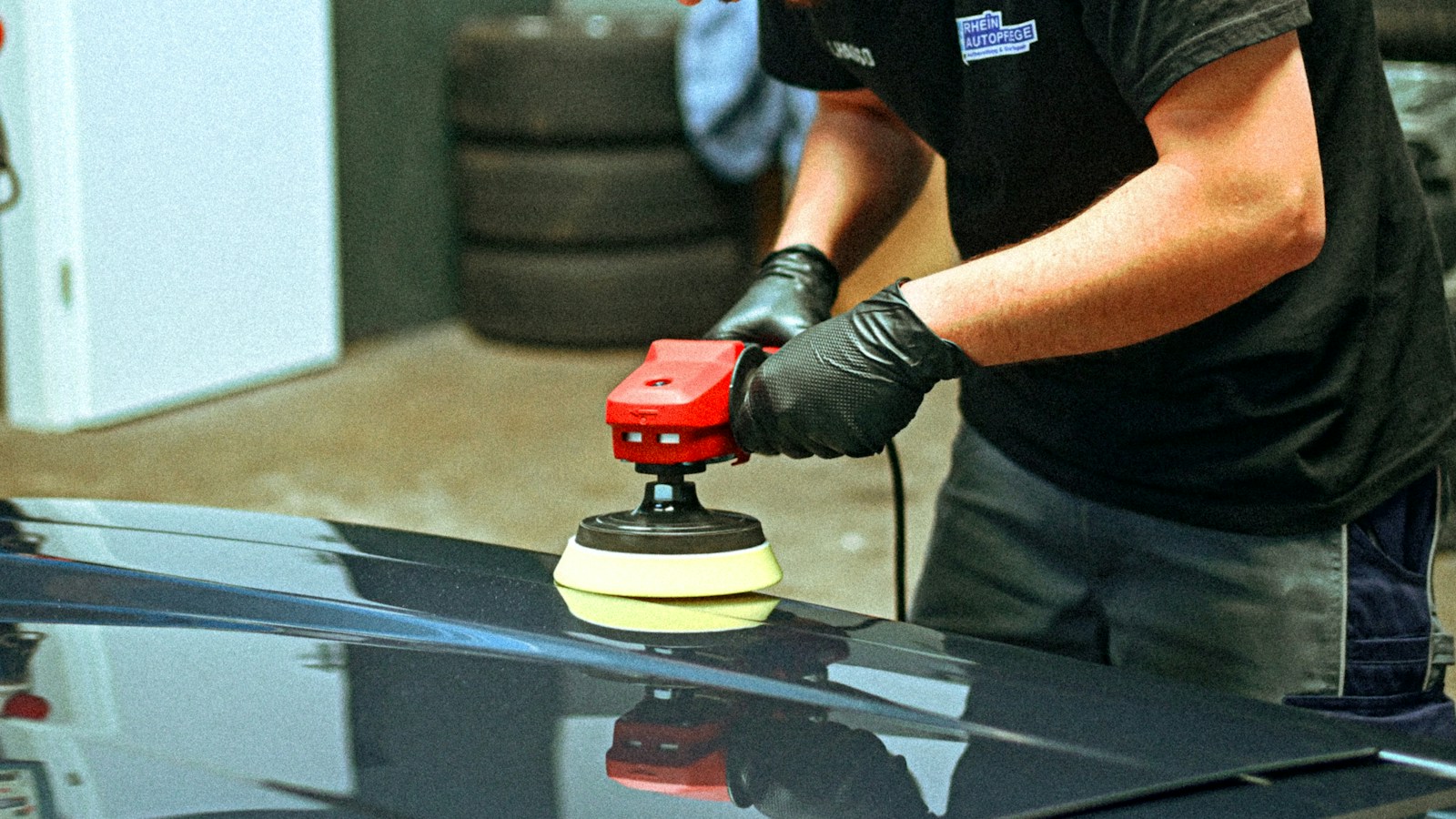
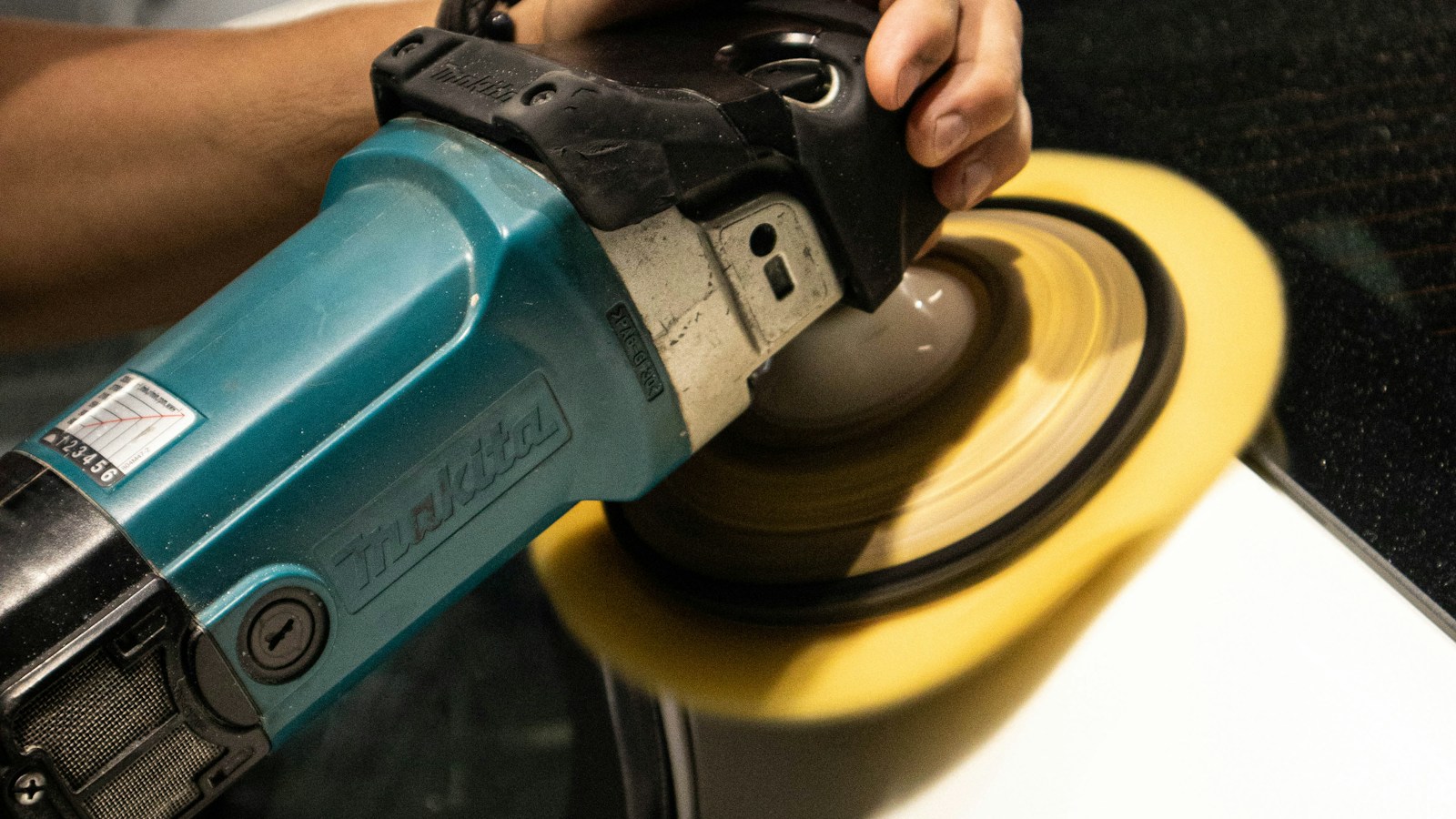
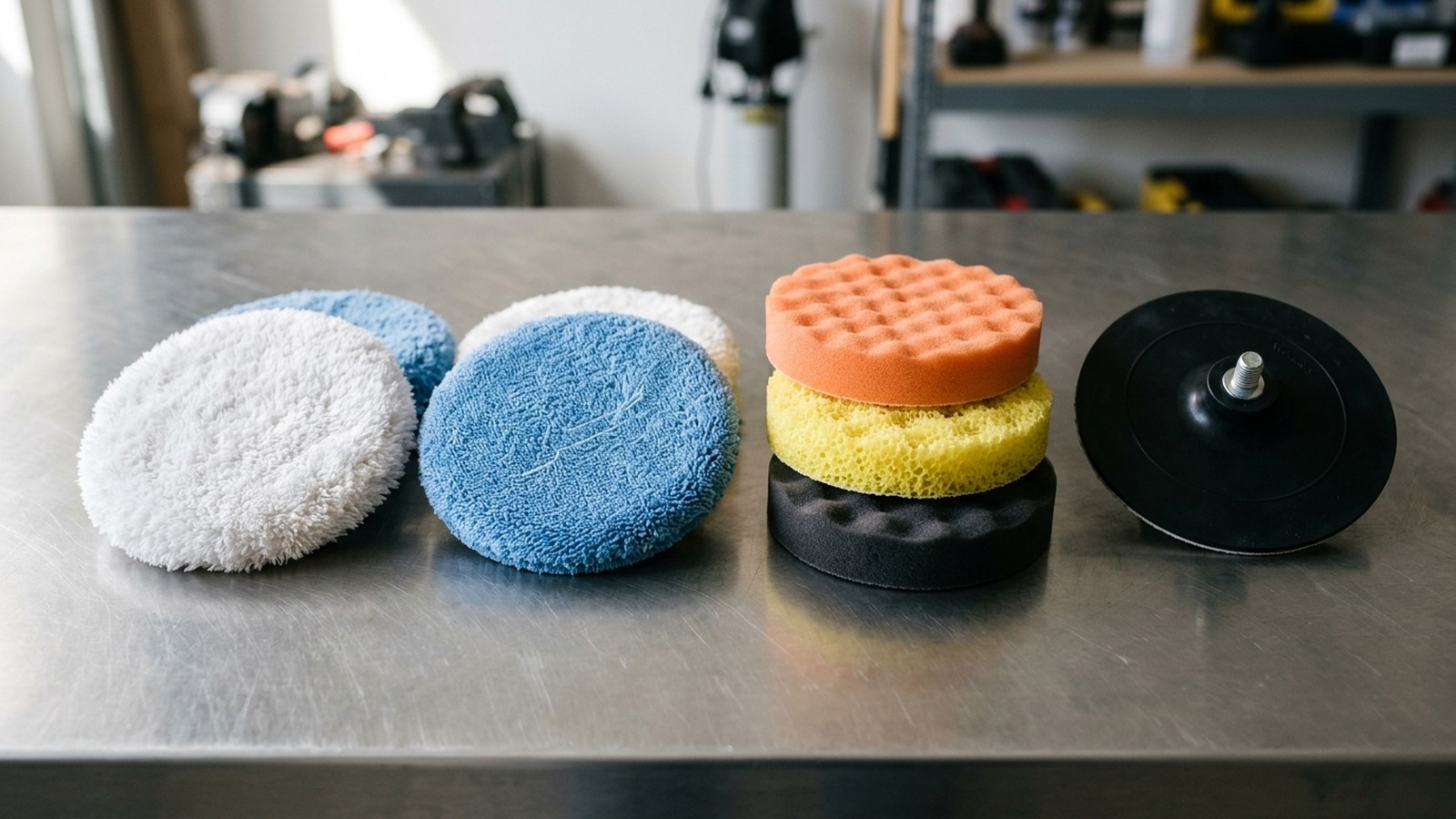
Technicians use a dual-action orbital polisher paired with a firm open-cell foam or microfibre cutting pad and shrinking abrasive compound. The orbital motion cuts away the tiny crater rim without concentrating heat in one spot.
The technician guides the polisher across a 40cm section in overlapping cross-hatch passes.The abrasives level the top 1 to 2 microns of clear coat. Clearing the visual crater shadow.
Following the compounding cut, the technician switches to a soft finishing foam pad and ultra-fine jewel polish. This finishing pass removes compounding haze, restoring mirror reflections.
Wiping the panel with an alcohol-based panel wipe verifies that the etching has been physically levelled rather than temporarily masked by compound carrier oils.
Micro Wet-Sanding for Severe Fractured Paint Etchings
When an acidic dropping has baked into paint for weeks. Compounding alone may not be aggressive enough to level the deep crater edges.
In those severe circumstances, technicians use micro wet-sanding. Detailers wrap 3000-grit or 5000-grit abrasive paper around a small, firm rubber sanding block.
Using soapy water slip lube. The technician sands strictly across the crater rim using light. Featherweight pressure for five to eight strokes. The area is wiped dry with a microfibre cloth to check progress.
Once the sharp crater rim blends into the surrounding clear coat, wet-sanding stops immediately. Dual-action compounding then buffs out the 3000-grit sanding haze to restore crystal clarity.
Wet-sanding requires skilled paint depth monitoring to avoid cutting through thin factory clear coat.
Paint Depth Gauge Diagnostics and Strike-Through Prevention
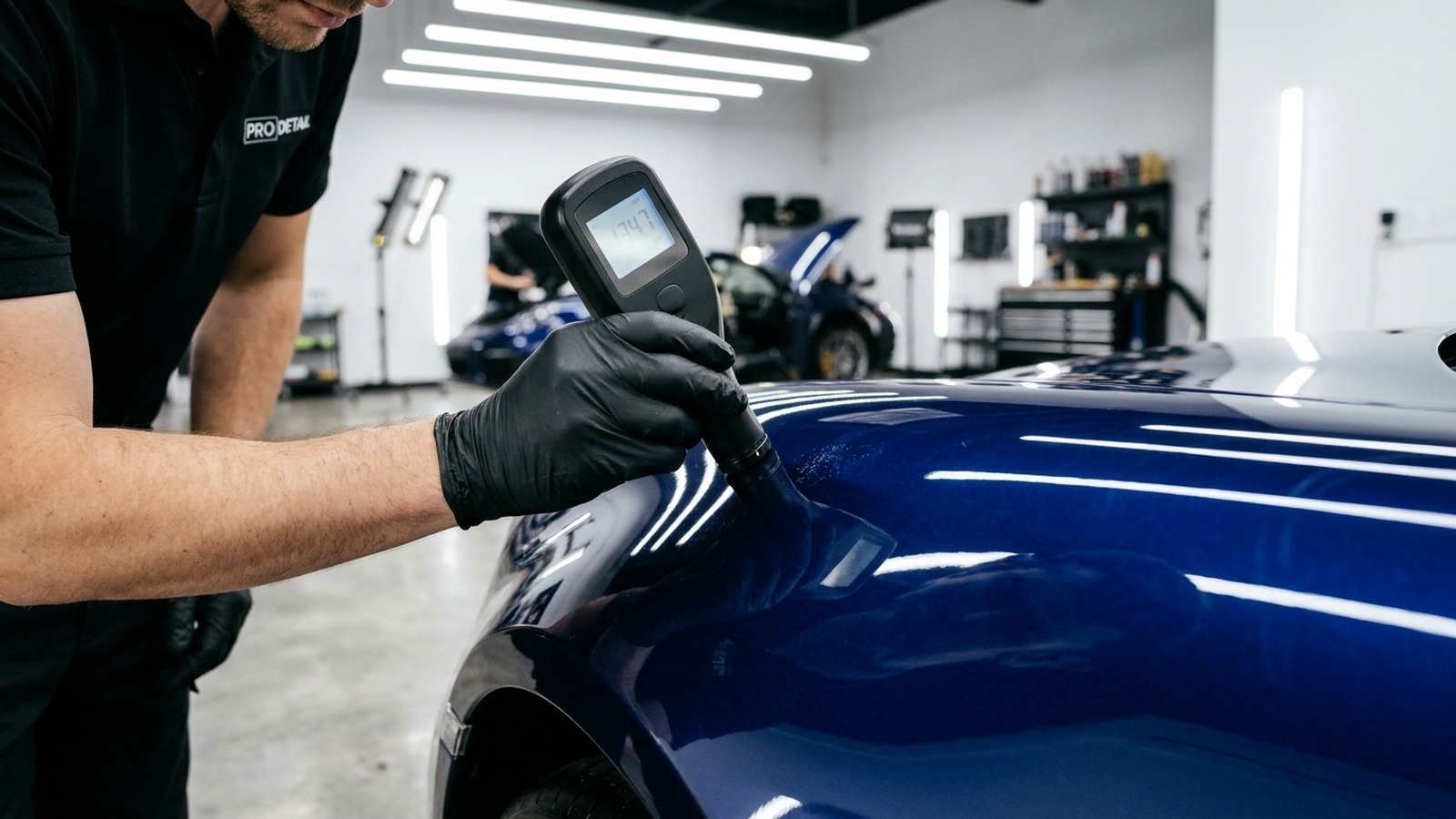
Safe etch repair always begins with digital paint depth measurement.Factory car clear coat is thin. Typically measuring between 35 and 50 microns.
Detailers measure clear coat thickness across all affected panels using digital digital gauges. Taking baseline readings on undamaged panel sections establishes the remaining paint margin.
If clear coat readings are below 25 microns. Aggressive wet-sanding or heavy compounding is unsafe. In those thin areas, technicians rely on heat reflow and gentle hand polishing to round off the sharp crater edge.
Rounding off the crater edge reduces light reflection by 80%. Making the defect virtually invisible from normal viewing distance while preserving paint integrity.
Comparison Table: Bird Dropping Damage Levels and Repair Techniques
The table below summarizes the traits, depth. Also, corrective methods for different bird dropping damage levels.
| Damage Stage. | Visual Signs. | Damage Depth. | Clear Coat Impact. | Professional Repair Method. |
|---|---|---|---|---|
| Stage 1: Topical Etch. | Milky shadow silhouette. | 0.2 to 0.8 microns. | Upper clear coat surface marring. | Dual-action finishing polish pass. |
| Stage 2: Wrinkled Crater. | Distorted reflection with raised rim. | 1.0 to 2.5 microns. | Thermal molecular contraction wrinkle. | Heat reflow + DA compounding. |
| Stage 3: Deep Fracture. | Cracked spiderweb crazing into base. | 4.0+ microns. | Complete clear coat structural failure. | Touch-up respraying (unfixable by polish). |
The 10-Point bird dropping paint etch repair Checklist
Professional workshops follow this 10-point checklist to repair bird dropping damage safely.
- Soft Chemical Pre-Wash. Soak dried dropping with pH-neutral snow foam to lift organic solids without scratching paint.
- Gentle Microfibre Removal. Wipe away softened dropping using light upward lifting motion.
- Chemical wash. Clean panel with alcohol panel wipe to remove residual uric acid salts.
- Digital Paint Thickness Audit. Measure clear coat depth across affected panel to verify safety margins.
- High-CRI Lighting Diagnostic. Inspect under 4500K LED check torch to classify damage stage.
- Controlled Infrared Heat Reflow. Warm wrinkled clear coat to 65°C using digital heat gun to relax polymer chains.
- Panel Cool Down Period. Allow panel to return to ambient room heat before applying machine heat.
- Dual-Action Machine Compounding. Level remaining crater rims using firm foam cutting pads and shrinking abrasive compound.
- Optical Jewel Refinement. Polish panel with soft finishing foam to clear haze and restore mirror gloss.
- Ceramic shielding Sealing. Apply a high-grade quartz ceramic coating to shield raw clear coat from future acid attacks.
Sacrificial Protection: Ceramic Coatings and Paint Film
Once vehicle paint has been restored to crystal clarity. Applying durable shield is key to prevent future acid etching.
A professional quartz ceramic coating cures into an ultra-dense. Glass-like shell across clear coat pores. Ceramic coatings offer robust chemical resistance across the pH 2 to pH 12 range.
When a bird dropping lands on a ceramic-coated panel. The uric acid attacks the sacrificial ceramic coating rather than burning into factory clear coat. Car owners have a much wider window of opportunity to wash away droppings safely.
For ultimate shield, applying Paint shield Film (PPF) over bonnets and roofs creates a self-healing polyurethane barrier that fully shields paint from stone chips and bird droppings alike.
Workplace Safety and Environmental Workshop Compliance
Professional car detailing studios comply with complete Australian health and safety rules. Under standards overseen by Safe Work Australia, technicians use heat-resistant gloves. Wear eye shield during machine buffing. Also, maintain certified electrical gear.
Workshops must also comply with environmental discharge guidelines enforced by the NSW Environment shield Authority. Chemical wash runoff and spent polishing compounds must pass through approved trade waste filtration systems before release.
Vehicle safety on state roads is regulated by Transport for NSW. Ensuring clear, undistorted optical visibility across windscreens and mirrors shields drivers during night journeys.
To clear unsightly bird dropping scars safely and protect your vehicle with durable ceramic coatings, booking expert bird dropping etch repair in Armidale ensures master-level care from trained technicians.
People Also Ask About bird dropping paint etch repair
Can bird poop damage car paint in one day?
Yes.Under direct Australian sunlight on a warm day. focused uric acid combined with thermal clear coat expansion can cause sub-surface clear coat etching in as little as 60 to 90 minutes.
Does a heat gun really remove bird dropping etchings?
Yes. Modern clear coats are viscoelastic polymers.Heating wrinkled clear coat to about 65°C relaxes the polymer chains. Allowing deformed molecules to flow back into a flat orientation.
What is the best way to clean bird droppings off car paint?
Soak a microfibre cloth with warm water or quick detailer spray and lay it over the dropping for five minutes. Once softened, gently lift the dropping away without scrubbing or dragging grit across paint.
Can hand polishing remove bird dropping etchings?
Hand polishing can reduce faint Stage 1 surface shadows. However, it cannot produce the consistent heat and levelling action required to remove indented Stage 2 craters. Machine polishing is required.
Frequently Asked Questions on Bird Etch Removal
Why shouldn't I scrape off dried bird droppings with my fingernail?
Bird droppings contain hard insect shells, seeds, and grit.Scraping a dry dropping drags these abrasive particles across the clear coat. Gouging deep scratches directly into the paint.
Can baking soda neutralize bird dropping acid on paint?
While baking soda is alkaline, rubbing powder paste onto vehicle paint acts like coarse sandpaper, causing severe swirl marks. Always soften droppings with water or specialized detailer sprays instead.
Does ceramic coating make a car immune to bird droppings?
No coating is 100% immune.However, ceramic coatings provide a sacrificial quartz barrier that slows down acid penetration. Giving car owners hours or days to wash away droppings safely.
Can bird dropping damage cause rust on car panels?
If a severe acid burn penetrates fully through the clear coat, colour base. Also, primer, exposed bare steel will rust rapidly when exposed to rain and moisture.
How much clear coat is removed when repairing bird etchings?
Combining heat reflow with dual-action compounding removes only 1.0 to 2.5 microns of clear coat. Safely preserving more than 90% of factory clear coat thickness.
Emergency Field Care: Neutralizing Fresh Bird Droppings on the Road
The single best way to avoid expensive paint etch repair is rapid emergency cleaning while traveling.The longer an acidic dropping sits under midday sun. The deeper the acid penetrates.
Car owners should keep an emergency detailing kit in their glovebox or boot.The kit should contain a small bottle of pH-neutral quick detailer spray or waterless wash. And two plush 400 GSM microfibre towels sealed in clean zip-lock bags.
When you spot a fresh bird dropping. Never rub or scrub the dry spot with a dry tissue.Scraping hard solids drags insect shells and sand across the clear coat. Gouging deep scratches into the paint.
Instead, spray a generous pool of quick detailer directly onto the dropping. Place a folded microfibre towel saturated with spray over the mark. Let the liquid dwell for two to three minutes to soften and dissolve the dried uric acid crust.
Once the dropping is softened. Gently lift the towel upward without dragging it across the surrounding paint. Follow with a light spray and wipe with the clean second towel to neutralize residual acids. This quick field habit prevents permanent clear coat etchings on every road trip.
Paint Protection Film: The Ultimate Shield Against Acid Burns
While ceramic coatings provide strong chemical resistance. Paint shield Film (PPF) offers the highest level of physical and chemical shield against bird droppings.
PPF is an eight-mil thick, optically clear thermoplastic polyurethane film applied directly over vulnerable bonnets, roofs, and mirrors. The film features an elastomeric polymer top coat that self-heals under warmth from the sun or hot water.
When an acidic bird dropping bakes onto a film-protected vehicle. The uric acid attacks the sacrificial polyurethane layer rather than reaching factory clear coat.If etching occurs, pouring warm water over the film allows the self-healing polymers to flow flat again. Keeping factory paint 100% pristine.
Conclusion: Erasing Unsightly Paint Etchings for Good
Bird dropping etchings can ruin the look of an immaculate vehicle. Leaving unsightly milky scars across prominent panels.However, with modern heat reflow techniques and precision machine compounding. Even stubborn acid craters can be erased.
spending in professional bird dropping paint etch repair restores smooth optical reflections while preserving valuable factory paint thickness.Protected by a durable ceramic coating. Your vehicle will stay shielded against harsh outdoor elements for years of driving enjoyment.