Few things are as frustrating as paying for expert car polishing only to see floating ghost trails across your bonnet under sunlight.When fixing shoddy polishing work. Knowing proper hologram and buffer trail removal is key to restore crisp mirror reflections.In regional New South Wales. Including Armidale and the New England Tablelands. Intense solar radiation makes these circular machine marks painfully visible on dark vehicles. Knowing why high-speed rotary buffers create these mirror ribbons and how modern dual-action polishing clears them forever guarantees true paint clarity.
hologram and buffer trail removal is a precision paint polishing process that uses dual-action orbital machines, soft foam jewel pads, and ultra-fine jewel polishes to level tiny rotary scratches. This process forever clears light-refracting circular grooves left by aggressive buffing, restoring true mirror gloss and deep mirror reflections.
- The Physics of Buffer Trails. How Rotary machines Gouge Paint.
- Why Cheap Detailing Shops Leave Buffer Trails.
- Armidale Sunlight and High-Altitude Hologram Visibility.
- The Glaze Deception. Why Holograms Reappear After Rain.
- check Lighting. Spotting Trails Indoors with High-CRI Torches.
- Dual-Action Machine polishing Workflow.
- jewel Pad and Micro-Abrasive Pairings for Flawless Gloss.
- Solvent Panel Wipedown. Verifying Permanent Defect removal.
- Comparison Table. Rotary Buffer Trails vs Swirl Marks vs Sanding Scratches.
- The 10-Point hologram and buffer trail removal Checklist.
- Sealing Corrected Paintwork with Quartz Ceramic Coatings.
- Workplace Safety and Environmental Standards in Australia.
- People Also Ask About hologram and buffer trail removal.
- often Asked Questions on Buffer Trail Removal.
- Conclusion. Restoring Pure, Hologram-Free Mirror Reflections.
The Physics of Buffer Trails: How Rotary machines Gouge Paint
Holograms, often called buffer trails or zebra stripes. Are not surface dirt or oily smears.They are thousands of tiny. Parallel circular trenches gouged into vehicle clear coat.
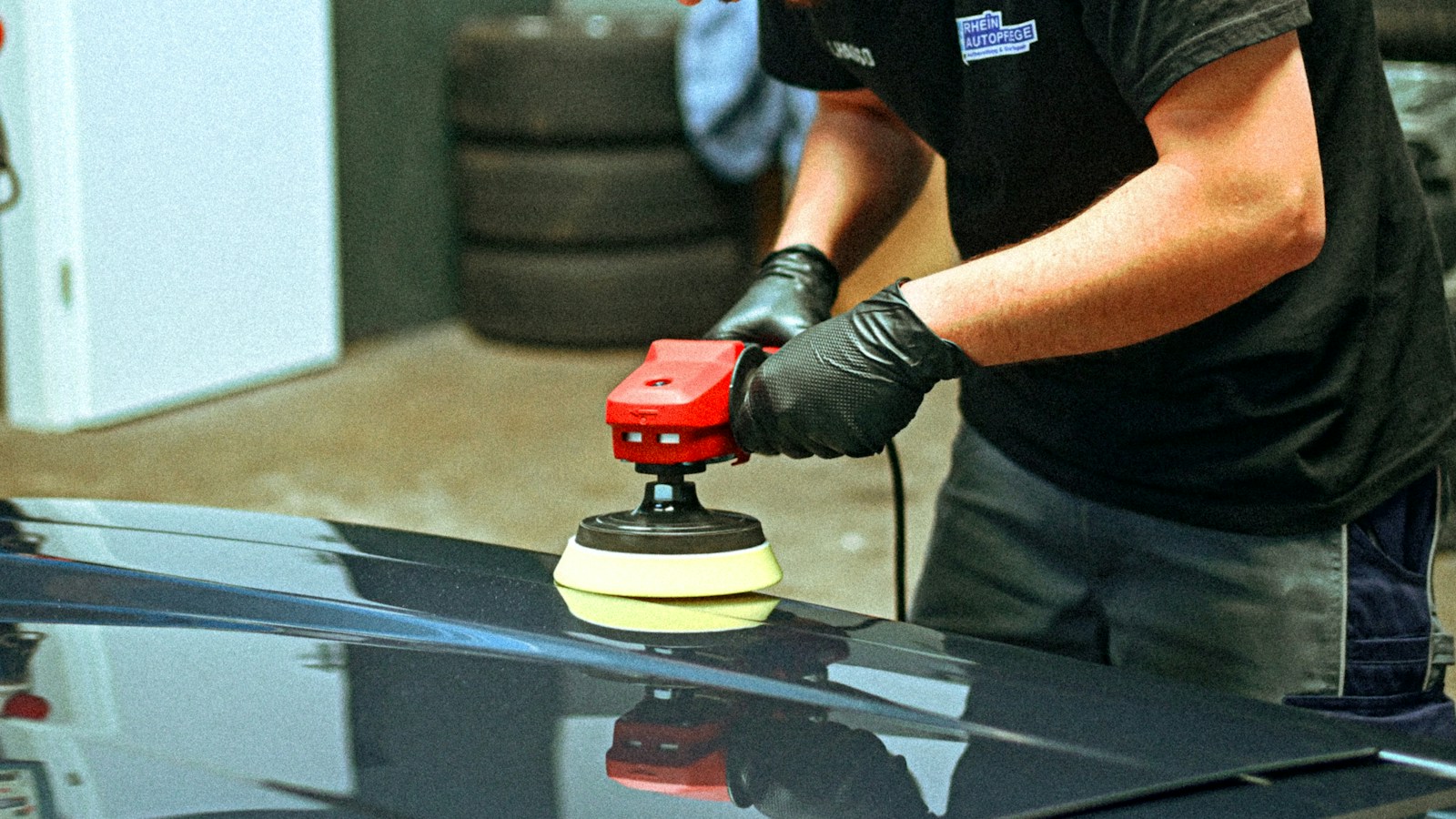
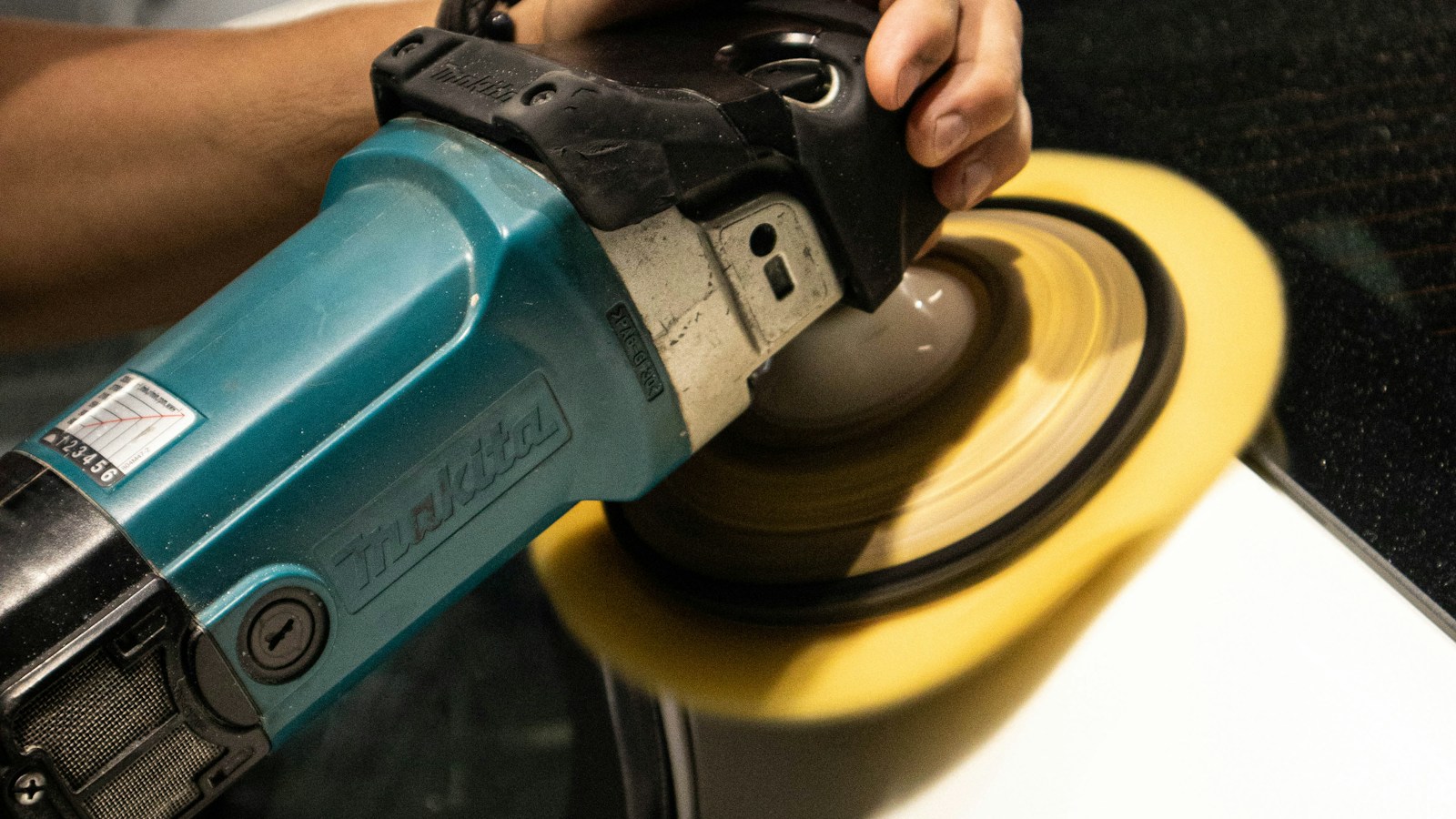
When an untrained user uses a direct-drive rotary polisher. The spinning pad cuts in rigid circular loops.If the user tilts the machine on its edge or uses a dry wool pad. Single abrasive particles scour sharp trenches into the clear coat.
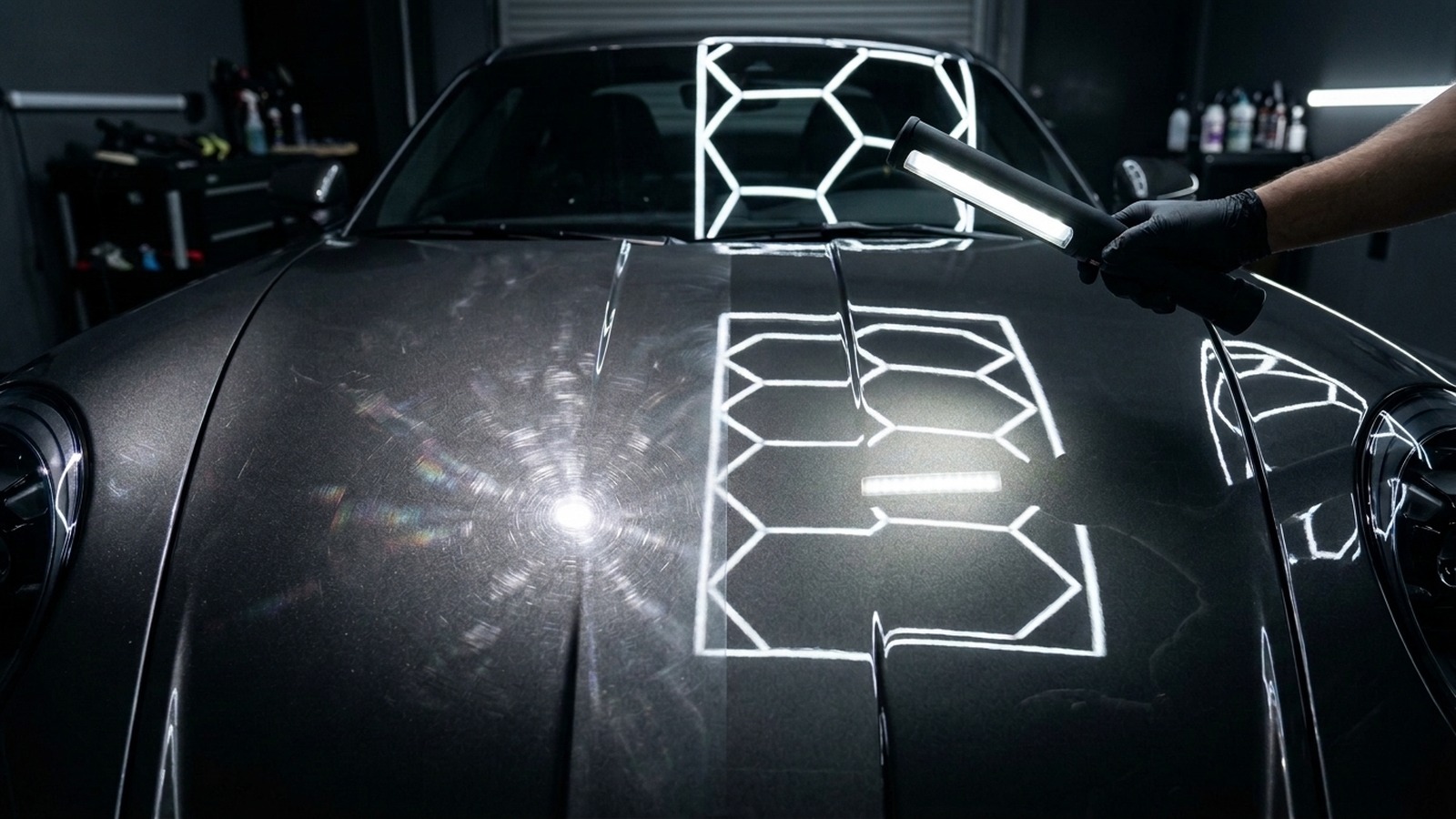
Under overcast skies or dim garage lighting, these trenches remain invisible.But when direct sunlight strikes the panel. Light rays refract off the parallel trench walls.
This mirror refraction creates three-dimensional silver or rainbow ribbons that seem to float beneath the paint surface.As the observer walks past the car. The 3D ribbons twist and bend across every panel curve.
True buffer trail removal requires smoothing down these trench walls flat.Once the clear coat is levelled flat. Light reflects in one uniform direction without scattering.
Why Cheap Detailing Shops Leave Buffer Trails
Buffer trails are almost always the result of rushed, high-volume detailing practices. Many commercial car yards and cheap hand car wash shops prioritise speed over quality.
users often use coarse rotary wool pads with heavy cutting compound across an entire vehicle in under forty minutes.While this removes heavy wash swirls quickly. It leaves devastating buffer trails behind.
Rather than performing a special second refining pass with a dual-action polisher. Rushed users take a shortcut. They apply an oily glaze wax packed with temporary silicone fillers.
The silicone oils fill the tiny trenches. Making the paint look glossy and smooth when the client collects the car. However, this cosmetic cover-up is purely temporary and washes away after the first rain shower.
expert detailers reject filler glazes.Reputable studios use multi-stage machine polishing to clear the defects physically. Ensuring the paint looks flawless forever.
Armidale Sunlight and High-Altitude Hologram Visibility
Vehicles driven in Armidale and across the New England High Country face unique mirror conditions.At 1,000 metres above sea level. Atmospheric filtering of sunlight is much lower than on the coast.
The direct high-intensity UV and solar rays penetrate clear coat deeply.On dark blue, grey. Also, black vehicles, buffer trails glow with unbearable intensity under bright Armidale midday sun.
Regional heat swings also play a role. Cold winter mornings followed by rapid midday warming cause vehicle clear coat to expand and contract. This expansion forces out low-grade glaze fillers faster than in mild coastal regions.
also, regional country road dust settles into the micro-trenches left by bad polishing. As dust particles lodge in the grooves, washing drags them along the trench lines, creating severe buffing scratches.
clearing these trails forever shields the vehicle's aesthetic appeal and prevents premature paint failure under harsh Tablelands weather.
The Glaze Deception: Why Holograms Reappear After Rain
Many car owners experience immense disappointment two weeks after collecting their newly detailed car.After a heavy thunderstorm or a weekend car wash. Ugly ghost trails suddenly reappear across the bonnet.
This happens because the previous detailer relied on filler glazes rather than tool repair.car glazes contain heavy mineral oils, petroleum distillates. Also, clay binders.
These oils have an mirror refractive index similar to factory clear coat.When smeared over buffer trails. They level the surface optically by filling the air voids inside each scratch trench.
However, silicone oils cannot bond chemically to clear coat.High ambient heat, rain.Also, car wash detergents dissolve the oily fillers in days. Washing them straight down the drain.
Once the fillers vanish, the bare. Damaged clear coat is re-exposed to sunlight. Proper repair requires stripping away all remaining oils and levelling the clear coat mechanically.
Inspection Lighting: Spotting Trails Indoors with High-CRI Torches
You cannot clear buffer trails if you cannot see them. Standard overhead fluorescent workshop tubes are fully ineffective for diagnosing rotary holograms.
Fluorescent lighting casts diffuse, scattered light that washes out paint reflections. Concealing up to 80% of machine buffer trails. expert studios rely on specialised check lighting setups.
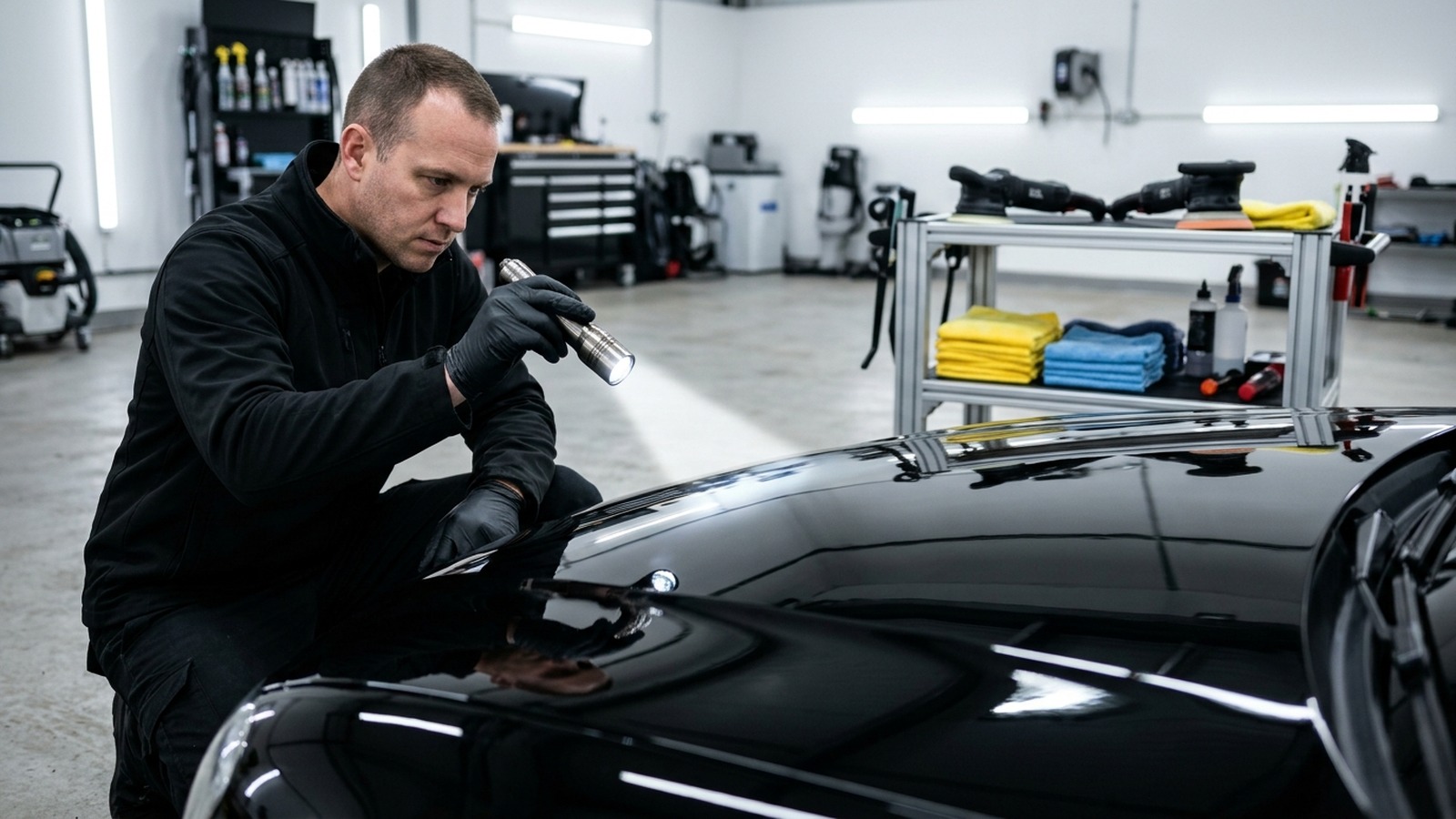
Detailers use handheld check torches featuring high Colour Rendering Index (CRI 95+) LED emitters. By shining a tight, focused beam of 4500K neutral white light at a 45-degree angle, every micro-trail is exposed.
pros inspect panels from multiple angles. Moving the light source across swage lines and curved edges.They also use warm 3000K LED lights. This highlight buffing haze on metallic paint better than cool white lights.
Using dual-spectrum check lights ensures zero hidden machine trails remain before applying permanent ceramic coatings.
Dual-Action Machine polishing Workflow
The definitive cure for rotary buffer trails is dual-action (DA) orbital machine polishing. Dual-action machines combine central rotation with eccentric orbital oscillation.
This randomized motion ensures that abrasive particles never travel along repeating circular paths.As the pad glides over the panel. It gently shaves away the sharp peaks of rotary scratch trenches.
Detailers divide panels into manageable 40cm by 40cm working sections. After priming a soft foam jewel pad with fine jewelling polish, the pro works the area using slow, overlapping cross-hatch passes.
The pro applies light, uniform downward pressure. Allowing the machine's orbital throw to level the clear coat without generating excessive surface heat.Two passes are completed horizontally. Followed by two passes vertically.
Because dual-action machines spread heat evenly. The risk of paint burn-through is virtually zero. Making them the safest tool for refining thin factory clear coat.
jewel Pad and Micro-Abrasive Pairings for Flawless Gloss
Achieving a mirror-like, hologram-free finish requires the correct combination of pad density and abrasive chemical formulation. Using an overly aggressive pad will introduce fresh micro-marring.
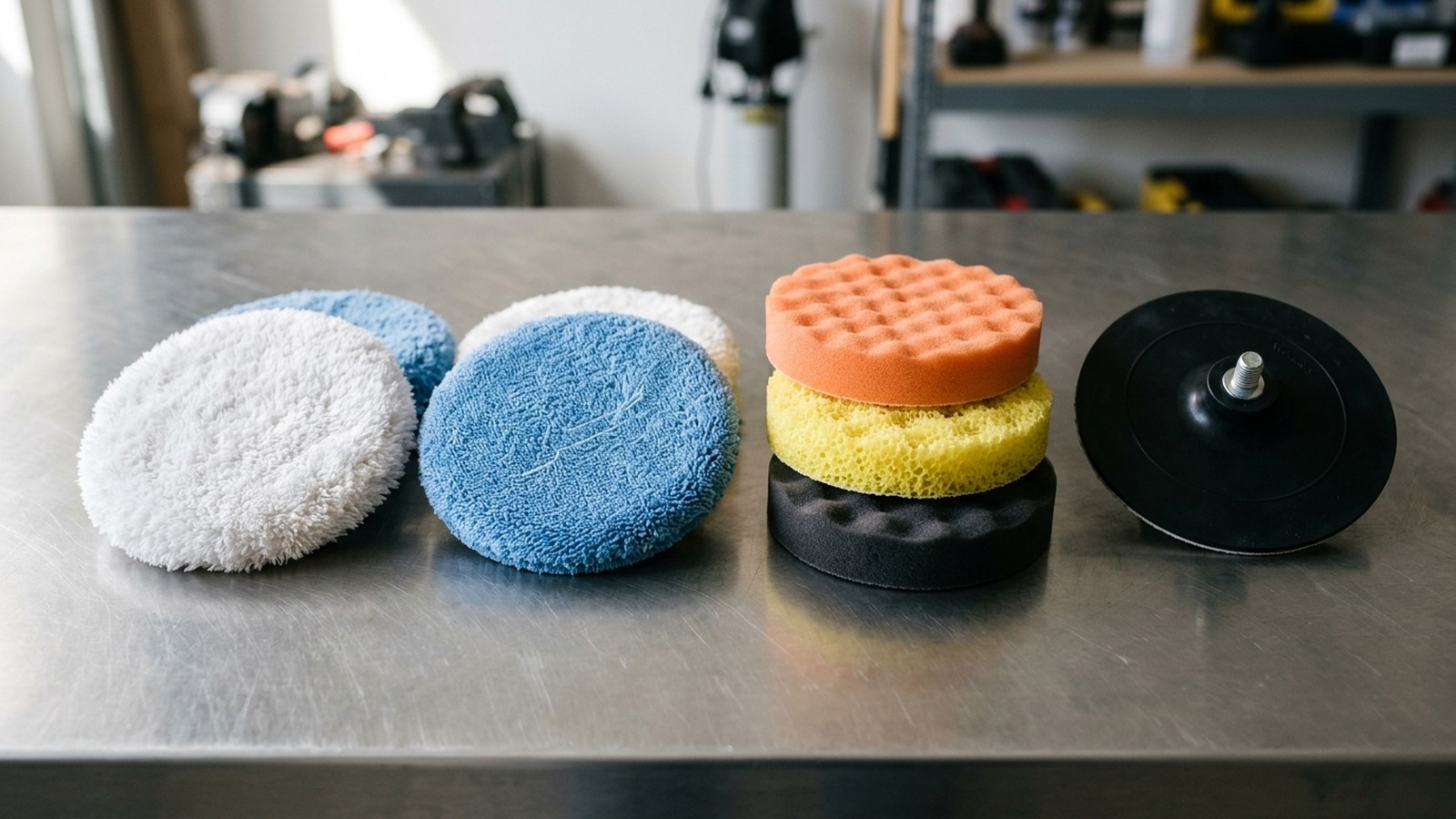
expert detailers select ultra-soft, open-cell foam jewel pads.The soft foam conforms gently to panel curves. Cushioning the abrasive grains against thin clear coat.
The pad is paired with a water-based jewel glaze containing sub-micron aluminium oxide abrasives. Unlike older shrinking abrasives, modern non-shrinking micro-abrasives maintain consistent particle size throughout the cycle.
These ultra-fine particles shave off fractions of a micron. Polishing away rotary trails without thinning the clear coat noticeably.The formula contains zero silicone fillers. Ensuring that the results seen under the check light are 100% genuine.
Cleaning the pad face with compressed air or a soft nylon brush after every section pass prevents spent clear coat residue from scouring the warm paint.
Solvent Panel Wipedown: Verifying Permanent Defect Elimination
The most crucial step in expert buffer trail removal is the solvent wipedown check. Even water-based polishes contain lubricating oils that can temporarily conceal fine defects.
To verify that the holograms are forever eliminated. Detailers spray a special alcohol-based panel wipe or solvent check spray across the polished area.
The solvent dissolves carrier lubricants and emulsifies polishing oils.The pro gently wipes the area clean using a plush, edgeless microfibre towel. Flipping the towel to a clean face for the final wipe.
Once the surface is fully dry and stripped of all lubricants. The pro re-inspects the panel with a high-CRI LED torch.If the paint remains crystal-clear with zero ghost trails. The repair is verified permanent.
This strict verification protocol guarantees that the client receives true mirror clarity that will never wash away in the rain.
Comparison Table: Rotary Buffer Trails vs Swirl Marks vs Sanding Scratches
The table below compares the physical depth, visual traits. Also, repair methods for common paint defects.
| Defect Type. | Visual Appearance. | Defect Depth. | Primary Cause. | repair Method. |
|---|---|---|---|---|
| Rotary Buffer Trails. | 3D floating ghost ribbons in sun. | 0.5 to 1.5 microns. | Rushed rotary buffing passes. | Dual-action jewel foam polish. |
| Wash Swirl Marks. | Circular spiderweb webs. | 1.0 to 2.5 microns. | Drive-through washes & dirty sponges. | Medium compound & polishing passes. |
| Wet Sanding Scratches. | Flat, matte grey sanding haze. | 2.0 to 4.0 microns. | 2000 to 3000-grit wet sandpaper. | Heavy buffing followed by DA polish. |
| Water Spot Etchings. | Chalky rings with concave craters. | 1.5 to 3.0 microns. | Bore water minerals & acid rain. | Chemical descaling + DA machine cut. |
The 10-Point hologram and buffer trail removal Checklist
expert workshops follow this structured 10-point checklist to clear buffer trails forever.
- wash Wash. Strip road traffic film and old filler waxes using high-foaming alkaline soap.
- Chemical Iron Fallout Removal. Spray reactive iron remover to dissolve embedded brake particles.
- Clay Bar Treatment. Glide car clay across panels to lift bonded industrial fallout.
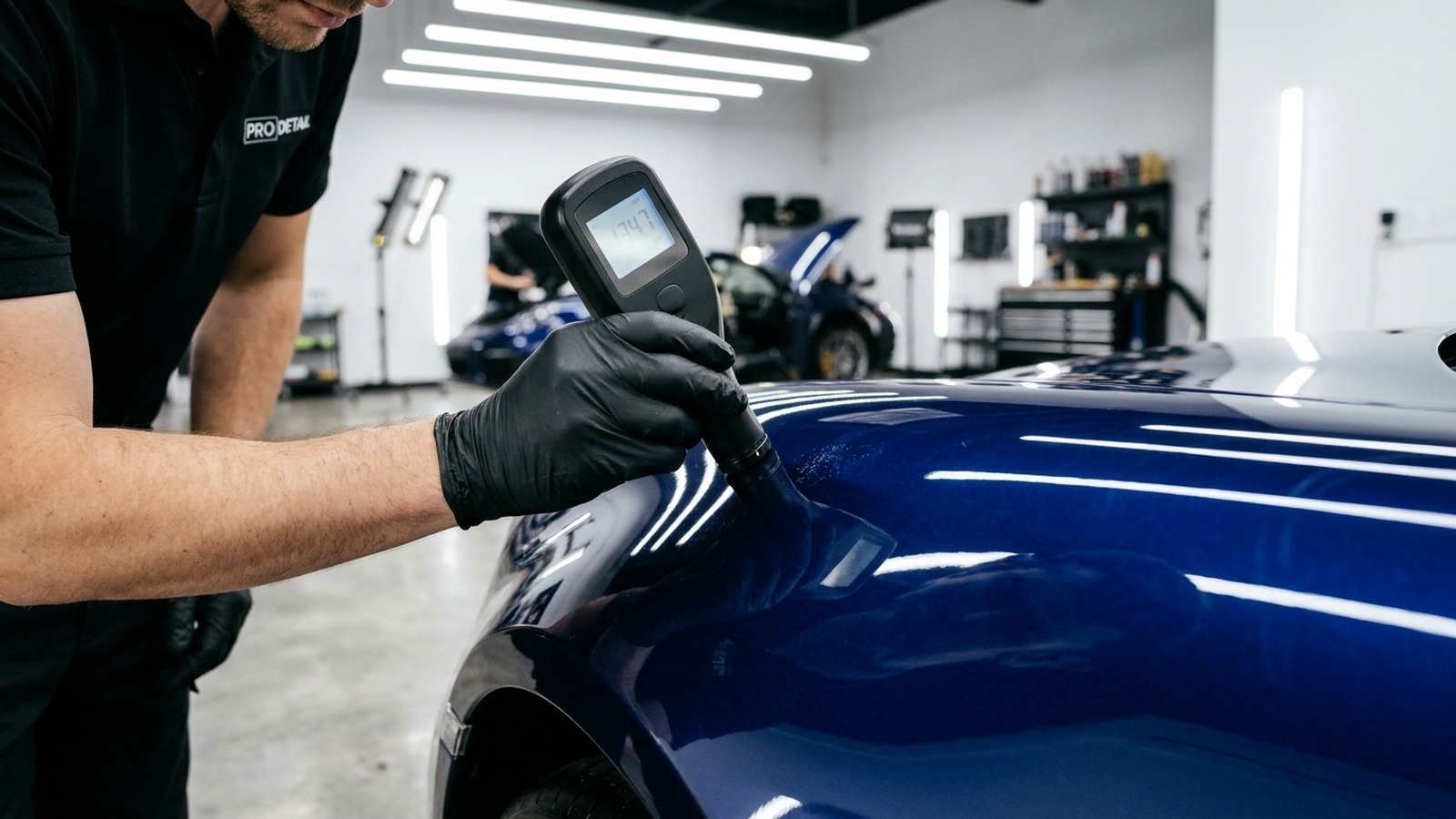
- Paint Thickness Audit. Measure clear coat depth across all panels using digital digital gauges.
- High-CRI LED Mapping. Map out hologram intensity and rotary trail directions under 4500K check lights.
- shielding Tape Masking. Seal plastic mouldings, rubber seals. Also, panel edges with low-tack car tape.
- special 40cm Test Spot. Test a soft foam pad and fine jewel polish to confirm complete trail removal.
- Systematic Dual-Action Passes. Complete overlapping cross-hatch passes using moderate arm speed and light pressure.
- Solvent Panel Wipedown. Wipe down panels with pure isopropyl alcohol spray to reveal true unmasked clear coat.
- Ceramic shielding Sealing. Apply a expert quartz ceramic coating to protect the flawless mirror finish.
Sealing Corrected Paintwork with Quartz Ceramic Coatings
Once paintwork has been restored to mirror perfection. Locking in that clarity with durable shield is vital. Bare clear coat is porous and vulnerable to chemical contamination.
Applying a high-grade quartz ceramic coating creates a semi-permanent chemical bond with the clear coat.The liquid coating cures into a hard. 9H ceramic shell that resists fine wash scratches and acid etching.
Ceramic coatings also provide incredible water beading.Rainwater beads into tight spherical droplets that roll off panels. Taking loose country road silt with them.
For car owners in Armidale.This intense solar UV degrades unprotected paint. A ceramic coating shields the refined clear coat from premature oxidation. It ensures your investment in paint repair continues to turn heads for years.
Workplace Safety and Environmental Standards in Australia
Operating a high-end detailing studio requires strict adherence to Australian workplace and environmental standards. Under rules overseen by Safe Work Australia, pros must use ergonomic machine grips, wear hearing shield. Also, use dust extraction systems during machine polishing.
Environmental compliance is governed by the NSW Environment shield Authority.expert detailing bays capture and filter wash runoff through certified oil-water separators. Preventing harmful chemicals from entering local stormwater systems.
On-road safety and mirror visibility standards are regulated by Transport for NSW. Ensuring vehicle glass and windscreens remain free of distorted glare promotes road safety during regional night driving.
If your vehicle suffers from unsightly buffer trails or holograms left by amateur machines, booking expert hologram removal and paint repair in Armidale guarantees that skilled pros restore true mirror reflections safely.
People Also Ask About hologram and buffer trail removal
What causes holograms on car paint?
Holograms are caused by rotary machines used with aggressive buffing pads and improper technique. The spinning pad scours parallel micro-scratches into clear coat that refract sunlight into floating 3D ribbon patterns.
Can hand polishing remove buffer trails?
No. Hand polishing cannot generate the consistent oscillation speed and uniform pressure required to level machine scratch trenches. Complete removal requires a dual-action orbital polisher.
How much clear coat is removed to fix holograms?
Fixing buffer trails with a dual-action polisher and fine jewel polish removes less than one micron of clear coat out of 35 to 50 factory microns total. It is very safe for vehicle paint.
Why do buffer trails disappear in the shade?
Diffuse shade scatters light from multiple angles. Preventing the focused refraction needed to reveal the parallel scratch trenches. Direct point light sources like the sun or LED torches make them instantly visible.
Frequently Asked Questions on Buffer Trail Removal
Can ceramic coating hide buffer trails?
No. Ceramic coatings are optically clear quartz layers.Applying a ceramic coating over buffer trails will forever lock the holograms beneath the glass coating. Making them even more noticeable.
How long does it take to fix buffer trails across a car?
A thorough hologram removal process across an entire vehicle typically takes between 6 and 10 hours, including wash wash, dual-action polishing passes, solvent wipedowns. Also, sealant use.
Do dual-action machines ever leave holograms?
No. Dual-action machines combine rotation with random orbital oscillation. The randomized abrasive paths prevent the parallel trench alignment necessary to produce visible 3D ribbons.
Can I fix buffer trails myself with an orbital polisher?
Yes, provided you use an entry-level dual-action machine, a soft foam pad, a quality jewel polish. Also, follow clean wipedown protocols. Never use high speed or tilt the machine on its edge.
Why do car dealerships often deliver cars with holograms?
Dealership delivery departments often contract high-volume pre-delivery cleaning to rushed subcontractors who use aggressive rotary buffers to quickly remove transport grime. Leaving severe buffer trails behind.
Panel Wipe Inspection Sprays vs Diluted Isopropyl Alcohol
Verifying complete buffer trail removal requires stripping all polishing oils off the panel. Many hobbyists reach for a bottle of diluted isopropyl alcohol (IPA). However, modern paint pros prefer special panel wipe sprays.
Pure isopropyl alcohol can swell soft vehicle clear coats when applied heavily. When clear coat swells, microscopic scratch grooves close up temporarily. The panel looks flawless under inspection lights.But hours later, as the alcohol evaporates and the clear coat contracts. The hidden buffer trails reappear.
special panel wipe sprays use complex blends of mild hydrocarbon solvents and fast-evaporating alcohols. These expert sprays dissolve heavy compound carrier oils, silicone waxes, and synthetic lubricants instantly.
The solvent lifts the oils without softening or swelling the clear coat.pros spray a light mist onto a clean, short-pile microfibre towel, wipe the panel gently in straight lines. And follow immediately with a dry plush buffing towel.
This reveals the true, unmasked clear coat finish.If the panel remains crystal-clear under bright LED inspection beams. The pro knows the buffer trails are forever gone.Investing in proper panel wipe sprays guarantees honest. Permanent correction results that never wash away.
Conclusion: Restoring Pure, Hologram-Free Mirror Reflections
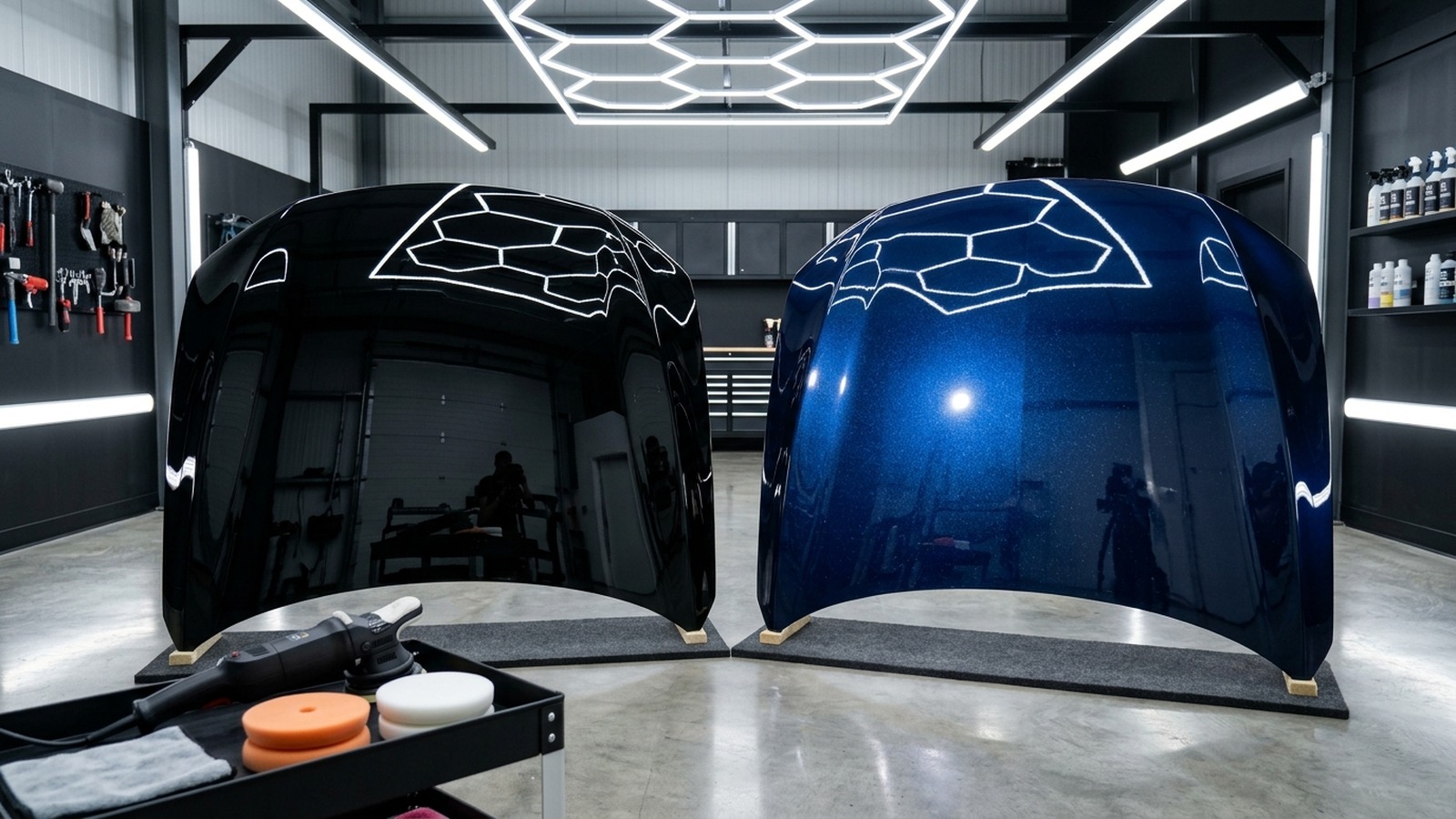
Buffer trails can make an expensive vehicle look neglected and poorly treated.However, with modern dual-action polishing and disciplined workshop protocols. Even the worst rotary ghost marks can be eliminated forever.
spending in expert hologram and buffer trail removal forever levels out machine scour marks. Restoring deep colour clarity and mirror-perfect reflections.Protected by a durable ceramic coating. Your vehicle will showcase breathtaking gloss under the brightest Australian sunlight.