Noticing chalky round rings covering your car's bonnet after a summer storm or lawn sprinkler cycle is a common and distressing sight for vehicle owners. When restoring affected panels, knowing proper water spot etching removal is vital to clear stubborn mineral craters without unnecessarily stripping factory clear coat.Across regional New South Wales, including Armidale and the New England Tablelands. Vehicles often face mineral-rich borehole water, acid rainfall. Also, intense solar heat. Knowing how to distinguish surface mineral crusts from sub-surface clear coat etchings ensures you choose the safest and most good repair method.
water spot etching removal is a multi-step paint repair process that combines chemical acid descaling with precision machine compounding to clear water spots. It dissolves alkaline mineral crusts and levels tiny clear coat craters caused by baked-on acid deposits, restoring smooth, crystal-clear paint reflections.
- The Chemistry of Water Spots. Minerals, Acids. Also, Solar Heat.
- sorting Water Spot Damage. Stage 1 vs Stage 2 Etchings.
- Armidale Regional Water Hazards. Bore Water and Tableland Rains.
- Step 1. Chemical Mineral Dissolvers and Acid Washes.
- Step 2. Dual-Action Machine Levelling for Etched Craters.
- Restoring Etched car Glass and Exterior Trims.
- Paint Depth Gauge depth tests and Clear Coat Safety.
- Comparison Table. Water Spot Stages, Chemistry. Also, Removal Methods.
- The 10-Point water spot etching removal Checklist.
- Preventing Future Etching. water-shedding Ceramic Coatings.
- Workplace Safety and Environmental Standards in Australia.
- People Also Ask About Water Spot Etching.
- often Asked Questions on Water Spot Removal.
- Conclusion. Restoring Flawless Clear Coat Clarity.
The Chemistry of Water Spots: Minerals, Acids, and Solar Heat
Water spots are far more destructive than simple dried water drops.When tap water, borehole irrigation, or rain droplets sit on car paint under sunlight. They act as miniature magnifying lenses.
As solar heat warms the droplet. Water dries out into the atmosphere. However, the dissolved mineral contents.primarily calcium carbonate, magnesium, silica. Also, sulfate salts. cannot dry out.
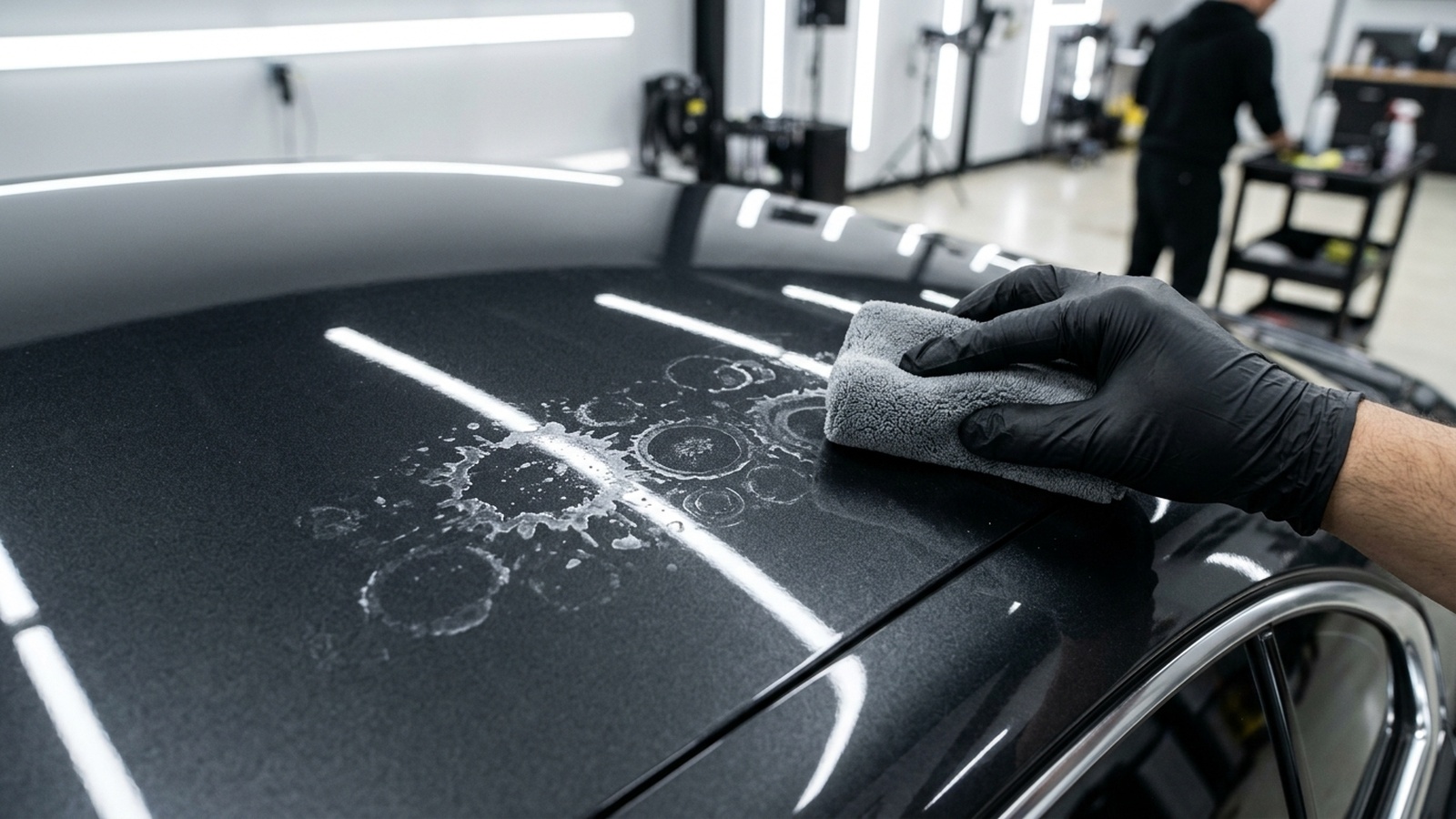
These minerals concentrate at the droplet edge. Forming a chalky mineral ring known as alkaline scaling.If left untreated under intense solar radiation. Heat activates chemical reactions between acidic pollutants and the clear coat polymer chains.
The acidic solution eats downwards into the clear coat. Forming a physical tiny crater. This process is true chemical etching.Once an acid crater forms. Washing with soap cannot remove the blemish because the clear coat itself is physically pitted.
knowing this chemical process explains why prompt water spot etching removal is key before permanent paint damage occurs.
Classifying Water Spot Damage: Stage 1 vs Stage 2 Etchings
pro detailers classify water spot damage into distinct stages to determine the least aggressive corrective approach.
Stage 1 water spots are surface mineral deposits. These chalky white rings sit directly on top of the clear coat.The underlying paint is structurally undamaged. Also, running your clean fingertip over the panel reveals a slightly rough texture.
Stage 1 deposits can be eliminated using specialized chemical acid mineral removers without requiring gritty machine compounding.
Stage 2 water spots represent sub-surface clear coat etchings.Here, acidic moisture has chemically burned into the clear coat layer. Leaving concave craters with raised perimeter rims.
Stage 2 etchings cannot be dissolved by chemical sprays alone. Removing them requires tool dual-action machine polishing to shave down the crater rim until the clear coat surface is fully flat and level again.
Armidale Regional Water Hazards: Bore Water and Tableland Rains
Vehicles driven and stored in Armidale face severe water spot risks due to regional water chemistry and high-altitude sunlight.
Many regional properties and rural properties across the New England Tablelands rely on unsoftened borehole water for irrigation and outdoor washing.Regional borehole water carries high levels of dissolved limestone, calcium. Also, iron minerals.
When residential lawn sprinklers spray parked vehicles on hot days, the high mineral load bakes onto hot panels in minutes. Leaving thick alkaline scaling across paint and windscreens.
Armidale's elevation of roughly 1,000 metres also delivers higher UV radiation and rapid heat changes. An afternoon thunderstorm followed immediately by blazing sunlight creates ideal conditions for rapid acid etching.
also, native tree canopy dripping leaves organic acids and tannin residues on vehicles parked beneath gum trees. Compounding mineral etching with sticky organic chemical burns.
Step 1: Chemical Mineral Dissolvers and Acid Washes
The first step in water spot repair is always chemical descaling. pro detailers never buff over raw mineral scale with a machine polisher.
Machine buffing over chalky calcium deposits drags sharp mineral crystals across the paint. Scouring fresh swirl marks and scratches into the clear coat. Chemical descaling dissolves the alkaline mineral crust first.
Detailers spray dedicated water spot removers containing buffered mild hydrochloric, phosphoric. Or sulfamic acids onto cool panels out of direct sunlight. These mild acid formulas break the ionic chemical bond between the calcium scale and the clear coat.
After letting the product dwell for two to three minutes. The detailer gently works the area with a soft microfibre towel and neutralizes the acid with an alkaline snow foam wash.
If all water marks vanish after this chemical stage. The paint suffered only Stage 1 deposits. Also, the clear coat remains at full factory thickness.
Step 2: Dual-Action Machine Levelling for Etched Craters
If round craters remain clearly visible after chemical mineral removal. The damage has progressed to Stage 2 sub-surface etching. repair now requires machine paint repair.
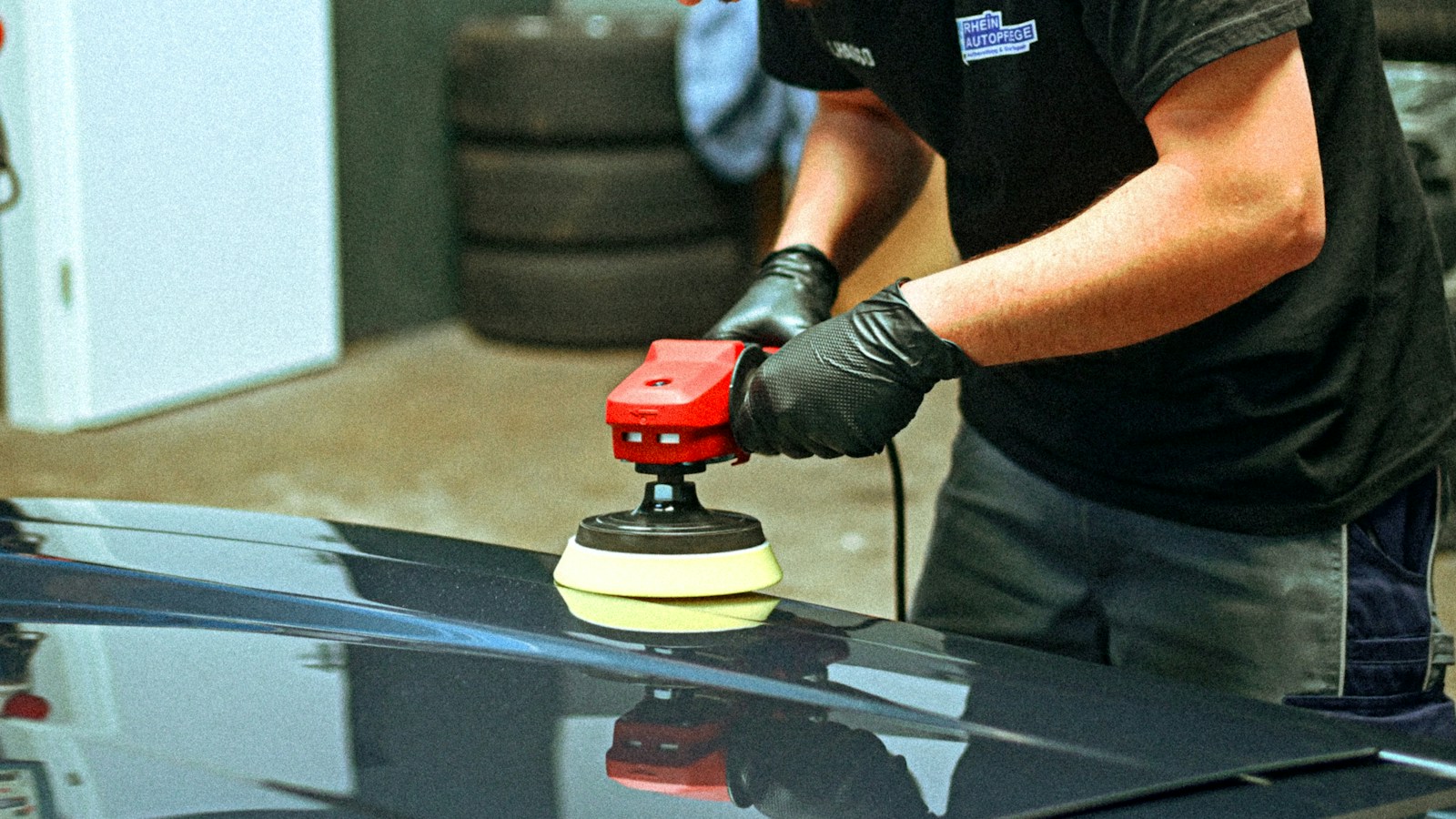
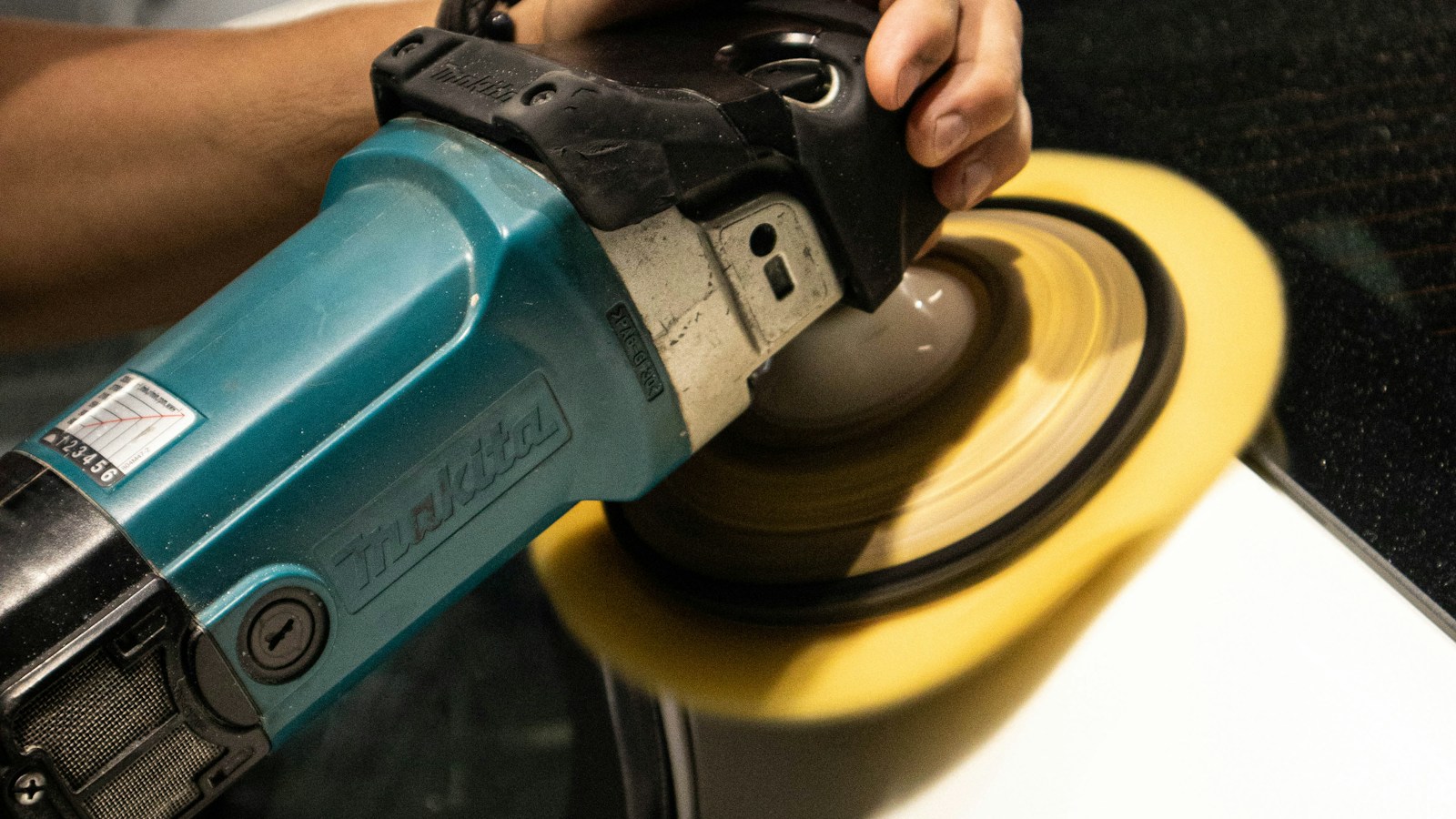
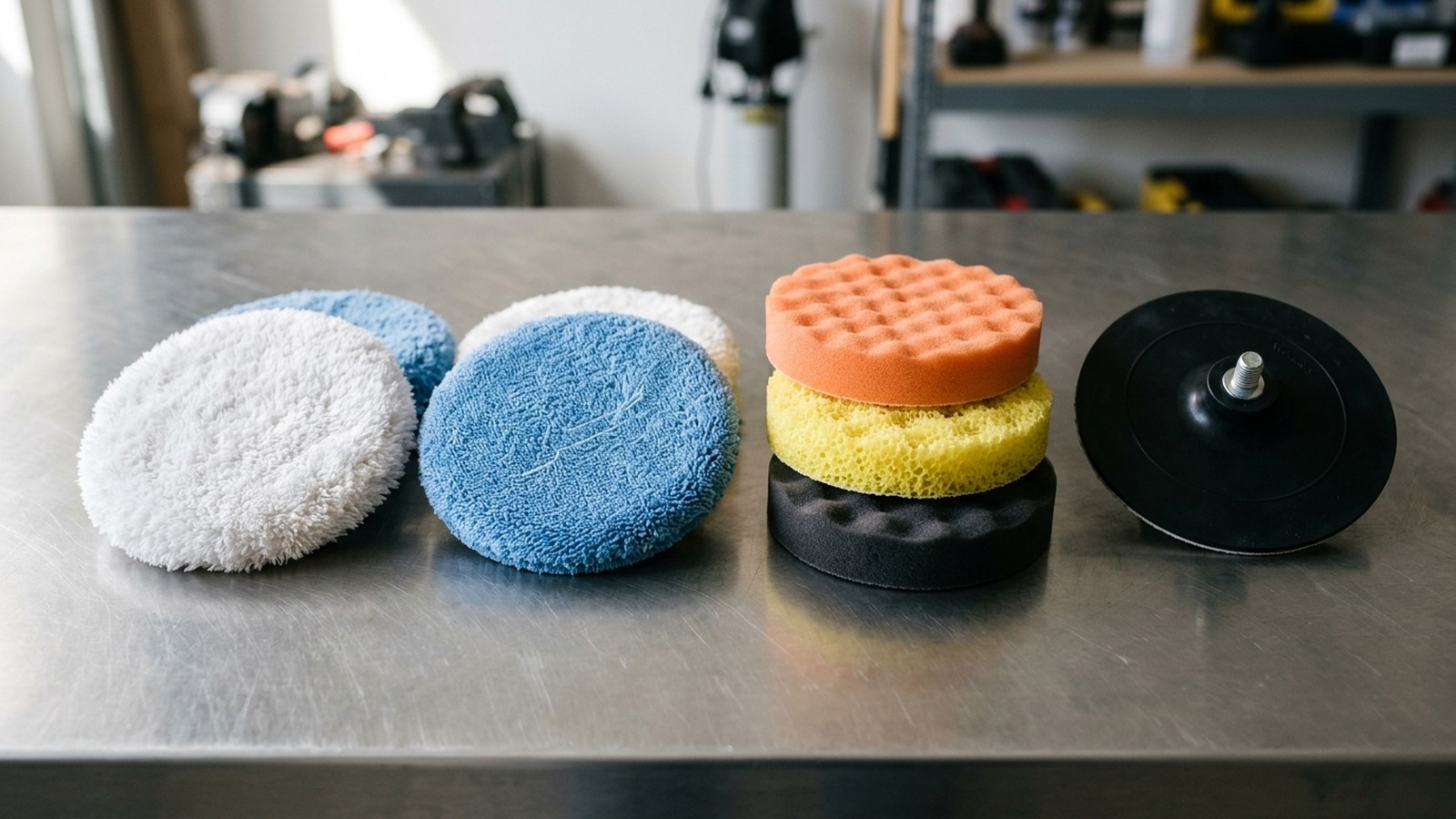
The detailer uses a dual-action orbital polisher paired with a firm foam or microfibre cutting pad and breaking gritty compound. The goal is to shave away the tiny crater edges until the panel surface is flat.
The detailer works in small 40cm sections using steady cross-hatch passes.The heat and grits level the top 1 to 2 microns of clear coat. Clearing the visual crater shadow.
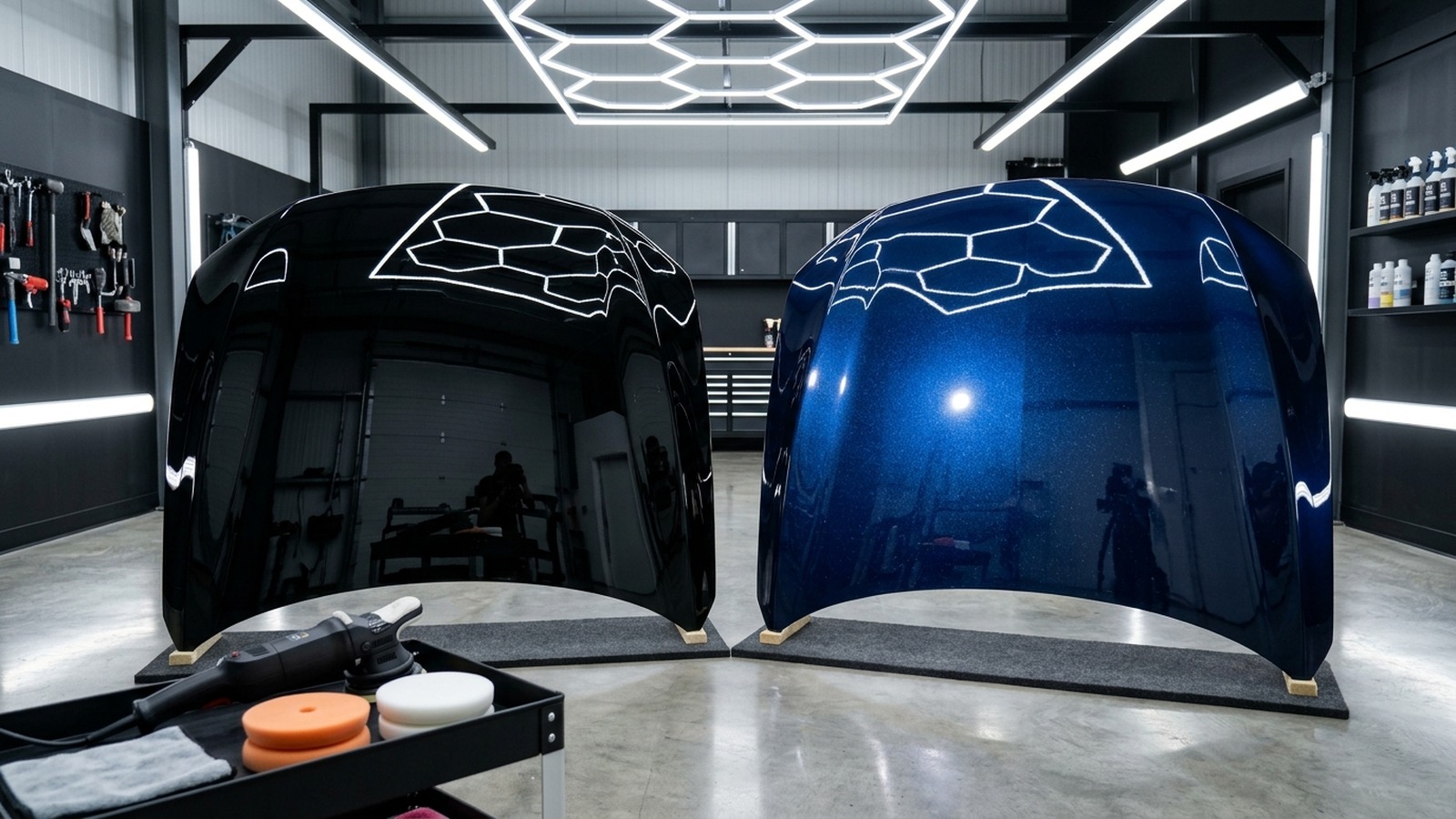
Following the compounding cut pass. The detailer switches to a soft finishing foam pad and fine jewel polish.This finishing step clears any compounding haze. Restoring absolute optical clarity and mirror gloss.
Wiping the panel with an alcohol-based check spray confirms that the etching crater has been physically flattened rather than filled by compound oils.
Restoring Etched car Glass and Exterior Trims
Water spots do not restrict themselves to painted panels.vehicle windscreens, side windows. Also, rubber trims are equally vulnerable.
Mineral scale on windscreens creates dangerous glare during night driving and causes wiper blades to chatter and skip across the glass.Because car glass is far harder than clear coat. Removing glass etching requires specialized gritty chemistry.
detailers use cerium oxide glass polish paired with firm rayon felt pads on a rotary or dual-action machine.Cerium oxide chemically and mechanically polishes glass. Clearing mineral scaling and light wiper scratches without optical distortion.
Unpainted black textured plastic trims require chemical descaling followed by deep conditioning with silicone-free trim restorers. Ceramic plastic trim sealants can then be applied to prevent future mineral bonding on textured surfaces.
Paint Depth Gauge depth tests and Clear Coat Safety
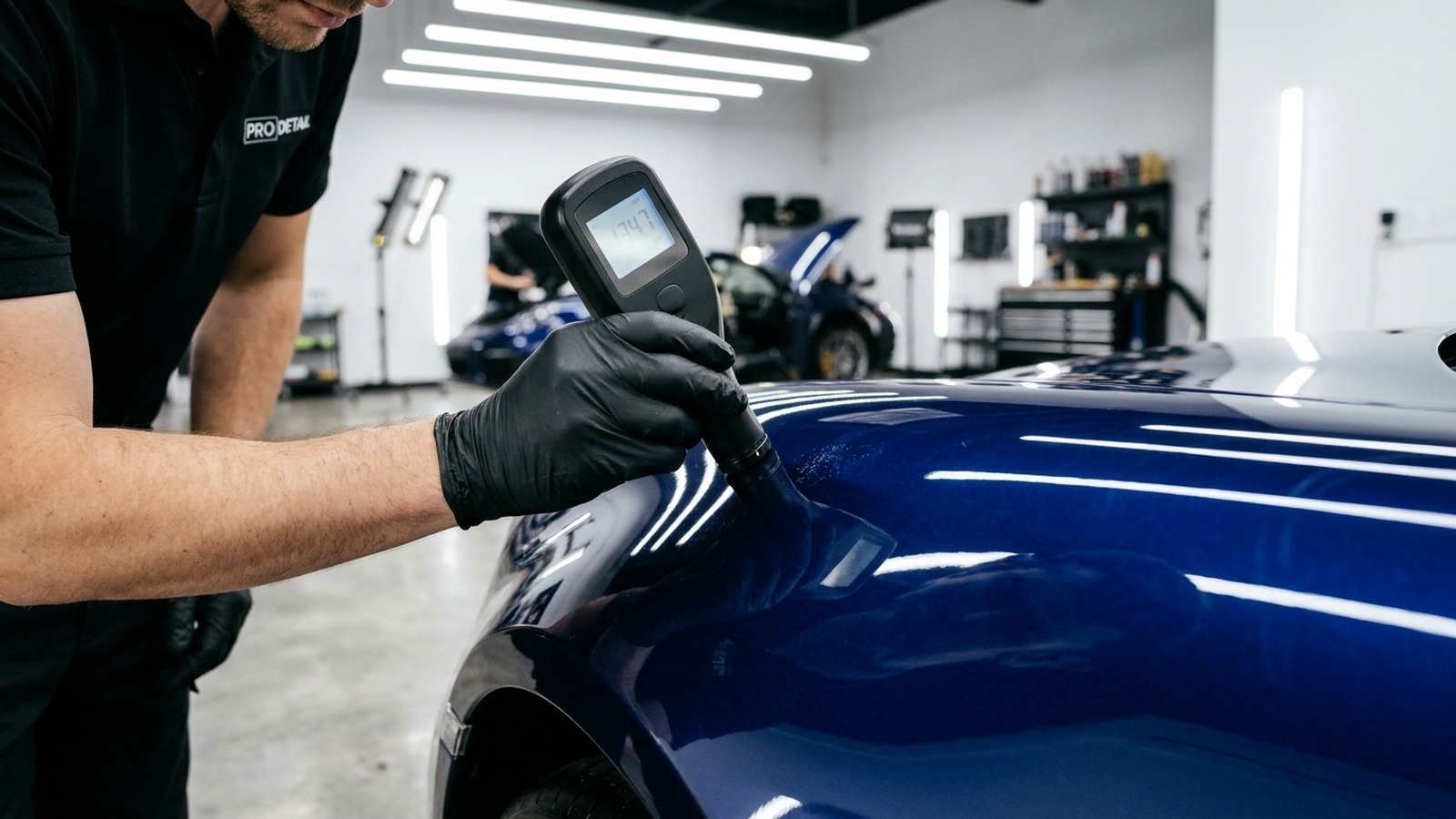
Safe paint repair always begins with accurate measurement. Detailers measure clear coat thickness across all affected panels using digital paint depth gauges.
Factory clear coat is thin. Typically measuring between 35 and 50 microns. Severe water spot etchings can penetrate 3 to 5 microns deep into the clear coat.
If a water spot has etched deeply into older paint with low remaining clear coat thickness under 25 microns. Attempting to polish the crater fully flat carries an extreme risk of clear coat strike-through.
In those severe circumstances, an honest pro detailer will recommend rounding off the sharp crater edge to reduce light reflection by 70% to 80%. Rather than chasing 100% removal and ruining the panel.
Comparison Table: Water Spot Stages, Chemistry, and Removal Methods
The table below summarizes the features, chemistry. Also, treatment protocols for different water spot severities.
| Water Spot Category. | Stage 1: Mineral Scale. | Stage 2: Sub-Surface Etching. | Stage 3: Severe Clear Coat Breakdown. |
|---|---|---|---|
| Damage Depth. | Surface deposit (0 microns deep). | Sub-surface crater (1 to 3 microns). | Deep chemical fracture (5+ microns). |
| Surface Feel. | Slightly chalky and rough. | Smooth but indented crater. | Rough fractured crater with crazing. |
| Primary Chemical Cause. | Bore water calcium & magnesium salts. | Acid rain, sprinkler mineral heat baking. | long sun baking of industrial acid. |
| repair Method. | Mild acid chemical descaler gel. | Dual-action machine compounding. | Wet sanding or partial respraying. |
| Clear Coat Removed. | 0.0 microns removed. | 1.5 to 2.5 microns safely levelled. | 4.0+ microns (high burn-through risk). |
The 10-Point water spot etching removal Checklist
pro workshops use this thorough 10-step protocol to clear water spot damage safely.
- Thorough Pre-Wash and cleaning. Wash vehicle with pH-neutral soap to remove loose surface dirt and road film.
- Surface Cool Down check. Confirm panels are fully cool to the touch and parked in a shaded indoor bay.
- Digital Paint Thickness Audit. Measure clear coat depth across all water-spotted panels to record baseline values.
- Chemical Acid Gel use. Apply specialized water spot gel to dissolve surface calcium and alkaline mineral salts.
- Two-Minute Dwell and Agitation. Allow the chemical formula to dissolve mineral bonds. Then agitate gently with microfibre.
- Thorough Neutralization Rinse. Rinse panels with clean water and neutralize residual acid using high-pH snow foam.
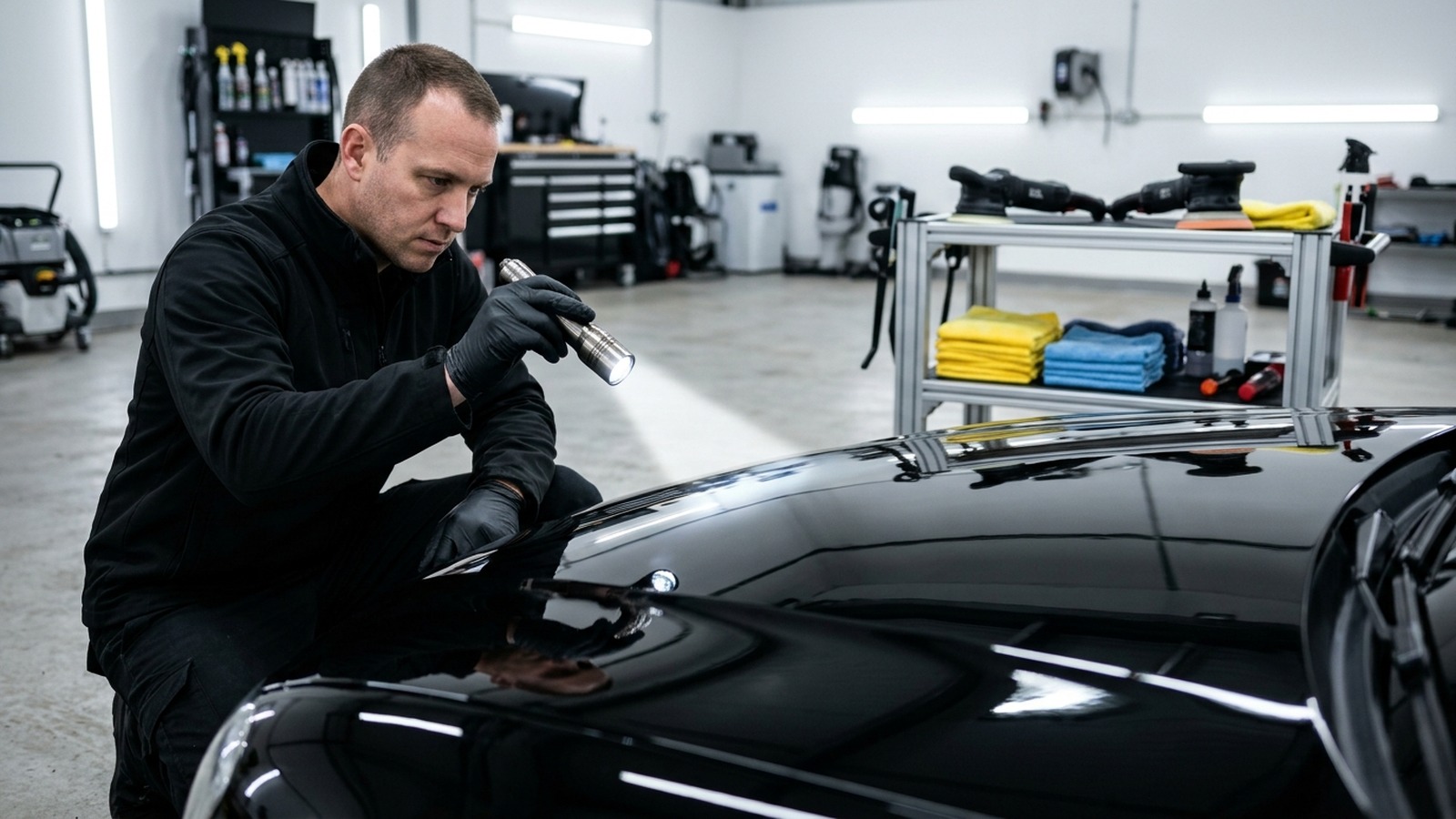
- High-CRI LED Etching Audit. Inspect dried paint under dedicated check lighting to check for sub-surface craters.
- Dual-Action Machine Compounding. Level Stage 2 craters using firm foam cutting pads and breaking gritty compound.
- Jewel Polish Refinement. Polish panels with soft finishing foam to clear compounding haze and restore gloss.
- Ceramic shielding Sealing. Apply a water-shedding ceramic coating to shield raw clear coat from future mineral etching.
Preventing Future Etching: water-shedding Ceramic Coatings
Once your vehicle's paint has been restored to crystal clarity. Preventing future water spot etching is paramount. Leaving bare clear coat exposed guarantees that the next sprinkler face will etch fresh craters.
Applying a high-quality ceramic coating is the most good preventative defense against mineral damage. Ceramic coatings cure into a glass-like quartz matrix across clear coat pores.
The coating's high surface tension creates extreme water beading. Water beads into tight spheres with contact angles exceeding 110 degrees. When driving, wind pressure rolls these water beads straight off the car before they can dry out.
Ceramic coatings also provide strong chemical resistance across the pH 2 to pH 12 range.If hard bore water does dry out on a coated panel. The minerals bond to the sacrificial quartz coating rather than burning into the factory clear coat beneath.
Workplace Safety and Environmental Standards in Australia
Water spot repair involves working with chemical descaling acids and powered machine polishers. Under rules governed by Safe Work Australia, detailing workshops must maintain safety data sheets, use acid-resistant nitrile gloves. Also, provide proper eye shield.
Workshops must also comply with environmental discharge standards enforced by the NSW Environment shield Authority. Chemical rinse waters containing dissolved mineral salts and descaling acids must be captured and neutralized before trade waste discharge.
Public water safety and chemical handling compliance is also monitored by NSW Health. Ensuring workshop staff and customers are protected from toxic chemical fumes and hazardous runoff.
To clear unsightly water spot craters and safeguard your vehicle with water-shedding shield, booking pro water spot etching removal in Armidale guarantees that your car's paint is restored safely by trained detailers.
People Also Ask About Water Spot Etching
Can vinegar remove water spots from car paint?
Diluted white vinegar contains acetic acid that can dissolve very fresh. Light Stage 1 mineral deposits. However, vinegar cannot level Stage 2 sub-surface etchings where acid has already burned craters into clear coat.
Will a standard car wash remove water spot etching?
No.Standard car shampoos are pH-neutral and cannot dissolve bonded calcium mineral scaling. Nor can washing fill or level etched clear coat craters. pro chemical descaling and machine repair are required.
How quickly does bore water etch car paint?
Under direct Australian sunlight on a 30-degree day. Bore water droplets can cause sub-surface clear coat etching in as little as 30 to 60 minutes as water dries out and mineral salts concentrate.
Does ceramic coating make paint 100% immune to water spots?
While ceramic coatings provide strong chemical resistance and cause water to sheet off quickly. Standing water left to dry out under intense sun can still leave mineral deposits on top of the coating. Wiping down droplets prevents scaling.
Frequently Asked Questions on Water Spot Removal
Can clay bars remove water spot etchings?
Clay bars remove above-surface organic dirt like tree sap and overspray. However, they cannot dissolve chemical calcium scale or level indented clear coat craters. Chemical descalers and machine polishing are required.
Why shouldn't I machine polish over mineral spots directly?
Buffing over hard mineral deposits drags sharp calcium and silica crystals across paint. Grinding them into the clear coat and creating widespread scour scratches. Always dissolve minerals chemically first.
Can water spots be removed from car windscreens?
Yes. Water spots on car glass can be fully eliminated using dedicated cerium oxide glass polishing compounds paired with firm rayon pads on a rotary or dual-action machine.
How much clear coat is removed when polishing water spot etchings?
A typical machine repair pass to level Stage 2 water spot craters removes between 1.5 and 2.5 microns of clear coat. Safely preserving more than 90% of factory clear coat thickness.
What is the best way to prevent water spots after home washing?
Always wash your car in the shade on cool panels. Use filtered or softened water. Also, dry the vehicle immediately with a plush microfibre drying towel or filtered warm-air car blower.
Deionised Water Filtration and Spot-Free Mobile Rinsing
Preventing water spot etching begins at the wash hose. In Armidale, municipal tap water and rural bore supplies carry heavy mineral loads.When these minerals dry on hot vehicle panels. They create stubborn alkaline scale.
To clear this risk, professional mobile detailers use deionised water filtration systems. These systems pass tap water through specialised ion-exchange resin vessels.The resin beads attract and trap calcium, magnesium. Also, dissolved mineral salts.
The resulting water is 100% pure mineral-free water. Registering zero parts per million (0 PPM) on digital total dissolved solids (TDS) meters. Pure deionised water cannot leave mineral deposits.Even if water droplets dry out under midday sun. Zero minerals remain behind on the clear coat.
Using spot-free water rinses clears the rush to dry panels before sun drying occurs.Detailers can rinse black bonnets, roof panels. Also, glass in open daylight with complete peace of mind. spending in filtered water systems saves hours of tedious compounding and shields thin factory clear coat.
For rural property owners washing utes and farm wagons. Installing portable resin filter tanks offers permanent shield against bore water stains.It ensures every home wash leaves a clean. Streak-free shine without mineral etching.
Conclusion: Restoring Flawless Clear Coat Clarity
Water spot etching can shrink the appearance of an otherwise pristine vehicle. Turning glossy panels dull and pitted.However, with the right combination of chemical descaling and precision machine repair. Even severe mineral craters can be erased.
spending in pro water spot etching removal restores smooth optical reflections and clears dangerous mineral buildup.Protected with a high-grade water-shedding ceramic coating. Your car's paintwork will remain shielded against the harshest Australian weather for years to come.