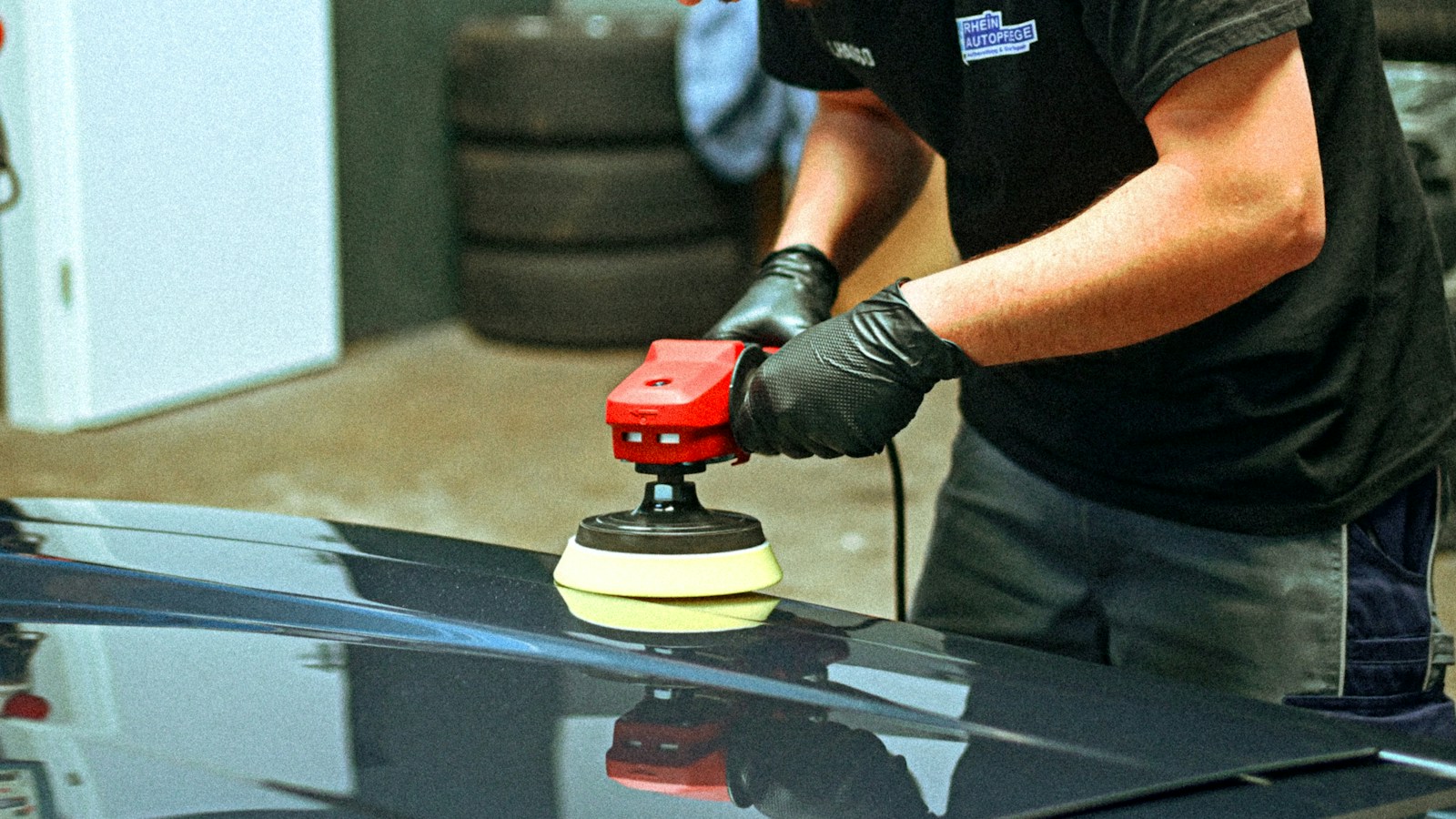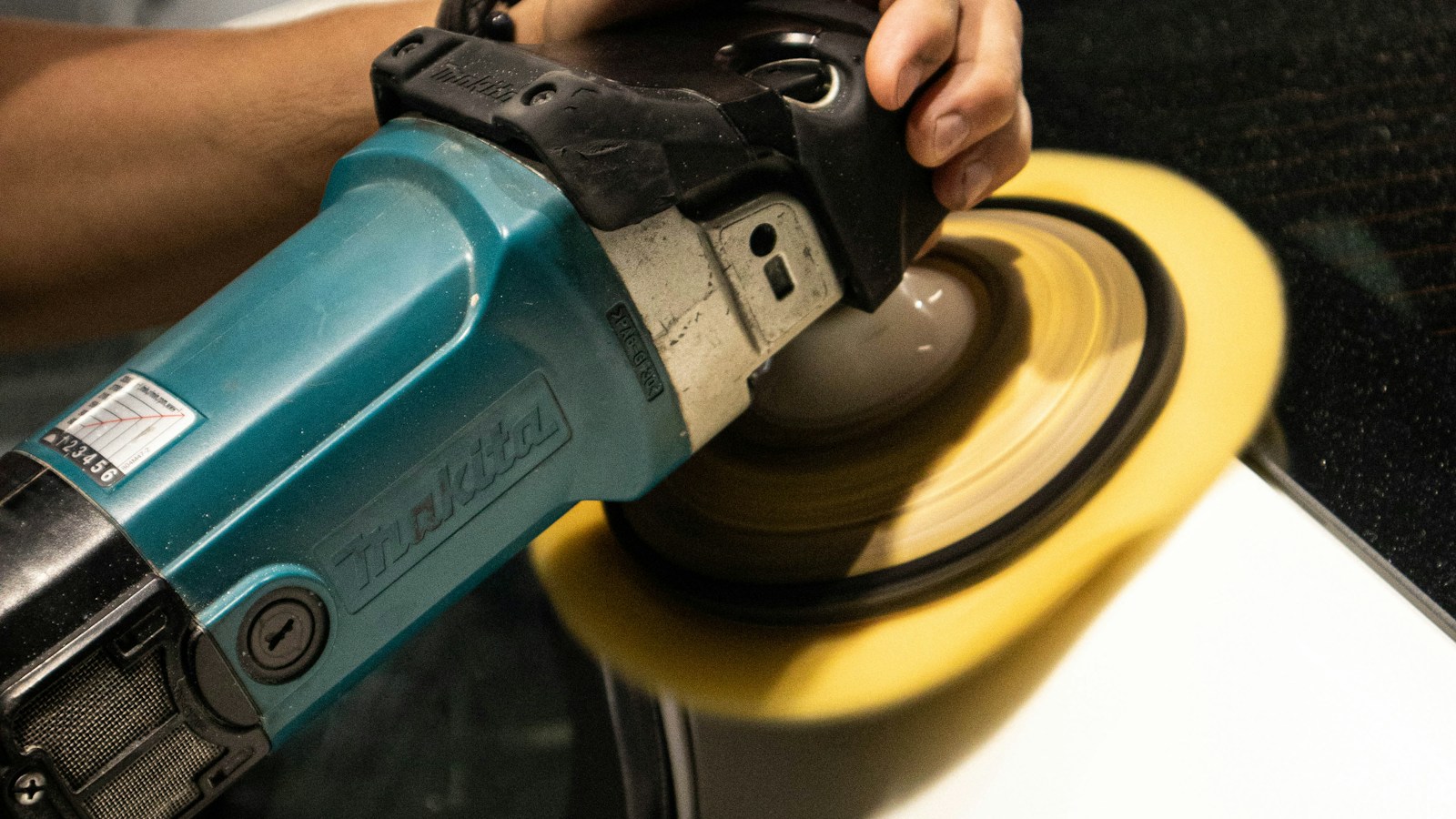
Every car enthusiast knows that no two vehicles react identically to machine polishing.When booking paint repair, knowing soft vs hard automotive paint is key to choose the correct pad, compound. Also, machine speed without burning thin factory panels.In regional Australia, including Armidale and the New England Tablelands. Intense solar radiation and airborne gravel dust punish both soft Japanese clears and rock-hard European finishes. Learning how car makers formulate clear coats and how technicians tailor polishing techniques ensures your car achieves maximum gloss while preserving vital clear coat thickness.
soft vs hard automotive paint describes the chemical scratch resistance and density of vehicle clear coat layers. Hard European ceramic clears resist light wash marring but require aggressive pads and compounds to correct. Soft Japanese clears scratch easily under light heat but polish to mirror gloss with gentle finishing pads.
- The Science of Clear Coat Hardness. Chemical Formulations.
- European Ceramic Clears vs Japanese Soft Paint Systems.
- The Nightmare of Sticky Paint. Polishing Soft Finishes.
- Armidale Climate Stress.Altitude, Heat. Also, Paint Flexing.
- How Detailers Test Paint Hardness with a Single Test Spot.
- Pad and Compound Strategy for Soft and Hard Clear Coats.
- Machine Speed and Surface Heat Control Protocols.
- Comparison Table. Soft vs Medium vs Hard car Paint.
- The 10-Point Paint Hardness Assessment Checklist.
- Matching Ceramic Coatings to Vehicle Paint Hardness.
- Workplace Health and Environmental Standards in Australia.
- People Also Ask About soft vs hard automotive paint.
- often Asked Questions on Paint Hardness.
- Conclusion. Tailoring Paint repair to Your Vehicle.
The Science of Clear Coat Hardness: Chemical Formulations
car paint hardness is not an accident. It is determined by the specific polymer chemistry and cross-linking density chosen by the vehicle maker.
Modern factory clear coats are acrylic polyurethane systems. To increase scratch resistance, some makers add nano-ceramic silica nanoparticles directly into the resin mixture.
These ceramic particles create tightly cross-linked molecular bonds.As the clear coat bakes in factory ovens. It cures into a dense. Rigid barrier rated up to 4H or 5H on the pencil hardness scale.
Conversely, other makers prioritise flexibility over rigid hardness.Highly elastic clear coats absorb light stone impacts and panel flexing without cracking.However, they sit much lower on the hardness scale. Often rating 1H to 2H.
knowing soft vs hard automotive paint helps technicians avoid using the wrong abrasive combinations. Aggressive pads that cut safely on hard German paint will scour soft Japanese finishes with severe micro-marring.
European Ceramic Clears vs Japanese Soft Paint Systems
car paint traits generally follow geographic manufacturing traditions. Although exceptions exist across vehicle models.
German marques such as Mercedes-Benz, BMW, Audi. Also, Porsche are renowned for hard clear coats. Mercedes-Benz pioneered nano-ceramic clear coat technology to resist commercial brush wash marring.
Correcting defects on German ceramic clears requires high-density microfibre cutting pads and heavy-cut aluminium oxide compounds.Even with powerful dual-action polishers. Removing deep scratches requires multiple passes and firm downward pressure.
In stark contrast, Japanese makers including Subaru, Mazda, Honda. Also, Mitsubishi commonly use soft clear coats.Soft paint is notoriously thin and prone to wash scratching, towel marring. Also, bird dropping burns.
However, soft paint corrects very quickly. A light finishing polish on a medium foam pad often clears 80% of wash swirls in a single effortless machine pass.
The Nightmare of Sticky Paint: Polishing Soft Finishes
Within the detailing industry, certain soft paint systems are infamous for a condition known as sticky paint.This condition often affects solid black Subarus, Mazdas. Also, Porsches.
Sticky paint occurs when the clear coat resin softens rapidly under machine heat heat.As the polishing pad works. The warm clear coat grabs the compound carrier oils rather than allowing the pad to glide freely.
The compound clumps into sticky gum balls on the pad face. Scouring fresh pigtail scratches into the panel.When the technician tries to wipe away the polish residue with a microfibre towel. The towel drags and scuffs the warm paint.
Mastering sticky paint requires specialised techniques.Technicians switch to water-based polishes with zero oily fillers. Use short machine buffing cycles. Also, wipe panels with diluted panel wipe sprays to release sticky residues safely.
Working in climate-controlled indoor studios also helps keep panel heat levels low. Preventing soft clear coats from becoming gummy during machine polishing.
Armidale Climate Stress: Altitude, Heat, and Paint Flexing
Vehicles driven in Armidale and across the New England Tablelands experience rapid environmental heat shifts that affect paint behavior.
Winter mornings in Armidale often drop below minus five degrees Celsius. However, summer afternoons bring blazing sun and heat levels above thirty-five degrees. This dramatic thermal cycle causes metal body panels to expand and contract constantly.
On vehicles with very hard, rigid clear coats. Rapid thermal expansion can cause tiny stress fractures around stone chips.On vehicles with soft clear coats. High summer sun softens the paint. Making it vulnerable to baking bird droppings and sap burns.
also, regional winds carry sharp granite and basalt dust from rural roads. Soft Japanese clear coats scratch almost instantly if dry-wiped with dusty towels in regional car parks.
knowing these regional hazards highlights why applying shielding ceramic coatings over corrected paint is vital for vehicle longevity in high-altitude environments.
How Detailers Test Paint Hardness with a Single Test Spot
Professional detailers never guess paint hardness.Before machine polishing an entire vehicle. Technicians conduct a methodical test spot.
The technician selects an inconspicuous 40cm by 40cm section. Typically on the lower boot lid or bonnet edge. A medium foam pad paired with a fine finishing polish is tested first.
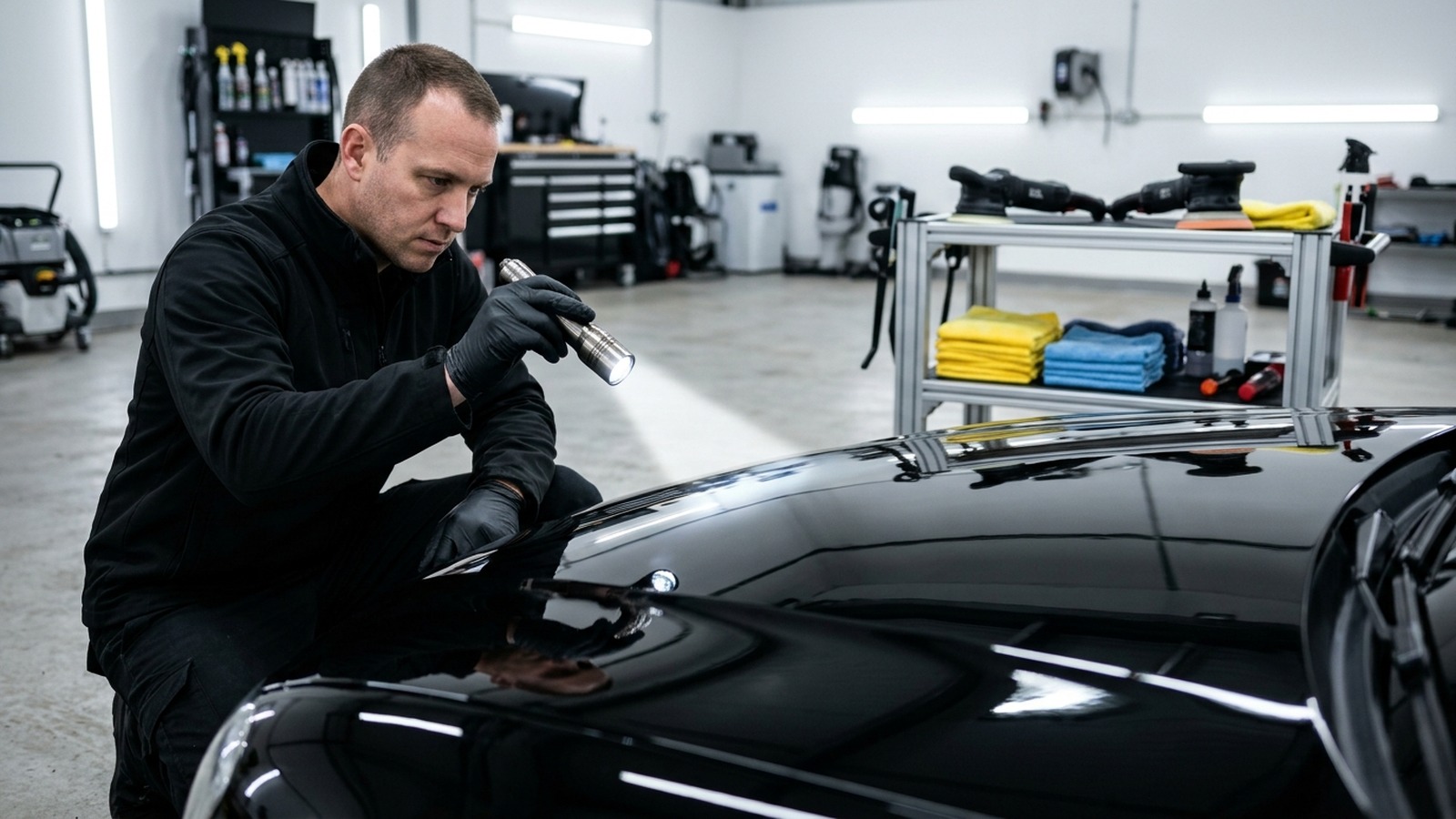
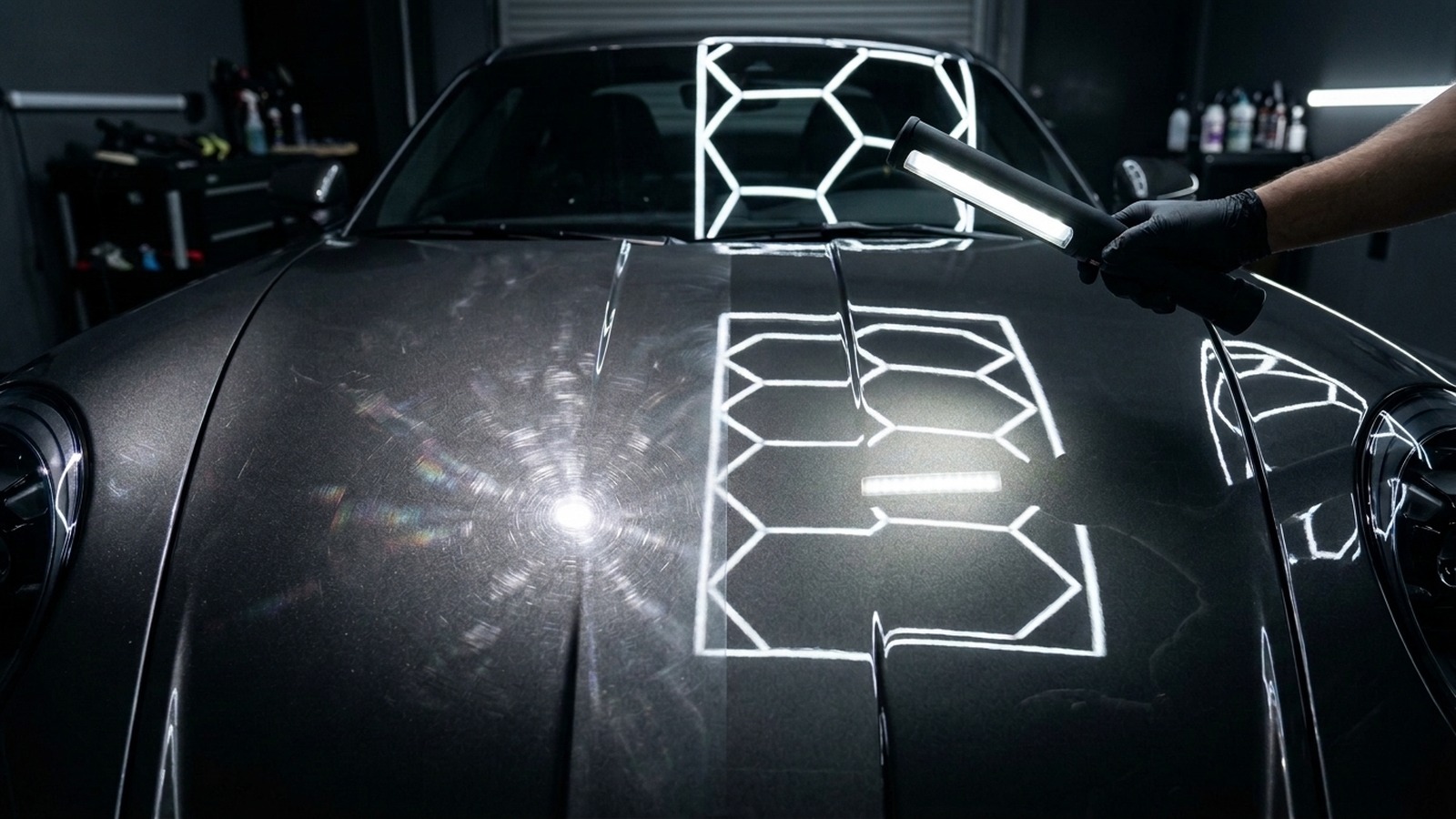
The detailer runs three overlapping cross-hatch passes at moderate machine speed. Then wipes the area clean with an alcohol panel wipe. The panel is inspected under a high-CRI LED check torch.
If the test spot reveals zero defect removal. The clear coat is hard. Requiring an upgrade to a microfibre pad and heavy compounding paste.If the test spot shows complete defect removal but leaves micro-marring haze, the paint is ultra-soft. Requiring an even gentler finishing foam pad.
This disciplined test spot protocol locks in the exact pad and polish combination required to deliver crystal clarity without unnecessary clear coat removal.
Pad and Compound Strategy for Soft and Hard Clear Coats
Tailoring the abrasive pad and chemical formulation to paint hardness is the secret to master-level paint repair.
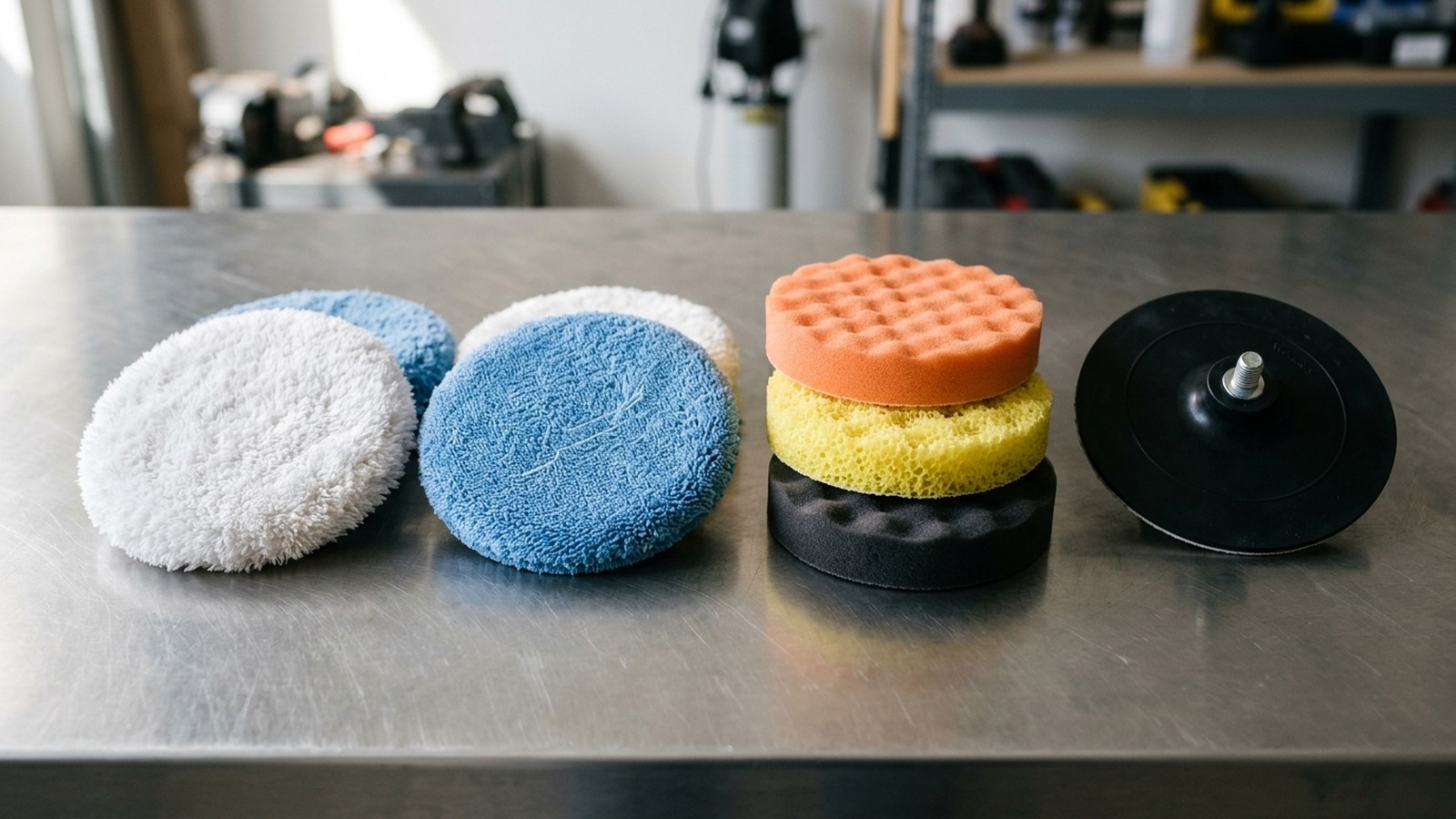
For hard ceramic clear coats. 1. Microfibre cutting pads provide maximum cutting density to level deep scratches quickly. 2. Heavy compounding pastes with high-purity aluminium oxide abrasives break down tough clear coat ridges. 3. High machine oscillation speeds generate sufficient energy to level the rigid clear coat surface.
For soft clear coats. 1.Soft open-cell foam pads provide gentle cushioning. Preventing pad edge scouring on thin panels. 2. Ultra-fine finishing glazes with micro-abrasives polish clear coat without creating compounding haze. 3. Lower machine speeds and minimal downward pressure keep heat heat low, preventing clear coat gumming.
By respecting these distinct tool requirements. Detailers preserve valuable factory paint while achieving mirror-smooth reflections.
Machine Speed and Surface Heat Control Protocols
Controlling surface heat heat is paramount when working with different paint hardness levels.heat heat softens clear coat. Increasing the risk of strike-through.
On hard European finishes, detailers can safely run dual-action polishers on speed settings 4 and 5. The dense paint dissipates heat effectively across the steel panel without burning.
On soft clear coats, running high machine speeds creates immediate problems.heat causes the clear coat to soften rapidly. Leading to towel marring during wipedown.
Detailers working on soft paint reduce machine speeds to setting 3 or 3.5, use lighter arm pressure. Also, make fewer section passes. Non-contact infrared thermometers are used to verify that surface heat levels remain below 45 degrees Celsius.
Detailers also blow out pads with compressed air after every single pass. Keeping pad faces clean prevents hot spent paint residue from galling soft panels.
Comparison Table: Soft vs Medium vs Hard Automotive Paint
The table below summarizes the traits, common vehicle brands. Also, corrective requirements for different paint hardness categories.
| Paint Category. | Typical Vehicle Brands. | Pencil Hardness. | Defect Sensitivity. | Recommended repair Setup. |
|---|---|---|---|---|
| Soft Paint. | Subaru, Mazda, Honda, Mitsubishi. | 1H to 2H. | very high (scratches from dry towels). | Soft foam pad + fine jewel polish. |
| Medium Paint. | Toyota, Ford, Holden, Hyundai, Kia. | 2H to 3H. | Moderate (standard wash marring). | Medium foam pad + one-step compound. |
| Hard Paint. | BMW, Mercedes-Benz, Audi, Volkswagen. | 3H to 4H. | Low (resists light wash marring). | Microfibre cutting pad + heavy compound. |
| Ceramic Hard Paint. | Mercedes CeramiClear, High-end Porsche. | 4H to 5H. | very low (very tough to scratch). | Wool/microfibre cut + two-stage DA polish. |
The 10-Point Paint Hardness Assessment Checklist
Professional detailers use this 10-point checklist to evaluate paint hardness and execute flawless repair.
- Vehicle Origin Identification. Check vehicle maker and assembly plant to estimate factory paint baseline.
- wash Hand Wash. Clean panels with pH-neutral soap and plush wash mitts to remove loose grit.
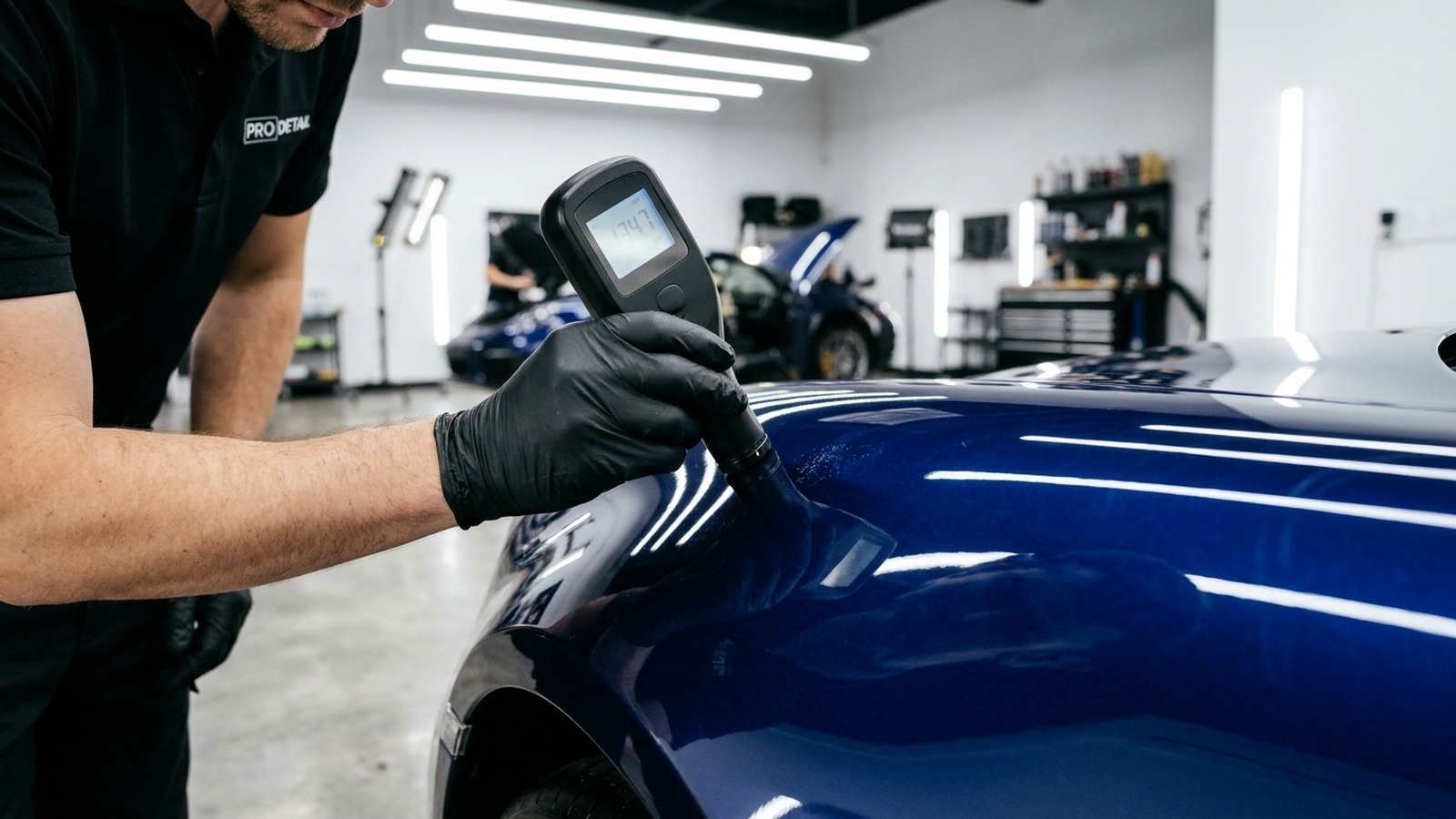
- Digital Paint Thickness Mapping. Log total micron readings across all panels to verify clear coat margins.
- High-CRI LED Defect Audit. Inspect scratch depth, wash swirl amount. Also, micro-marring patterns.
- Repaint Detection Check. Identify repainted panels which may have softer aftermarket clear coat than factory panels.
- Least Aggressive Test Spot. Buff a 40cm section with soft finishing foam and fine polish first.
- Solvent Panel Wipedown. Wipe away lubricating oils with alcohol spray to inspect true surface clarity.
- Pad and Compound Adjustment. Upgrade to firmer pads only if defect removal is under 60%.
- Surface heat Monitoring. Check panel warmth with infrared thermometers to avoid clear coat overheating.
- shielding Ceramic use. Lock in the corrected finish with a durable ceramic coating tailored for that paint system.
Matching Ceramic Coatings to Vehicle Paint Hardness
After machine repair, selecting the right shielding coating is key. Vehicle paint hardness influences how coatings bond and perform over time.
On soft Japanese clear coats. Applying a high-hardness 9H ceramic coating adds a crucial sacrificial quartz shell.The ceramic barrier increases surface hardness. Protecting the thin clear coat from fine wash scratching.
On hard European clear coats. The factory paint is already scratch-resistant.Here, ceramic coatings provide great chemical resistance against bird droppings, tree sap. Also, acid rain etching.
Ceramic coatings also impart high water beading across all paint types.Water beads into tight spheres and sheets off panels. Taking loose road dirt with it and reducing wash maintenance needs.
Workplace Health and Environmental Standards in Australia
Professional paint repair shops adhere to complete Australian workplace safety guidelines. Under rules enforced by Safe Work Australia, technicians use anti-shake gloves, wear hearing shield. Also, use dust extraction systems during compounding.
Environmental standards are governed by the NSW Environment shield Authority.Professional workshops capture wash bay trade waste through approved oil-water separators. Ensuring no chemical residues contaminate local waterways.
Road safety compliance is regulated by Transport for NSW. Maintaining clear, glare-free optical clarity across vehicle surfaces and windscreens ensures optimal driver visibility during regional journeys.
To safely clear scratches and achieve breathtaking gloss regardless of whether your car has soft Japanese or hard European paint, booking expert paint repair and detailing in Armidale guarantees tailored care from trained technicians.
People Also Ask About soft vs hard automotive paint
How do you know if your car has soft or hard paint?
Detailers perform a small test spot using a mild polish on a finishing pad. If light wash swirls vanish immediately, the paint is soft. If defects remain unchanged after three passes, the paint is hard.
Is soft car paint worse than hard car paint?
Neither is objectively worse. they simply have different strengths. Soft paint scratches easily during washing but corrects quickly. Hard paint resists wash swirls but is much harder to polish when scratched.
Does ceramic coating make soft paint hard?
Yes, to an extent.Ceramic coatings cure into a hard quartz barrier rated 9H. Adding a sacrificial top layer that much improves scratch resistance on soft factory clear coat.
Can a car have both soft and hard paint on different panels?
Yes.If a vehicle has had accident repairs or resprayed panels. The body shop may have used a softer aftermarket clear coat that behaves fully differently from the factory panels.
Frequently Asked Questions on Paint Hardness
Why does soft paint get towel scratches so easily?
Soft paint has lower cross-linking density in its clear coat resin. Even clean dry microfibre towels can exert enough heat pressure to scour micro-marring into the clear coat if wiped with heavy pressure.
Why is German car paint so hard to polish?
German makers often incorporate nano-ceramic silica particles into clear coat resins. These particles cure into a dense crystal network designed to withstand European weather and automated car washes.
Can aggressive compounding ruin soft paint?
Yes.Aggressive wool pads and heavy compounds on soft paint will scour deep hazing, generate excessive heat heat. Also, strip valuable clear coat microns unnecessarily.
How should I wash a car with soft paint?
Always pre-soak with touchless snow foam. Use the two-bucket method with grit guards and plush microfibre mitts. Also, dry the vehicle using a warm filtered air blower rather than dragging towels.
Does white car paint have different hardness than black paint?
The clear coat on modern base-and-clear paint systems is identical regardless of base colour. However, black paint reveals micro-scratches much more readily due to optical contrast.
Pad Sizing and Swage Line Safety on German vs Japanese Panels
Vehicle panels are not flat plains. Modern cars feature sharp swage lines, flared arches, and narrow pillars. Navigating these contours requires strict pad sizing discipline.
On hard German clear coats. Using large 150mm polishing pads on flat bonnet sections works well.But when reaching sharp door creases. Large pads concentrate pressure on the ridge peak. Detailers switch to smaller 75mm backing plates and pads to work close to creases without polishing directly over the ridge.
On soft Japanese paintwork, edge safety is even more key. Paint on Japanese door edges is often under 20 microns thick. Running a firm pad on soft paint edges can burn through clear coat down to primer in just two seconds.
Detailers protect these delicate body lines with low-tack blue masking tape.By covering the ridge crest. Technicians can polish adjacent flat areas safely without risking edge strike-through.
Mastering pad selection and edge shield ensures consistent defect removal across all panels while preserving fragile factory paint margins for years of safe driving.
Clear Coat Elasticity and Plastic Bumper Adhesion
Modern vehicles feature flexible polyurethane plastic bumper covers front and rear. car paint applied to plastic requires specialised flexing additives in both primer and clear coat.
These flex additives keep the cured paint pliable so it does not spiderweb or flake off under stone impacts or minor parking bumps. However, flex additives make the clear coat noticeably softer than adjacent steel wings and bonnets.
Technicians adjust machine speeds when transitioning from metal bonnets to plastic bumpers.Using lower speeds and softer foam pads prevents friction heat from softening flexible bumper clear coat. Ensuring a uniform gloss finish across all vehicle panels.
Conclusion: Tailoring Paint Correction to Your Vehicle
Recognising that vehicle paint systems differ greatly is the foundation of great detailing.Whether your pride and joy wears soft Japanese clear coat or rock-hard German ceramic paint. A customised approach is required.
weighing soft vs hard automotive paint ensures that every polishing pass is calculated and safe.Combined with high-grade ceramic shield and safe maintenance washing. Your vehicle's paintwork will maintain flawless. Mirror-like reflections for years to come.