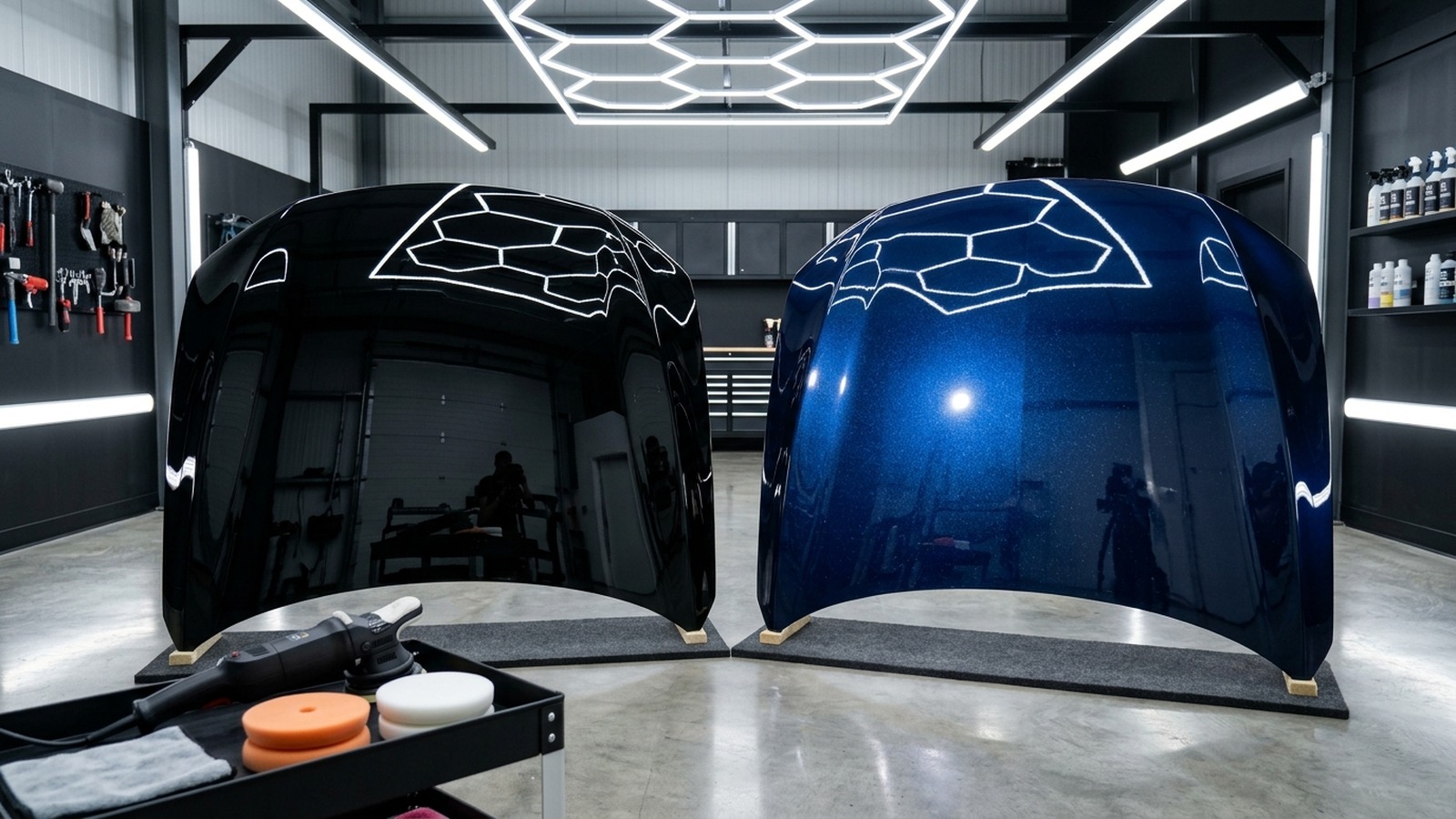
Achieving true mirror-like automotive clarity requires a comprehensive understanding of abrasive chemistry. And evaluating heavy compound vs finishing polish represents the core distinction between defect elimination and optical refinement. Automotive clear coat finishes are subjected to continuous micro-scratching from automated wash tunnels. abrasive dust. And aggressive road debris. When enthusiasts attempt paint correction without understanding heavy compound vs finishing polish traits. they frequently risk either scouring the clear coat with unrefined abrasives or wasting hours attempting to remove deep defects with an overly mild finishing glaze.
Evaluating this specialised procedure centers on abrasive particle size and clear coat removal rates. Heavy compounds utilize aggressive micro-abrasives to level deep swirl marks, scratches, and sanding marks, while finishing polishes employ ultra-fine diminishing particles to eliminate compound haze and maximize optical gloss.
Table of Contents.
- Abrasive Particle Dynamics: SMAT vs DAT Technologies.
- Heavy Compounds: Rapid Defect Removal and Clear Coat Leveling.
- Finishing Polishes: Refining Haze and Enhancing Surface Gloss.
- Pad Pairing Synergy: Wool. Microfiber. And Foam Interfaces.
- Executing a Flawless Two-Stage Paint Correction Process.
- Direct Comparison: heavy compound vs finishing polish standards.
- Essential Paint Correction Preparation and Polishing Checklist.
- Paint Correction Dynamics in Regional Australia and Armidale.
- People Also Ask About Paint Correction Compounds.
- Frequently Asked Questions.
- Abrasive Selection and Optical Jewelling Summary.
Abrasive Particle Dynamics: SMAT vs DAT Technologies.
Modern machine polishing relies on sophisticated abrasive tribology. At the tiny level. clear coats do not shine merely because chemicals are applied to them. they reflect light coherently when the surface is rendered perfectly flat and free of tiny peaks. valleys. And scratches. To achieve this. chemical manufacturers engineer abrasive grains into liquid emulsion suspensions.
Historically. polishing relied on Diminishing Abrasive Technology (DAT). In a DAT mixture. abrasive agglomerates physically fracture and break down under machine heat and moving friction. transitioning progressively from coarse cutting particles into fine polishing grains during a single buffing cycle. Conversely. contemporary corrections heavily use Super Micro-Abrasive Technology (SMAT). SMAT grains consist of sub-micron engineered aluminium oxides that maintain their precise size and shape throughout the entire buffing cycle. Understanding this abrasive behaviour is vital when selecting premium paint correction and machine polishing services. This ensures that clear coats are leveled with pinpoint tiny precision.
Heavy Compounds: Rapid Defect Removal and Clear Coat Leveling.
Heavy cutting compounds represent the heavy artillery of paint correction. Formulated with high levels of dense. sharp micro-abrasives. heavy compounds are clearly engineered to level out severe paint flaws. including heavy automatic car-wash swirl marks. deep fingernail scratches behind door handles. bird-dropping acid etching. And P1500 to P2000 wet sanding marks.
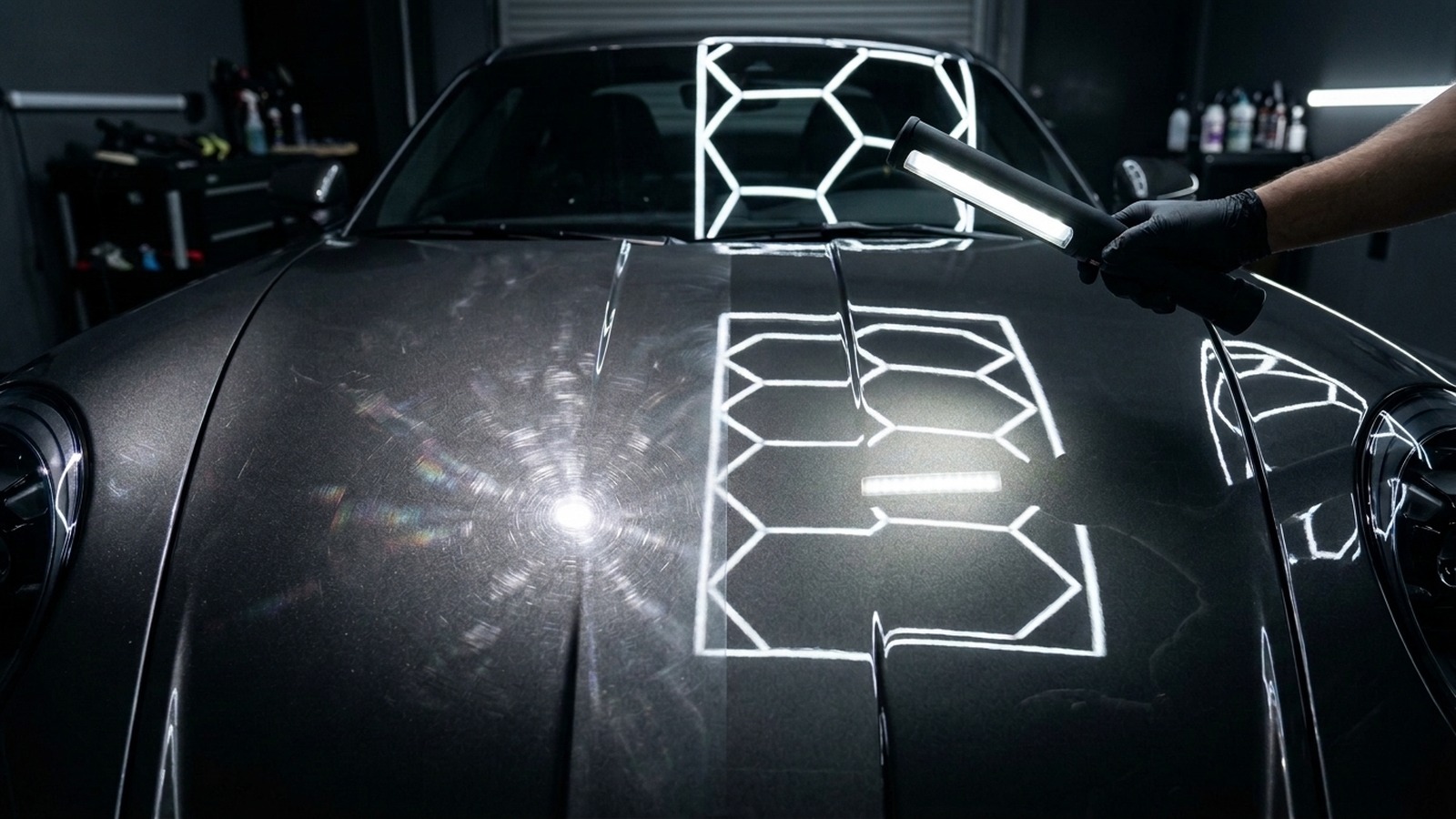
The operational mechanism of a heavy compound involves the calculated physical removal of a tiny layer of clear coat. Because a scratch is simply a trench in the clear coat that refracts light irregularly. eliminating the scratch requires shaving the surrounding clear coat down to the floor of the trench. Depending on machine speed. pad aggressiveness. And operator downward pressure. a heavy compound typically removes between 2 and 5 microns of clear coat material. However. Because heavy abrasives cut aggressively. they inherently leave behind micro-marring. light swirl tracks. And an optical cloudiness known as "compound haze."
Finishing Polishes: Refining Haze and Enhancing Surface Gloss.
A finishing polish serves an entirely distinct thermodynamic and optical objective. Operating with ultra-fine abrasive powders suspended in rich lubricating carrier oils. a finishing polish does not possess the cutting power required to level deep scratches. Instead. its specialized function is to systematically eliminate the micro-marring. buffer trails. And tiny scouring tracks left behind by the heavy compounding stage.
During the finishing stage. clear coat removal is minimal. typically less than 0.5 microns. The tiny abrasives plane off the minute micro-scratches left by the compound. flattening the surface topography until light reflects with 95%+ specular shine. In pro detailing circles. this phase is often termed "jewelling" or "optical burnishing." Skipping the finishing polish step leaves vehicle paint looking cloudy. greyed. And devoid of the deep. rich colour saturation that defines elite automotive presentations.
Pad Pairing Synergy: Wool, Microfiber. And Foam Interfaces.
An abrasive liquid cannot perform effectively in isolation. its cutting efficiency is intimately linked to the moving interface pad selected. Pairing a heavy compound with a soft finishing pad yields poor defect removal and excessive chemical gumming. While pairing a finishing polish with an aggressive twisted wool pad re-introduces scouring marks onto the clear coat.
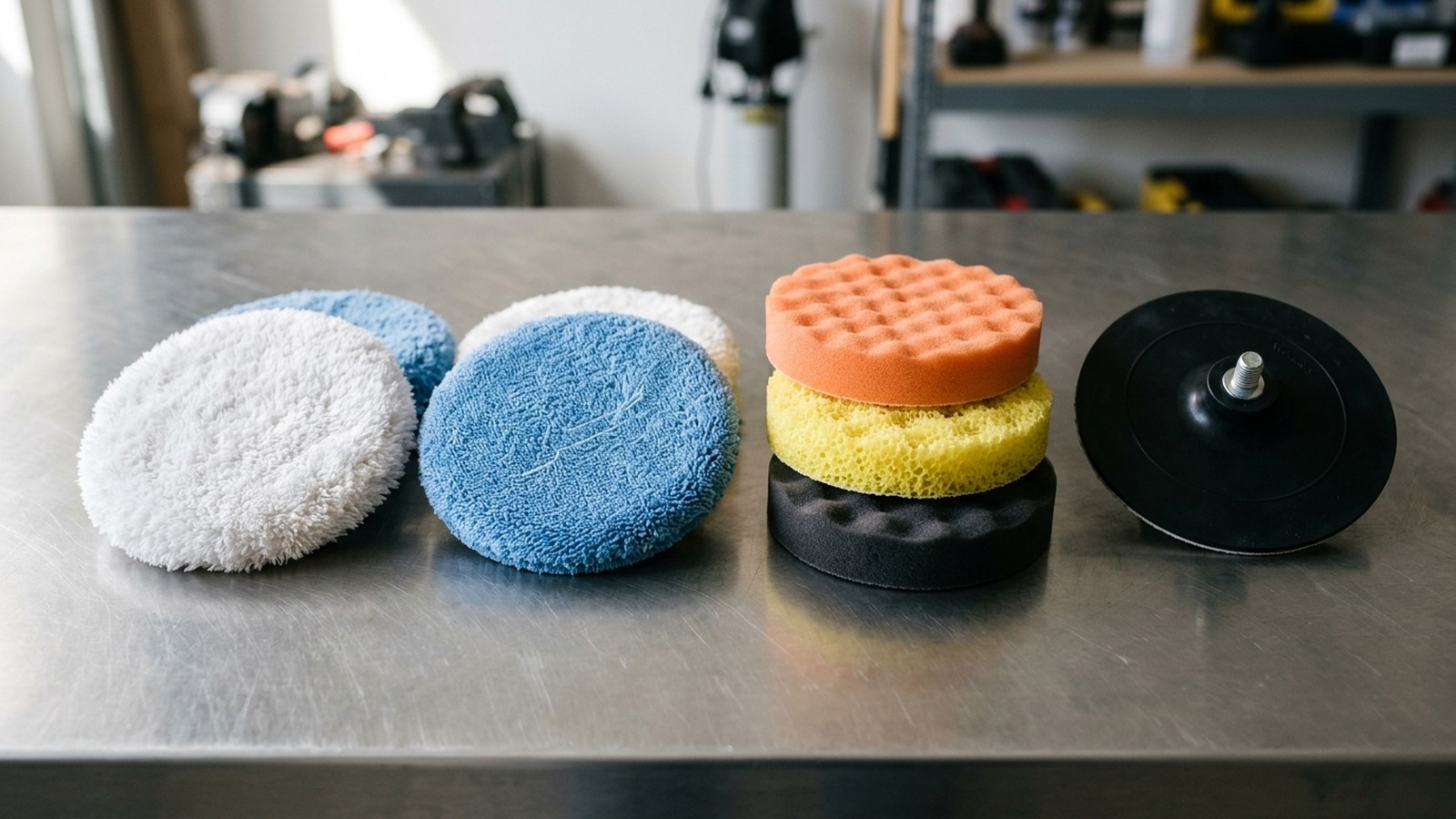
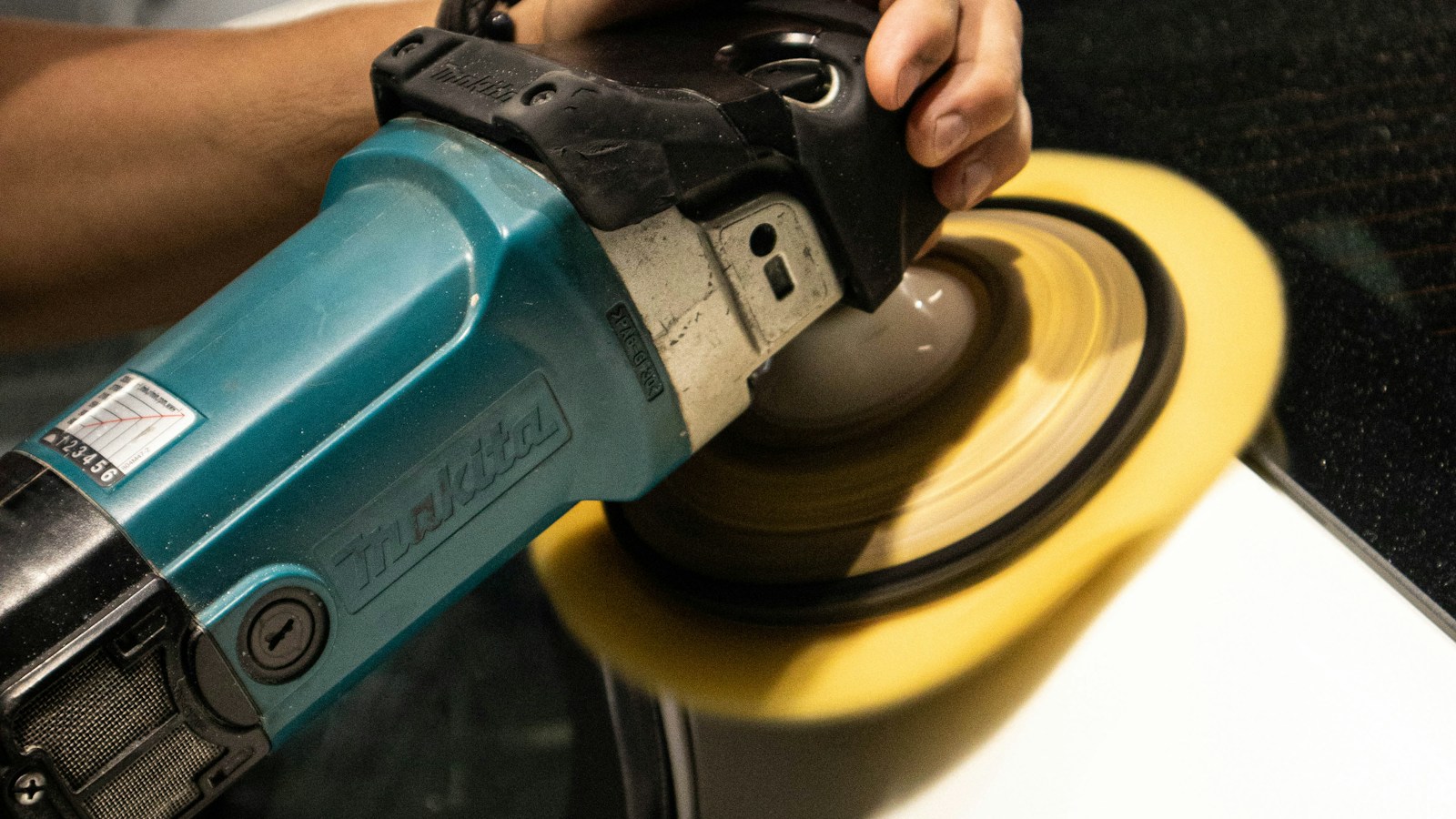
For heavy compounding on hard clear coats (such as factory German ceramic-infused clears). detailers pair cutting compounds with twisted wool pads on rotary buffers. Or high-density microfibre cutting discs on random orbital machines. The microfibre strands deliver immense surface area. trapping compound grains and maximizing friction against clear coat defects. Conversely. for finishing polishes. soft closed-cell or reticulated foam pads (such as black or gold European foam) provide the compliant cushion necessary to burnish clear coat without generating excessive surface heat.
Executing a Flawless Two-Stage Paint Correction Process.
Combining this specialised procedure into a cohesive. sequential multi-stage paint correction workflow bonds flawless defect elimination while preserving maximum clear coat thickness.
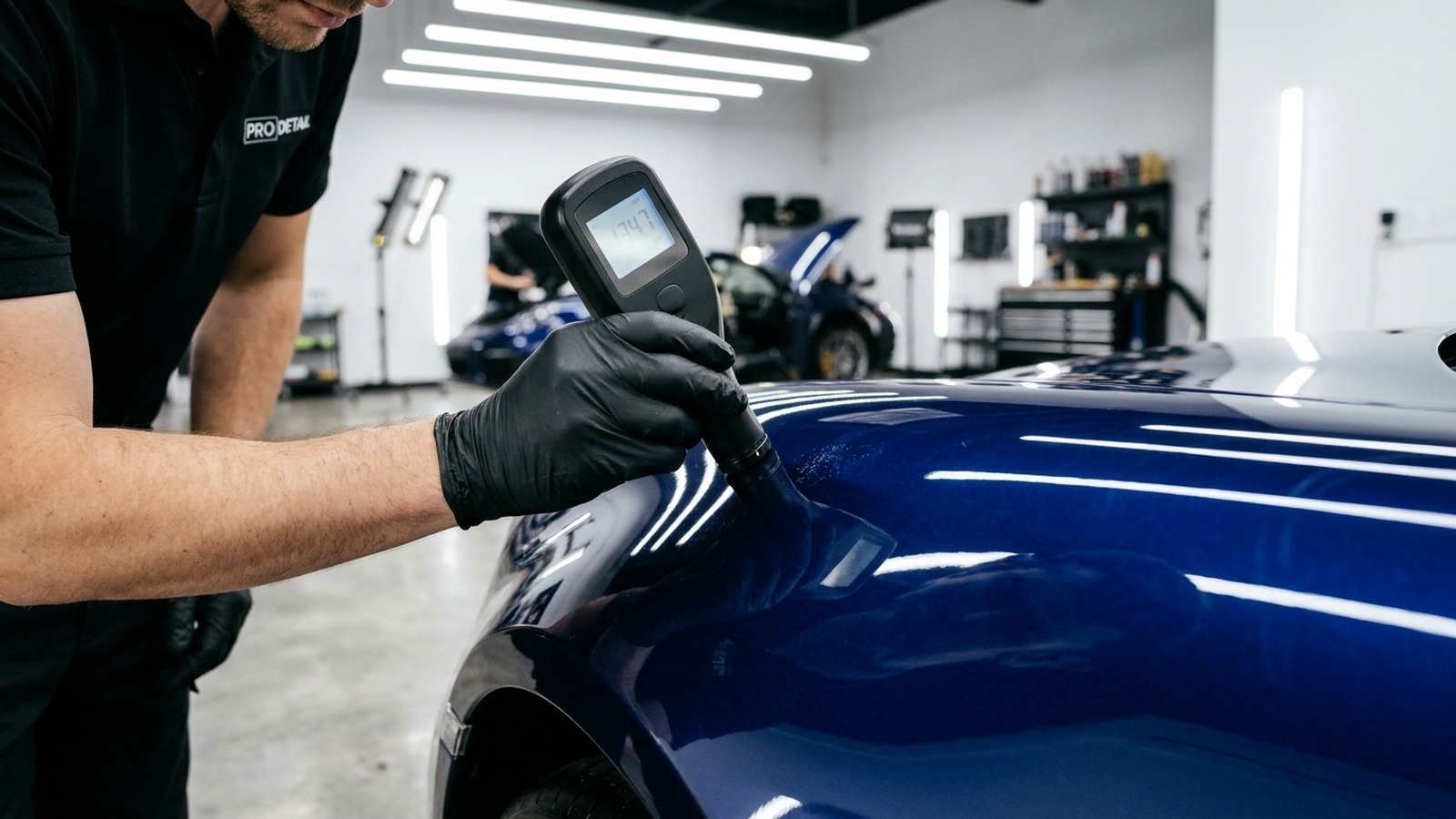
- cleaning and Paint Depth Measurement: Thoroughly wash. chemically clean with iron fallout removers. And clay bar the vehicle. Use an electronic paint depth gauge to measure clear coat thickness across all steel and aluminium panels. This ensures safe working margins.
- Test Spot Validation: Never polish an entire vehicle without performing a controlled test spot on a 40x40 centimetre test section. Validate that the chosen pad and compound combination successfully removes defects without excessive clear coat loss.
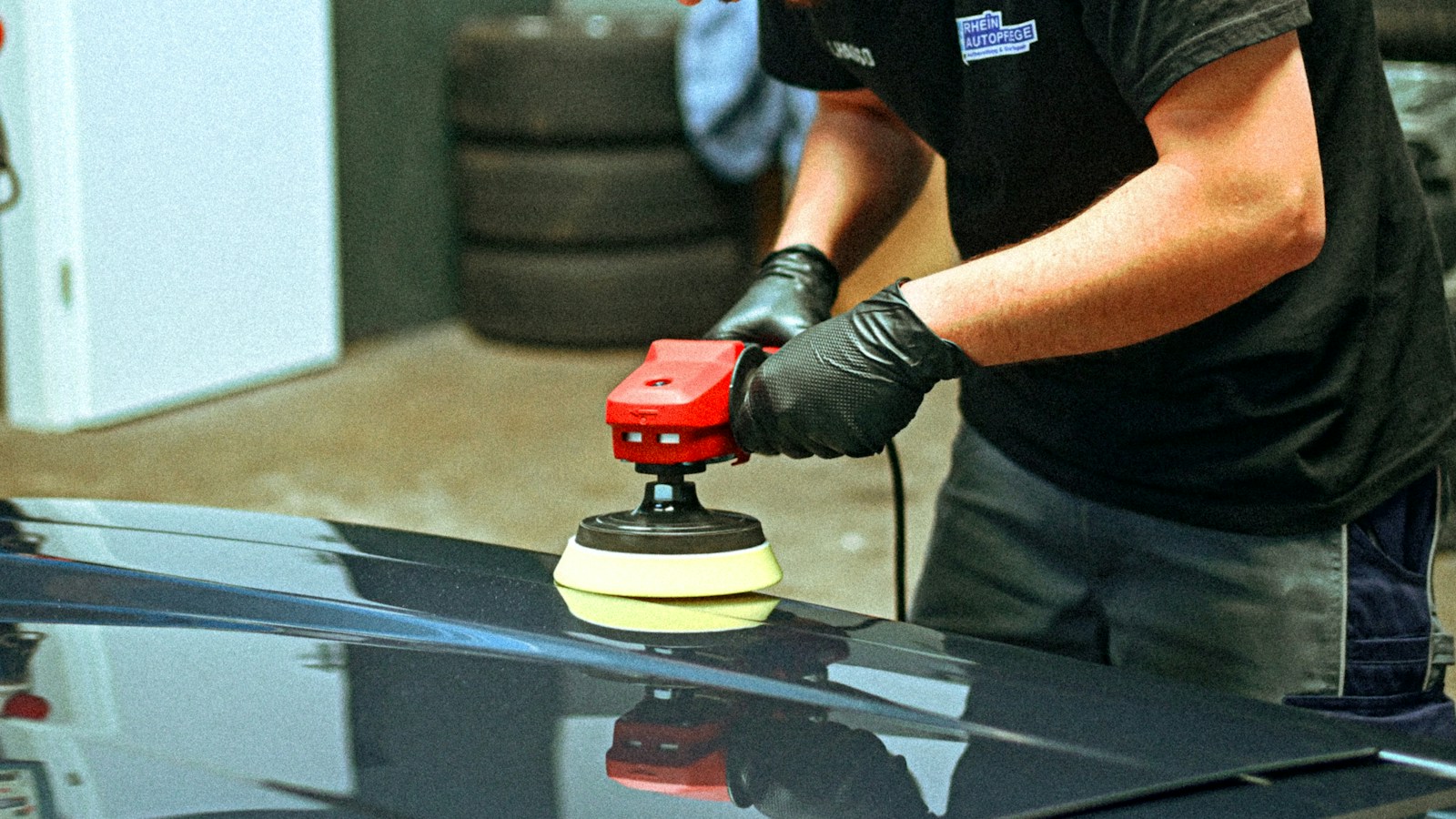
- Heavy Compounding Passes: Apply 3 to 4 pea-sized drops of heavy cutting compound to a primed microfibre or wool pad. Work the machine in overlapping cross-hatch passes (left-to-right. then up-and-down) at medium-high speeds with moderate downward pressure until defects are leveled.
- Panel Wipe Down: Inspect the compounded section by spraying an isopropyl alcohol (IPA) or solvent panel-prep wipe to remove lubricating carrier oils. This exposes the true bare surface. This ensures defects have been physically removed rather than temporarily masked with cosmetic oils.
- Pad and Chemical Transition: Switch to a dedicated soft foam finishing pad and an ultra-fine finishing polish. Clean the machine backing plate to prevent cross-dirt from stray heavy compound particles.
- Jewelling Polish Passes: Work the finishing polish at lower machine speeds with light downward pressure. This allows the fine abrasives to refine compound haze and burnish the clear coat to a mirror gloss.
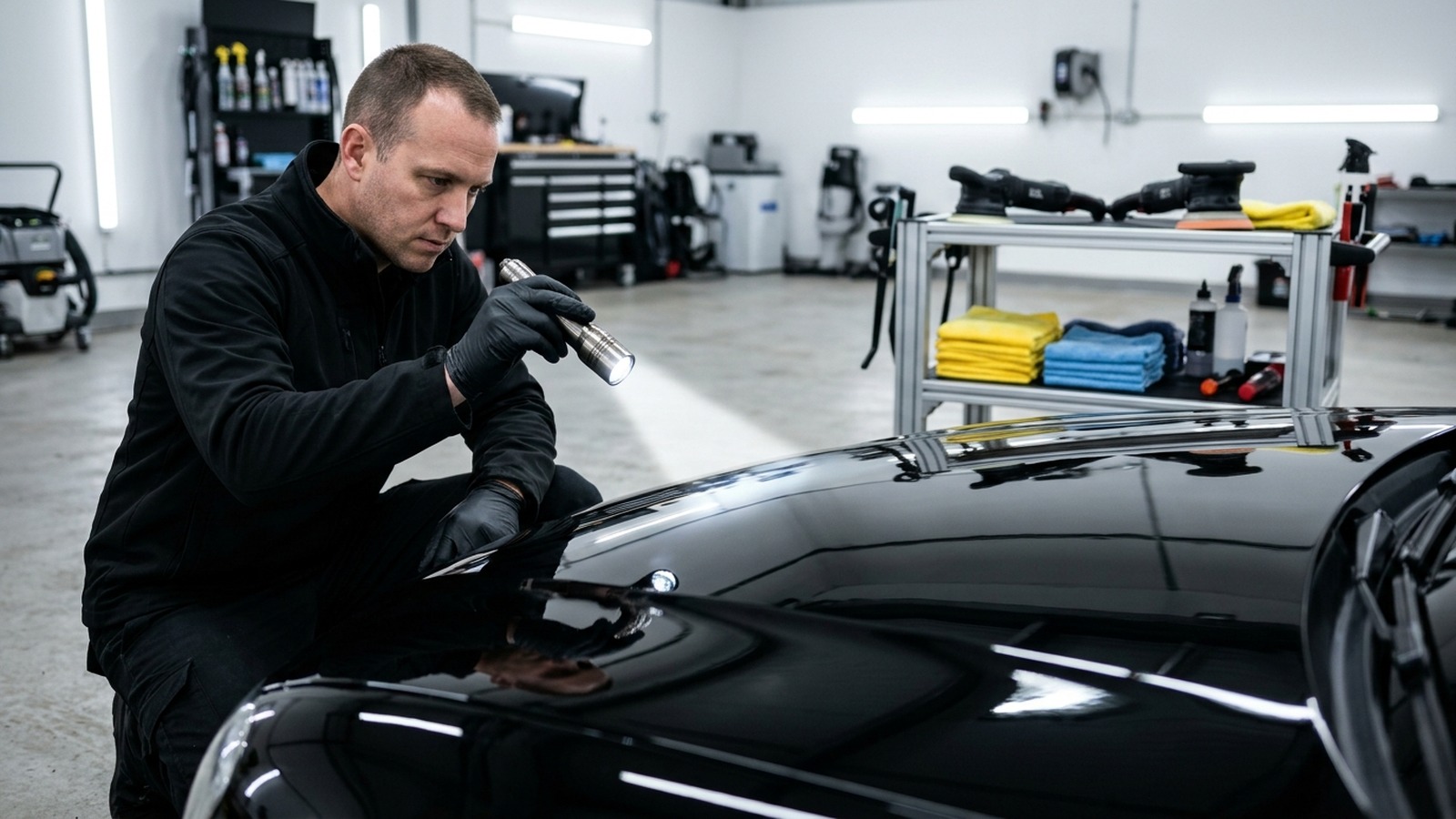
- Final Inspection under Dual-Spectrum Lighting: Inspect the finished paintwork using both warm halogen and cold LED inspection lights to verify complete elimination of holograms and micro-marring.
Direct Comparison: heavy compound vs finishing polish standards.
Understanding the core operational differences between heavy compound vs finishing polish ensures that detailers select appropriate abrasive systems for each paint correction phase.
| Technical Metric. | Heavy Cutting Compound. | Fine Finishing Polish. |
|---|---|---|
| Primary Purpose. | Level deep scratches. sanding marks. And swirl marks. | Eliminate compound haze. jewelling. And optical gloss. |
| Abrasive Size / Density. | Coarse to medium micro-abrasives (high density). | Sub-micron refining abrasives (low density). |
| Clear Coat Removal. | Substantial: 2.0 to 5.0 microns per cycle. | Minimal: 0.1 to 0.5 microns per cycle. |
| Optimal Pad Interface. | Twisted wool. microfibre cutting pad. hard foam. | Soft reticulated foam. finishing microfibre. |
| Machine Speed (O/min). | High: Speed 4 to 6 (DA) / 1200-1500 RPM (Rotary). | Low to Medium: Speed 2 to 3.5 (DA) / 800-1000 RPM. |
| Visual Output. | Defect-free surface with light micro-marring haze. | Ultra-deep mirror shine and rich gloss. |
| Required Follow-up. | Always requires a secondary finishing polish stage. | Ready for immediate ceramic coating or sealant. |
Essential Paint Correction Preparation and Polishing Checklist.
Following a strict operational checklist bonds consistent correction quality and avoids costly clear coat strike-through mistakes.
- Measure Before Cutting: Document paint depth across high-risk areas including body creases. panel edges. And door jambs where clear coat is historically thinner.
- Mask Sensitive Trims: Apply automotive low-tack masking tape over unpainted black textured plastic trims. rubber window weatherstrips. And sharp panel ridges.
- Pad Priming: Prime dry polishing pads thoroughly with a thin. even coat of product to prevent dry friction scouring on initial contact.
- Frequent Pad Cleaning: Clean polishing pads with a pad spur. compressed air. Or a stiff nylon brush after every single work section to clear caked clear coat residue.
- Avoid Working Hot Panels: Never polish vehicle bodywork under direct sunlight or when metal panels are hot to the touch. excess heat causes compounds to flash and gum prematurely.
- Isolate Compounds: Keep heavy cutting pads. finishing pads. And microfiber buffing towels completely segregated to prevent abrasive cross-dirt.
- Apply Surface Protection: Immediately seal freshly corrected. bare clear coat with a ceramic quartz coating. graphene spray. Or sealant sealant to lock in the finish.
Paint Correction Dynamics in Regional Australia and Armidale.
Executing pro paint correction across regional New South Wales demands specific technical adaptations. In high-altitude climates such as Armidale. intense solar sun rays combined with dry ambient conditions causes polishing chemical carriers to flash and evaporate greatly faster than in humid coastal settings. When a compounding emulsion loses its lubricating carrier oils mid-cycle. dry abrasive particles drag across the clear coat. creating micro-marring and aggressive buffer hop.
Detailers in regional areas compensate by reducing work section sizes (working 30x30 cm squares rather than large panels) and slightly increasing the quantity of compound or using water-misting techniques to maintain fluid greasing. also. vehicles operating on regional unsealed roads build up heavy. sharp silica dust embedded into lower rocker panels. Rigorous chemical cleaning and moving claying are mandatory before machine polishing to prevent loose quartz grit from being caught in a polishing pad and spun across the clear coat at 4,000 oscillations per minute.
People Also Ask About Paint Correction Compounds.
Can a finishing polish remove swirl marks on its own?
A fine finishing polish can remove very light. superficial wash haze on soft clear coats. But it lacks the abrasive density required to eliminate moderate to heavy swirl marks or deep clear coat scratches. Attempting to cut out heavy swirls with a finishing polish simply burns pad friction without removing defects.
Can you use a heavy compound by hand?
While heavy compounds can be used by hand to remove small isolated scuffs (such as fingernail scratches behind door cups). hand polishing cannot generate the consistent oscillations. uniform downward pressure. Or surface heat required to level entire vehicle panels evenly. Machine polishing is mandatory for uniform clear coat correction.
Does compounding thin your car's clear coat permanently?
Yes. Paint correction is a subtractive process. Heavy compounding removes tiny amounts of clear coat material permanently. Factory clear coats are roughly 35 to 50 microns thick (the thickness of a Post-it note). Proper compounding removes only 2 to 4 microns. leaving ample clear coat for UV protection if performed by trained technicians.
What is the difference between a compound and a car wax?
A compound is an abrasive corrective liquid designed to permanently cut away damaged clear coat to level scratches. A car wax is a non-abrasive protective paste designed to fill tiny surface pores and lay down a sacrificial protective layer over corrected paint.
Frequently Asked Questions.
Should I compound and polish a brand new car?
Most brand new vehicles arrive from factory assembly plants and dealership transit lots with light transport damage. iron fallout. And dealer wash swirls. A brand new car rarely needs heavy compounding. But a gentle single-stage finishing polish is strongly recommended to jewel the clear coat before applying ceramic coating.
What causes buffer trails and holograms during compounding?
Holograms and buffer trails are visual artifacts caused by improper rotary buffer technique. dirty polishing pads. high rotational speeds. Or failing to follow up a heavy compounding step with a dedicated fine finishing polish and soft foam pad.
How many times can a car be compounded in its lifetime?
Because factory clear coats are thin. a vehicle should undergo heavy compounding no more than two to three times in its operational lifetime. Once defects are leveled. maintaining the finish with proper two-bucket washing and ceramic protection eliminates the need for future heavy compounding.
Can a finishing polish hide scratches instead of fixing them?
Low-grade finishing glazes containing heavy silicone oils or carnauba waxes temporarily fill scratches. creating an illusion of defect removal that washes away after two or three rainstorms. True pro finishing polishes contain zero fillers. permanently leveling the paint for genuine optical clarity.
How do I know if my clear coat is too thin to compound?
Using an electronic ultrasonic paint depth gauge reveals the exact thickness of clear coat layers. If total paint depth (primer. base coat. And clear coat combined) reads below 75 to 80 microns. heavy compounding carries an extreme risk of clear coat strike-through. And only ultra-fine finishing polishes should be used.
pro detailers also consult Safe Work Australia equipment safety guidelines to bond high technical standards.
pro detailers also consult Standards Australia specular gloss testing benchmarks to bond high technical standards.
Selecting the Ideal Abrasive Curve for Soft and Hard Clears.
Every automotive clear coat reacts differently to moving polishing. German luxury marques often use ultra-hard ceramic-infused clear coats that resist light scratches but require intense abrasive work to level. Conversely. Japanese vehicles frequently feature soft. delicate clear coats that cut rapidly but scratch easily.
Achieving showroom clarity demands matching your abrasive system to paint hardness. Equipment safety and chemical handling standards published by Safe Work Australia recommend proper ventilation and personal protective equipment when handling fine compound dusts during extended machine correction. Material testing standards from Standards Australia further define optical specular gloss benchmarks for automotive coatings.
Always test your combination on a small test section before polishing the whole vehicle. Start with the least aggressive pad and compound combination. If a medium polish on a foam pad removes the defects cleanly. you avoid removing unnecessary clear coat with heavy compounding.
Clean your polishing pads frequently as you work. As the pad spins against clear coat. spent paint residue and dried compound cake across the pad face. Use compressed air or a soft pad spur after every panel section. Clean pads run cooler. cut faster. And leave far less micro-marring.
Keep your paint clean. Polish clear coat with clean pads. Fine jewelling polish brings out deep mirror gloss. Clear paint reflects light like glass. Swirls won't dull your car body. Glossy panels turn heads on sunny city streets. Drive safe on open roads. Love your car every day. Clean paint lasts for years. Safe care brings peace of mind.
Good polishing care is smart. Check paint depth before buffing. Use gentle downward pressure. Let the machine do the hard work. Clean panels stay smooth in winter and summer. Clean paint never looks faded or cloudy. You enjoy true mirror shine on every road trip. Glossy cars stay stunning. Swirls run away fast. Look after your pride and joy.
Flawless paintwork maximizes vehicle trade-in and resale returns. keen used car buyers judge maintenance by paint shine. A swirl-free. mirror-gloss body proves the car received master detailing care throughout its life. pro polishing keeps your car looking brand new.
Precision Finishing and Optical Jewelling Secrets.
Achieving true show-car paint shine requires a master understanding of abrasive dynamics. After heavy compounding levels out deep scratches and wash swirls. a dedicated finishing polish burnishes the surface to a mirror finish.
Select ultra-soft European foam finishing pads for the final jewelling phase. Soft foam cushions machine vibrations and allows sub-micron abrasives to plane down tiny compound haze without introducing new scratches.
Operate your dual action machine on low to medium speeds with very light downward pressure. Move the polisher slowly across the panel. This allows the lubricating oils to create a slick glide over the clear coat.
Wipe off polish residue using an ultra-plush. edgeless 500 GSM microfiber towel misted with a slick panel prep spray. Inspect the paintwork under multiple lighting angles to confirm complete elimination of buffer trails and holograms.
Mirror paintwork turns heads everywhere you drive. Deep. rich colour reflects sunlight like liquid glass. Flawless clear coat showcases the true beauty of your vehicle bodywork. You enjoy absolute pride of ownership on every sunny day. Smart detailers polish with patience and pride.
Finishing polish care is an art form. Prime clean foam pads with care. Work in small. controlled sections. Buff off residue with soft towels. The paint stays dazzling and swirl-free for years. You win on every drive.
Work with care. Take your time. Clean cars look great. Pros love this work. You win on every drive. Fast work brings peace of mind. Take pride in your ride. Park in the cool shade. Clean details bring true joy on every road trip. Drive safe on dirt roads. Love your car every day. Clean surfaces last for years. Safe care brings peace of mind. Keep your car clean. Wipe panels with soft cloths. Use mild soap. Pat dry with clean towels. Fast work brings joy. You win on every trip.
Good car care is easy. Clean seams once a month. Use a soft brush. Lift dirt out of corners with care. Wipe away road film with mild soap. Clean trim stays smooth in winter and summer. Clean surfaces never trap grit or dampness. You enjoy true luxury on every country mile. Clean cars stay fresh. Dirt runs away fast. Look after your pride and joy.
Drive safe on country roads. Love your car every day. Clean cars last for years. Safe care brings peace of mind. Look after your car with pride. Good habits pay off big. Smart drivers clean cars with pride.
Abrasive Selection and Optical Jewelling Summary.
Mastering the distinct roles of heavy compound vs finishing polish is the defining pillar of world-class automotive paint correction. By deploying heavy compounds to safely level deep defects and following with precision finishing polishes to jewel the clear coat to a mirror finish. detailers achieve breathtaking optical shine while preserving maximum clear coat longevity across demanding Australian operating climates.