Lifting a car bonnet reveals wiring. It shows sensors and fuel lines. It also reveals electronics. When heavy dirt builds up, using engine bay detailing safety is vital. It stops electrical damage. It keeps parts clean. An unwashed engine traps heat. It hides fluid leaks. It also weakens rubber hoses over time. However, blasting engines with high-pressure water causes harm. It ruins alternators and sensitive control units. In Armidale, unsealed roads throw dust into every gap. Safe cleaning keeps cars running well. It stops costly wear.
Engine bay detailing safety is a systematic cleaning method designed to remove dirt, grease, and road film without damaging delicate vehicle electronics. By masking sensitive components, using low-moisture dry steam or citrus degreasers, and avoiding high-pressure water, this process safely restores engine compartment components to like-new condition.
- The Mechanical Benefits of a Clean Engine Bay
- Modern Vehicle Electronics and Moisture Vulnerabilities
- Regional Dust Hazards Across Armidale and Regional NSW
- Essential Masking Protocols Before Cleaning
- Selecting Safe Degreasers: Water-Based vs Caustic Solvents
- Low-Moisture Steam and Agitation Techniques
- Drying Protocols: Compressed Air vs Heat Evaporation
- Protecting Plastics and Hoses with Non-Silicone Dressings
- Engine Cleaning Method Comparison: Pressure Wash vs Solvent vs Precision Detailing
- The 10-Point Engine Bay Detailing Safety Checklist
- Routine Under-Bonnet Inspection and Maintenance Schedule
- Bonnet Liner and Firewall Insulation Cleaning
- Battery Tray and Bare Aluminium Corrosion Care
- Cleaning Hybrid and Electric Vehicle Inverter Bays
- Radiator and Intercooler Fin Cleaning Protocols
- Intelligent Battery Sensor and Alternator Care
- Workplace Chemical Safety and Runoff Environmental Standards
- People Also Ask About Engine Bay Detailing Safety
- Frequently Asked Questions on Engine Bay Cleaning
- Conclusion: Maintaining Peak Performance Through Safe Engine Bay Care
The Mechanical Benefits of a Clean Engine Bay
Many drivers rarely look under the bonnet. But a clean engine brings real benefits. Engines run hot. Heavy grease traps heat around the engine block and reservoirs.
A clean engine makes work faster. Mechanics spot oil leaks, coolant drips, and worn belts early. Clean parts also stop dirt falling into open caps.
When selling a car, a clean engine shows pride. It proves good care. It builds trust. Prospective buyers and trade-in valuers associate an orderly engine compartment with regular logbook servicing and conscientious vehicle care.
Modern Vehicle Electronics and Moisture Vulnerabilities
Modern cars are computers on wheels. Engine bays hold control units, sensors, and plugs. These parts have delicate seals.
High pressure forces water past seals. Trapped water causes pin rust and misfires. Water jets also ruin alternators.
This is why high-pressure car wash wands should never be pointed into an engine bay. Safe cleaning relies on controlled spray bottles, soft bristle brushes, and low-pressure rinse methods that keep water away from high-risk electrical units.
Regional Dust Hazards Across Armidale and Regional NSW
Cars in Armidale face harsh roads. Rural unsealed tracks have red basalt dust. This dust gets into the engine bay through grilles.
Dust mixes with hot oil mist to form thick grime. This crust sticks to manifolds and fuse boxes. Rural roads also throw bugs through radiator fins.
In winter, heavy frosts settle over cold engine bays. Moisture mixes with dust to make an acidic paste. This corrodes bare metal.
Essential Masking Protocols Before Cleaning
Good engine bay detailing safety starts with prep work. Before applying cleaners, technicians wrap parts in plastic film and tape.
Key components requiring protection include: 1. The Alternator: Wrap the alternator housing in plastic film to protect internal copper coils and voltage regulators. 2. The Engine Control Unit (ECU): Cover main computer boxes. Also cover wire harness plugs. 3. The Fuse and Relay Box: Cover the main fuse box. This stops water entering relay pins. 4. Open Air Intake Filters: Place a plastic bag over cone filters. Cover open intake tubes too. 5. Battery Terminals: Cover battery posts. Also shield sensors on modern battery clamps.
Taking ten minutes to mask these parts is smart. It removes almost all electrical risks.
Selecting Safe Degreasers: Water-Based vs Caustic Solvents
Choosing the right cleaner is vital. In the past, mechanics used kerosene or caustic solvents. These chemicals strip bolt coatings and dry out hoses.
Detailers now use pH-neutral citrus degreasers. Natural citrus extracts dissolve grease safely. They rinse away clean without white residue.
Low-Moisture Steam and Agitation Techniques
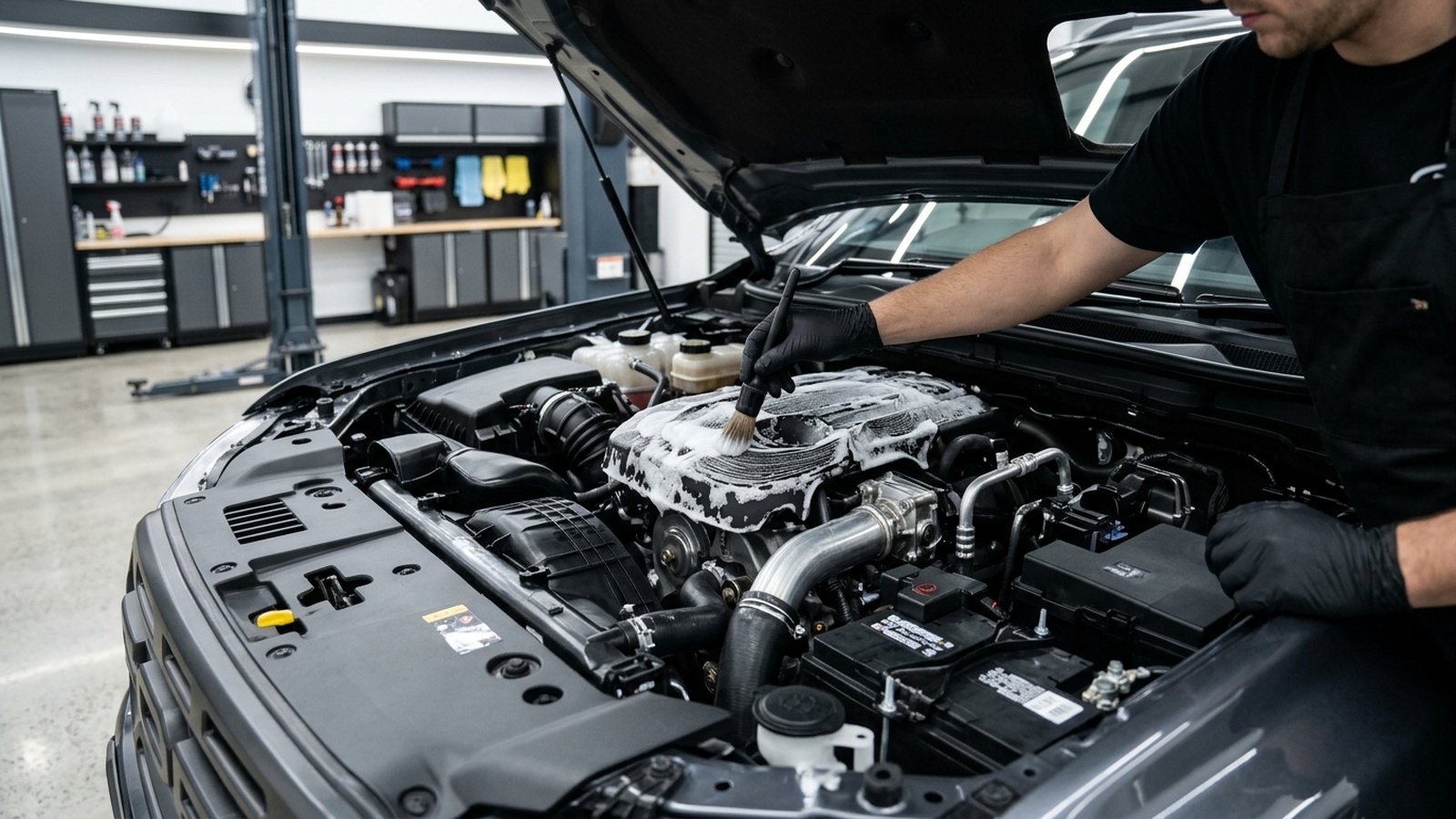
Safe engine cleaning is a hands-on task. It takes patience and the right tools. Technicians apply foaming citrus degreaser using hand pump sprayers. Foaming cleaners cling to vertical surfaces, allowing active ingredients to break down grime without running into low electrical valleys.
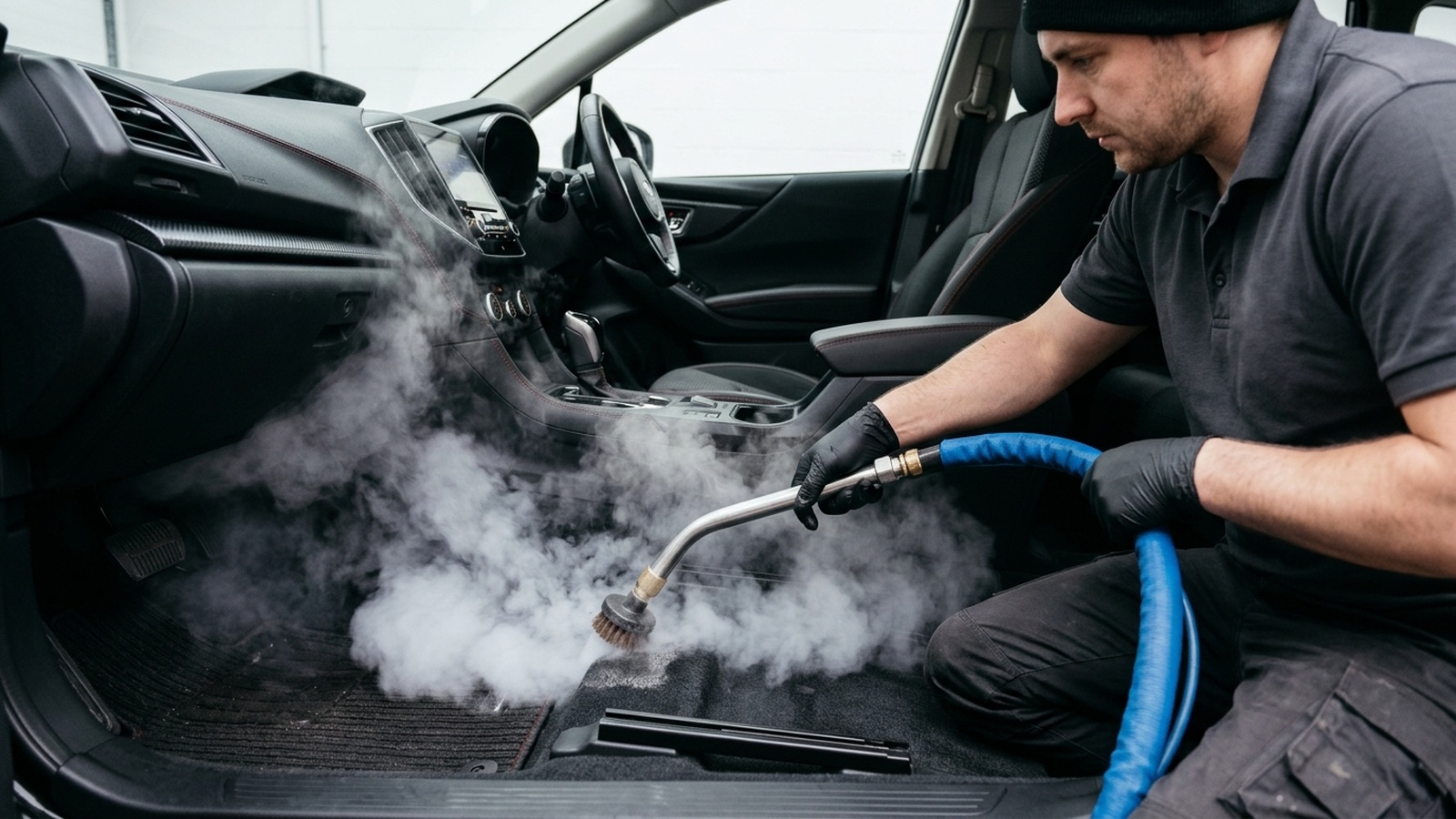
Detailers work foam into tight gaps. They use soft natural-hair brushes. Brushes clean plastic engine covers, alternator brackets, and radiator shrouds safely. Technicians then use low-pressure dry vapour steam to melt softened grease. Dry steam uses very little water, allowing detailers to wipe grime away with clean microfibre towels without flooding the engine bay.
Drying Protocols: Compressed Air vs Heat Evaporation
Thorough drying is essential. Leaving an engine bay to air dry allows water to pool. That causes rust.
Professional detailers use warm compressed air blowers. Pressurised air clears water from plugs. It purges bolt holes and intake gaps. Technicians then start the engine. They let it idle for ten minutes. Engine heat dries any remaining moisture. This keeps every wire dry and safe.
Protecting Plastics and Hoses with Non-Silicone Dressings
Cleaning leaves plastic covers clean but bare. To restore a factory finish, detailers apply water-based dressing. Avoid cheap silicone dressings. Silicone creates a sticky film that attracts dust and browns in engine heat.
Good water-based dressings have UV blockers. They also have anti-static agents. They soak into rubber hoses. They bring back a clean matte-satin finish. This coating keeps hoses soft. It stops plastic covers from fading or cracking over time.
Engine Cleaning Method Comparison: Pressure Wash vs Solvent vs Precision Detailing
The table below compares three common engine compartment cleaning approaches:
| Cleaning Factor | High-Pressure DIY Wash | Harsh Solvent Wash | Precision Engine Bay Detailing |
|---|---|---|---|
| Water Volume Used | Extremely high (floods bay) | High garden hose rinse | Low moisture (dry steam and damp towels) |
| Electronics Safety Risk | Critical (often triggers check engine lights) | Moderate (corrosion risk to plugs) | Near zero (all electronics masked and protected) |
| Chemical Safety on Rubber | Car wash soap dries out rubber | Caustic solvents crack hoses and etch metals | pH-neutral citrus cleaners condition rubber |
| Finish Appearance | Patchy, chalky water spots | Dull aluminium and faded plastic | OEM factory satin finish without sticky residue |
| Time Invested | 5 to 10 minutes | 20 to 30 minutes | 1.5 to 3 hours of detailed work |
| Environmental Compliance | Illegal runoff into city stormwater drains | Pollutes local waterways with hydrocarbons | Fully compliant workshop oil-water separator traps |
The 10-Point Engine Bay Detailing Safety Checklist
Professional automotive workshops follow this strict ten-point safety checklist on every engine bay service:
- Engine Cool-Down Verification: Ensure the engine is completely cool to the touch before applying any cleaners.
- Battery Negative Terminal Check: Disconnect or safely isolate battery terminals on modern hybrid and stop-start vehicles.
- Protective Component Masking: Wrap the alternator, fuse box, and open air intake filters with plastic film and tape.
- Loose Debris Removal: Vacuum dry leaves, pine needles, and insect chaff from the scuttle panel and radiator frame.
- Mild Foaming Degreaser Application: Spray water-based citrus degreaser across soiled metal and plastic surfaces.
- Detailed Brush Agitation: Agitate grease around brackets, battery trays, and intake runners with natural-bristle brushes.
- Controlled Low-Pressure Rinse: Wipe away grease using low-moisture dry steam or damp microfibre towels.
- High-Pressure Air Blowout: Purge all trapped water from bolt heads, electrical sockets, and coil pack recesses using compressed air.
- Engine Warm-Up Cycle: Start the engine and idle for ten minutes to evaporate any remaining moisture traces.
- Water-Based Satin Dressing: Apply a non-greasy, anti-static protective dressing to all plastic shrouds and rubber hoses.
Routine Under-Bonnet Inspection and Maintenance Schedule
Keeping an engine bay clean is simple once deep grime is cleared. A regular inspection routine prevents heavy buildup and keeps the vehicle running smoothly.
Follow these easy steps every few months: 1. Monthly Visual Check: Unlatch the bonnet monthly to inspect fluid levels and look for fresh dust or fluid leaks. 2. Clear Leaf Debris: Remove dry leaves from the windscreen scuttle panel to stop windscreen drains from plugging up. 3. Quick Dust Wipe: Wipe the top plastic engine cover with a damp microfibre cloth after country road trips. 4. Annual Professional Detail: Schedule a thorough under-bonnet detail once a year to keep hoses soft and plastics protected.
Bonnet Liner and Firewall Insulation Cleaning
Most modern passenger vehicles feature a fabric sound deadening pad under the bonnet. This liner absorbs engine noise and protects bonnet paint from radiant engine heat. However, it easily traps dust, engine oil mist, and road dirt.
Cleaning bonnet liners needs care. Soaking the pad with water can cause it to sag, tear, or grow mould. Detailers vacuum the liner using soft brush attachments. They mist a mild fabric cleaner onto a microfibre towel and wipe stains gently. Low-moisture dry steam can be used on oil marks, but high pressure is avoided. This keeps the liner intact and looking clean without damaging its foam structure.
Battery Tray and Bare Aluminium Corrosion Care
Battery trays and cast aluminium brackets are prone to corrosion. Over time, battery acid fumes react with metal brackets, forming a white or blue crust. If left untreated, this acid eats through steel battery trays and causes rust on the inner wing.
Detailers neutralise acid with baking soda mixes. They also use special foams. Brackets are scrubbed with nylon brushes. Then they are rinsed with warm water. Once dry, technicians spray anti-rust coating. This stops future battery corrosion. Bare aluminium parts like alternator casings and air conditioning lines receive light protective coats to prevent white oxide powdering.
Cleaning Hybrid and Electric Vehicle Inverter Bays
Hybrid and electric cars bring new safety checks under the bonnet. These cars use bright orange cables. They carry high voltage. These cables carry between 300 and 800 volts of direct current.
Never spray water on orange high-voltage cables. Technicians use dry steam or damp cloths to wipe inverter covers. They wear insulated gloves and keep liquid cleaners away from high-voltage seals. This careful method cleans the bay safely without risking electrical shocks or system faults.
Radiator and Intercooler Fin Cleaning Protocols
Heat exchangers sit right behind front grilles. Radiators and intercoolers take direct hits from bugs, dust, and gravel. Bent fins and insect buildup block cooling airflow.
Detailers use soft nylon brushes. They dislodge dried bugs with gentle strokes. They never use high pressure near radiator fins. High pressure bends thin aluminium cooling fins. High water pressure bends thin aluminium cooling fins flat, permanently blocking air passage. Technicians use low-pressure water mist sprayed from the engine side outwards. This pushes bugs and dirt out the front of the grille safely.
Intelligent Battery Sensor and Alternator Care
Modern vehicles use intelligent battery sensors mounted on the negative terminal clamp. These small microprocessors monitor battery temperature, voltage drop, and charging state. They send live data to the engine computer.
You must keep water and degreasing liquids away from this terminal sensor. Moisture can short out the circuit board. If this sensor fails, the alternator may overcharge or undercharge the battery. Detailers clean battery tops with dry towels. They never spray water directly onto battery clamps. This simple rule prevents battery sensor faults and keeps charging systems working smoothly.
Workplace Chemical Safety and Runoff Environmental Standards
Cleaning engine bays involves hazardous grease and petroleum residues that demand strict compliance with Australian safety and environmental regulations. According to standards established by Safe Work Australia, automotive workshops must maintain up-to-date Safety Data Sheets (SDS), use appropriate eye and skin protection, and handle degreasing chemicals responsibly.
Environmental rules are strictly enforced across regional New South Wales. Under guidelines overseen by the NSW Environment Protection Authority, wash water containing petroleum hydrocarbons, heavy metals, and emulsified grease must never run into street stormwater gutters. Commercial detailing facilities must use bunded wash bays connected to approved oil-water separator systems to protect local river networks.
Consumer standards are protected under rules from the Australian Competition and Consumer Commission. Professional workshops must operate with transparency, using safe methods that protect vehicle electrical systems.
If you want your engine bay thoroughly cleaned without risking electronic damage, booking comprehensive vehicle detailing packages at Detailing Mates guarantees expert care and factory-clean results.
People Also Ask About Engine Bay Detailing Safety
Is it safe to spray water in a modern car engine bay?
High-pressure water is dangerous for modern engine bays. Pressurised water forces past electrical seals into sensors, alternators, and fuse boxes. Controlled low-moisture cleaning with spray bottles, brushes, and steam is the only safe method.
Should the engine be hot or cold when cleaning?
Always clean a completely cold engine. Spraying cold water or cleaners onto a hot engine block or exhaust manifold can cause metal cracking or warped parts due to thermal shock.
What parts of the engine bay must be covered before cleaning?
Always cover the alternator, fuse distribution box, electronic control unit (ECU), exposed aftermarket air filters, and battery terminals with plastic wrap and waterproof tape before cleaning.
Can engine bay cleaning help spot oil leaks?
Yes. A clean engine bay removes old, dried grease, making it simple to spot fresh oil seepages, weeping gaskets, and loose hose clamps before minor issues turn into costly breakdowns.
Frequently Asked Questions on Engine Bay Cleaning
How often should I clean my engine bay in regional Australia?
For vehicles driven regularly in rural areas with unsealed roads, cleaning the engine bay once or twice a year keeps dust from hardening into abrasive crusts. A quick monthly check is ideal.
Will engine bay detailing void my vehicle warranty?
Safe, professional detailing will not void warranties. However, using high-pressure car wash wands that force water into electrical plugs can cause sensor damage not covered by manufacturer warranties.
Why shouldn't I use tyre shine on plastic engine covers?
Tyre shine contains heavy silicone oils. In a hot engine bay, silicone becomes sticky, attracts road dust within days, and can degrade rubber coolant hoses over time. Always use water-based dressings.
Can I clean an engine bay on a hybrid or electric vehicle?
Yes, but with extreme caution. Hybrid and electric vehicles feature high-voltage orange cables and inverter units. Only trained detailers using dry vapour steam and microfibre towels should clean these vehicles.
How long does a professional engine bay detail take?
A safe under-bonnet detail typically takes 1.5 to 3 hours. This allows time for thorough component masking, gentle agitation, dry steam cleaning, compressed air drying, and satin dressing application.
Conclusion: Maintaining Peak Performance Through Safe Engine Bay Care
Under-bonnet care is a vital part of car maintenance. It keeps parts working well. A clean engine bay runs cooler, makes routine servicing simple, and preserves critical electrical and rubber components.
Focusing on engine bay detailing safety brings great benefits. You get a spotless engine without electrical risks. By masking sensitive sensors, choosing citrus cleaners, and drying panels with compressed air, vehicle owners maintain reliability and resale value. Treat your engine bay with care, protect your investment, and take pride in a car that looks immaculate inside and out.