Protecting a car against the harsh Australian sun takes good care. It requires strong chemical shielding. When looking at paint protection, comparing graphene vs ceramic coating is very popular. Drivers want the best shield for their cars. Both systems offer long-lasting protection far beyond traditional waxes and polymer sealants. However, graphene-infused formulations introduce reduced heat retention and higher water spot resistance on hot vehicle panels. In places like Armidale, high-altitude sun meets sudden summer storms. Knowing how these coatings work helps owners pick the best paint shield.
The key difference in graphene vs ceramic coating lies in thermal conductivity and water spot resistance. While both utilise durable silicon dioxide quartz backbones, graphene coatings incorporate carbon graphene sheets that reduce surface heat absorption, increase chemical etch resistance, and lower the risk of mineral water spotting on dark vehicle paint.
- Molecular Chemistry: Silicon Dioxide vs Carbon Graphene Honeycomb
- Thermal Heat Dissipation and Australian Sun Exposure
- Water Spotting Resistance and Hydrophobic Contact Angles
- Performance Under Armidale High UV and Frost Cycles
- Chemical Resistance: Bird Droppings, Bug Splatter, and Road Grime
- Application Protocols and Surface Preparation Requirements
- Durability, Scratch Resistance, and True Hardness Ratings
- Paint Protection Matrix Comparison: Wax vs Ceramic vs Graphene
- The 10-Point Coating Installation Workshop Checklist
- Safe Washing and Maintenance Protocols in Australia
- Protecting Exterior Plastic Trim and Rubber Mouldings
- Frost and Ice Shedding in Tableland Winter Climates
- Alloy Wheel and Exhaust Tip High-Heat Protection
- Quarterly Decontamination Washes and Coating Reset
- Windscreen and Glass Coating Advantages
- Coating Headlights Against UV Yellowing
- Brake Caliper and Wheel Barrel Protection
- Scientific Testing Standards and Consumer Fair Trading Guidelines
- People Also Ask About Graphene vs Ceramic Coating
- Frequently Asked Questions on Vehicle Coatings
- Conclusion: Choosing the Right Protective Coating for Your Vehicle
Molecular Chemistry: Silicon Dioxide vs Carbon Graphene Honeycomb
To compare these coatings, we must look at their chemistry. Ceramic coatings use silicon dioxide in liquid carriers. When applied, the carrier dries. The silica bonds with clear coat pores, forming a hard glass layer.
Graphene coatings build directly upon this proven ceramic foundation. Pure graphene is a thin sheet of carbon. In car coatings, makers blend graphene nanosheets into a ceramic resin. The graphene cross-links with the silica. This creates an intertwined shield.
This hybrid blend adds strength and flexibility. Pure quartz coatings can be brittle on plastic bumpers. Graphene coatings flex with body panels as temperatures change.
Thermal Heat Dissipation and Australian Sun Exposure
Australia experiences some of the highest solar radiation levels in the world. Dark coloured vehicles parked in full summer sun often reach panel temperatures exceeding 75 degrees Celsius. Extreme surface heat bakes tree sap, insect acid, and road grime into clear coat pores.
A big point in the graphene vs ceramic coating debate is heat control. Graphene moves heat fast. It spreads warmth across the panel instead of trapping heat in one spot.
This heat spread keeps panels cooler. Lower panel temperatures slow down acid etching from tree sap and bird droppings on hot summer days.
Water Spotting Resistance and Hydrophobic Contact Angles
While traditional ceramic coatings are intensely hydrophobic, their high water contact angle (typically 105 to 110 degrees) can sometimes create water spotting issues. When rain droplets sit on a hot bonnet, each drop acts like a small lens. As water dries in the sun, minerals leave white rings on the clear coat.
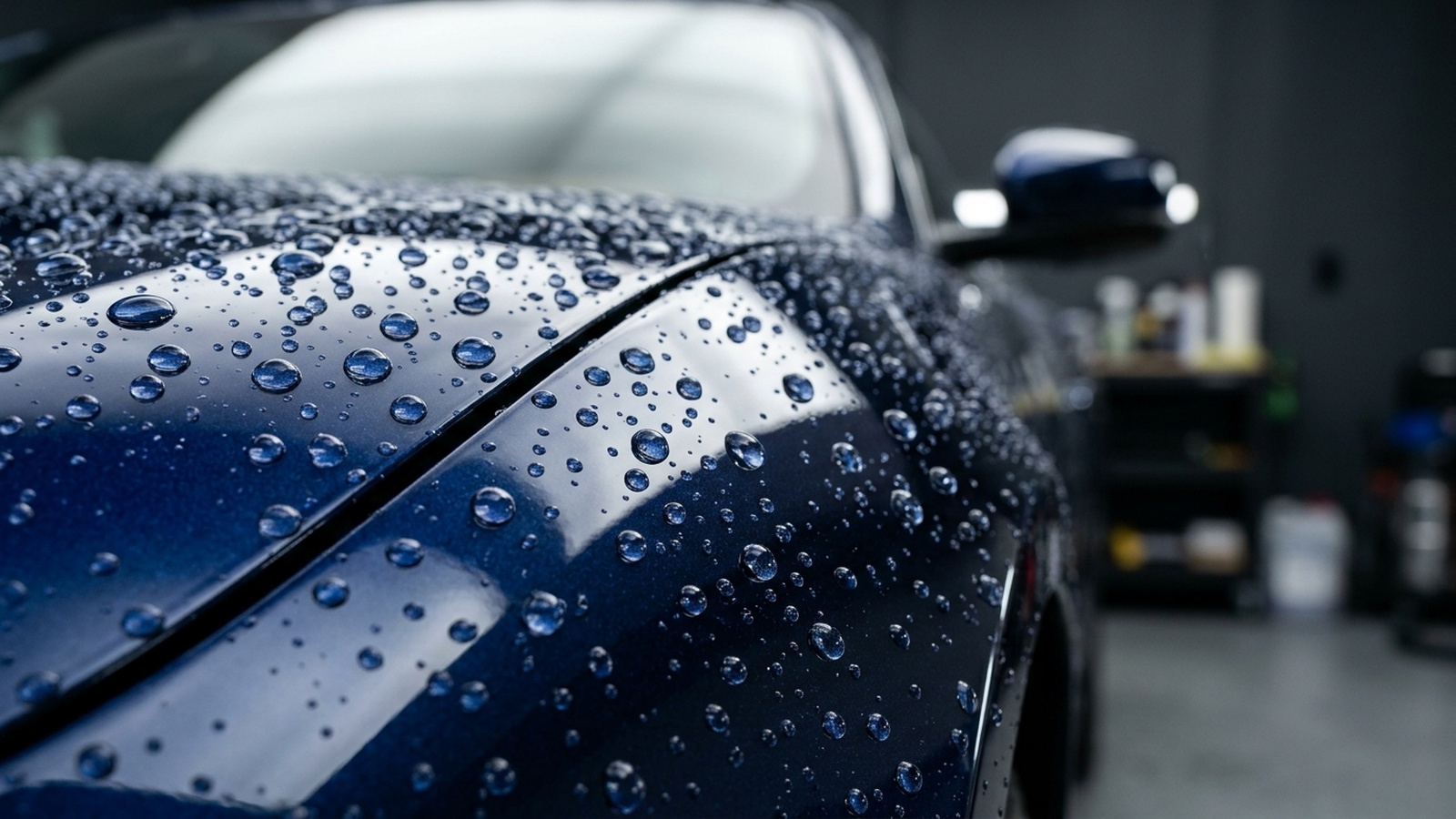
Graphene coatings solve this with higher sliding angles. Graphene lowers friction. Water beads roll off panels at gentle angles. Water sheets away while driving.
With less standing water on panels, water spots drop. For owners parking outdoors, lower water spotting is a huge benefit.
Performance Under Armidale High UV and Frost Cycles
Driving in Armidale brings tough weather. Sitting 1,000 metres up, Armidale has strong summer sun. Intense UV rays fade clear coat quickly, leaving paint dull and chalky.
In winter, temperatures drop below zero. Heavy frosts coat panels in ice. Repeated freezing stresses paint, making fine cracks widen over time.
Both coatings block UV rays and resist frost. Their glass shields seal clear coat pores. This stops ice expanding in paint cracks, protecting your paint year-round.
Chemical Resistance: Bird Droppings, Bug Splatter, and Road Grime
Country driving brings harsh dirt. Highway travel covers front grilles in bug splatter. Rural tracks add livestock spray, tree sap, and red dust.
Ceramic coatings resist chemicals from pH 2 to pH 12. Graphene coatings expand this to pH 1 to pH 13. This protects against strong touchless soaps and bird droppings.
No coating makes paint completely scratch-proof. But a good coating makes a strong barrier. Grime sits on the coating instead of burning into the clear coat.
Application Protocols and Surface Preparation Requirements
Applying either coating successfully requires extensive multi-stage surface preparation. A coating only bonds to bare, clean paint. Old wax, tree sap, or oil prevents proper bonding with clear coat pores.
Prep starts with a safe wash and iron rinse. Detailers clay the panels to lift stuck dirt. Next, they polish paint to clear swirl marks. Because coatings are clear like glass, coating over swirls seals scratches beneath the shield for years.
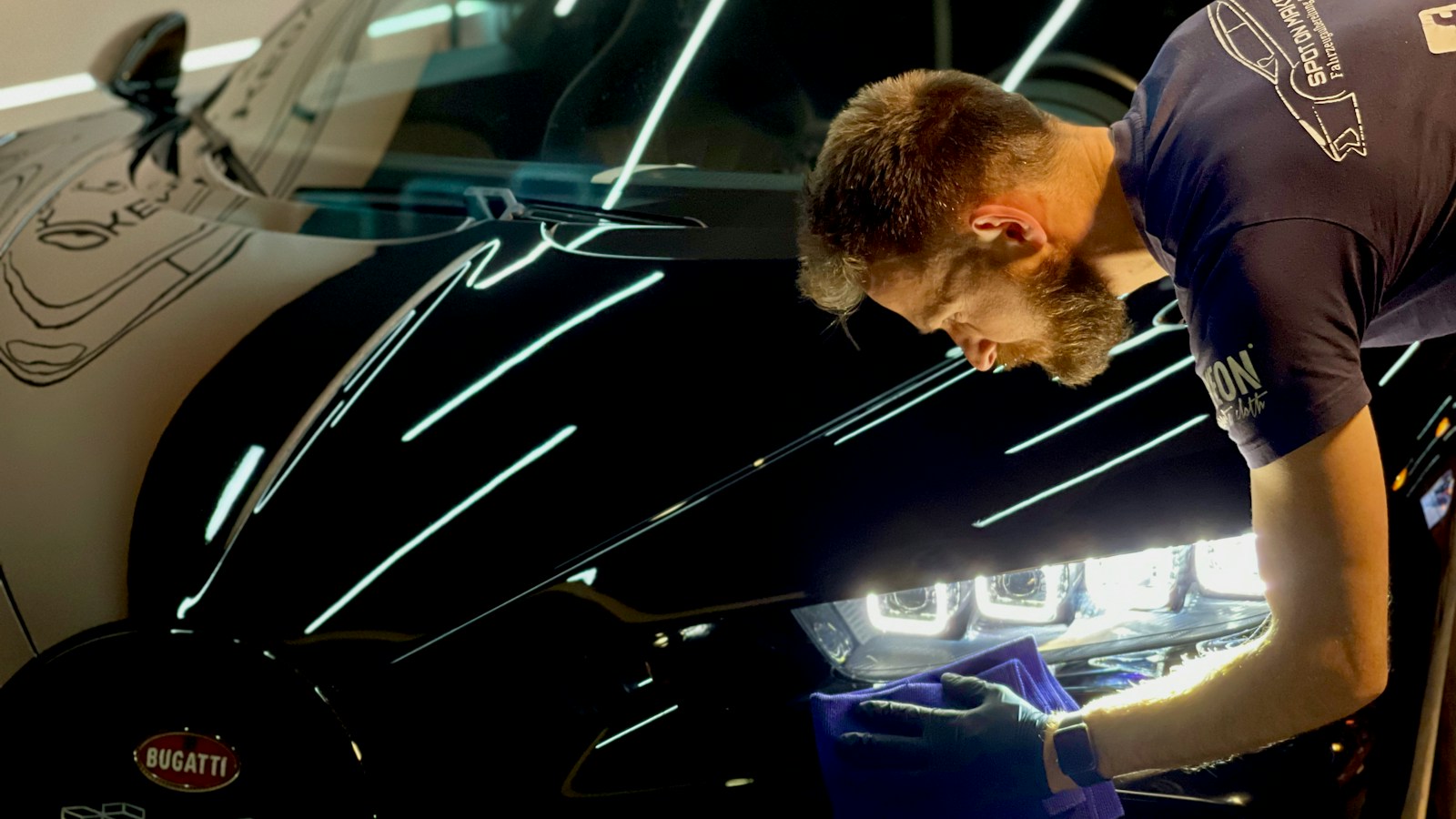
Finally, panels get an alcohol wipe. The coating is spread with lint-free blocks. It flashes with a rainbow sheen and is buffed level with plush towels.
Durability, Scratch Resistance, and True Hardness Ratings
Ads often claim 9H hardness for coatings. This means pencil hardness, not diamond hardness. A 9H coating resists light wash swirls. But it cannot stop stone chips or deep scratches.
Quality ceramic coatings last two to five years with safe washing. Graphene coatings last three to seven years thanks to carbon strength. Both outlast carnauba wax, which fades in four weeks.
Paint Protection Matrix Comparison: Wax vs Ceramic vs Graphene
The table below compares the performance of carnauba wax, traditional ceramic coating, and graphene matrix coating:
| Protection Attribute | Traditional Carnauba Wax | SiO2 Ceramic Coating | Graphene Matrix Coating |
|---|---|---|---|
| Chemical Matrix | Natural palm tree wax | Liquid silicon dioxide (SiO2) | Reduced graphene oxide infused in SiO2 |
| Durability Period | 4 to 6 weeks | 2 to 5 years | 3 to 7 years |
| Water Contact Angle | 85° to 95° | 105° to 110° | 110° to 118° |
| Water Spot Resistance | Low (soft wax traps minerals) | Moderate (prone to bead spotting) | High (sheets water and sheds minerals) |
| Heat Dissipation | None (melts at 80°C) | Moderate thermal resistance | High thermal conductivity reduces heat |
| Chemical Range | pH 5 to pH 8 | pH 2 to pH 12 | pH 1 to pH 13 |
The 10-Point Coating Installation Workshop Checklist
Professional detailers adhere to this ten-point quality protocol when applying protective coatings:
- Chemical Iron Fallout Wash: Dissolve brake dust and embedded industrial metal fallout using acid-free iron removers.
- Clay Bar Decontamination: Lift tree sap, bitumen, and rough surface fallout with lubricated detailing clay.
- Machine Paint Correction: Remove clear coat swirls, light scratches, and oxidation using dual-action polishers.
- Solvent Panel Prep: Wipe down all painted surfaces with isopropyl alcohol to remove polishing oils.
- Climate Control Verification: Ensure workshop ambient temperature is between 18°C and 25°C with low humidity.
- Uniform Application Passes: Apply coating using cross-hatch applicator motions to ensure even panel coverage.
- Flash Time Observation: Monitor coating rainbow sweat and begin levelling before high spots harden.
- Dual-Towel Levelling: Wipe excess product using a short-nap microfibre towel, followed by a plush buffing towel.
- High-CRI Inspection: Inspect panels under multi-angle inspection lights to confirm zero high spots or streaks remain.
- Infrared Curing Cycle: Cure panels under short-wave infrared lamps for fifteen minutes to accelerate chemical bonding.
Safe Washing and Maintenance Protocols in Australia
A high-end coating does not mean you never have to wash your car again. Rather, it makes safe hand washing much easier. Routine care preserves the hydrophobic top layer for years.
Follow these essential washing rules: 1. Two-Bucket Safe Wash: Wash using the two-bucket method with grit guards and pH-neutral car shampoo. 2. Avoid Friction Washes: Never drive through automatic car washes with spinning plastic bristles. 3. Use Microfibre Wash Mitts: Soft microfibre mitts glide over slick coated panels without inflicting swirl marks. 4. Quarterly Ceramic Boosters: Spray a diluted SiO2 or graphene quick detailer every three months to refresh slickness. 5. Dry with Air Blowers: Dry panels with warm air blowers or plush drying towels to prevent water drop spotting.
Protecting Exterior Plastic Trim and Rubber Mouldings
Modern vehicles feature black plastic bumper trims, mirror bases, and wheel arch flares. In harsh Australian sunlight, unprotected black plastic oxidises fast. UV rays turn black plastics into chalky grey panels within two years.
Both ceramic and graphene coatings bond to porous unpainted plastics. The nano-resin absorbs deep into the plastic texture. It restores a rich, natural black satin finish without greasy silicone oils. More importantly, the UV filters stop future sun fading. Rain sheets off plastic trims cleanly, keeping exterior mouldings looking factory fresh.
Frost and Ice Shedding in Tableland Winter Climates
Winter in high-elevation areas like Armidale brings heavy frost and freezing mornings. Ice crystals stick tightly to unprotected factory clear coat. Scraping frozen ice off paintwork with credit cards or plastic scrapers causes severe clear coat scratches.
A hydrophobic coating reduces ice adhesion. Because water cannot penetrate coated clear coat pores, ice cannot form a mechanical bond with the paint. Morning frost slides off panels with gentle warm water rinses. Owners never need to scrape panels, keeping clear coat scratch-free throughout freezing winters.
Alloy Wheel and Exhaust Tip High-Heat Protection
Braking systems generate extreme friction heat. Hot metallic brake dust shoots off brake pads at temperatures above 300 degrees Celsius. This hot metal dust burns into unprotected alloy wheels.
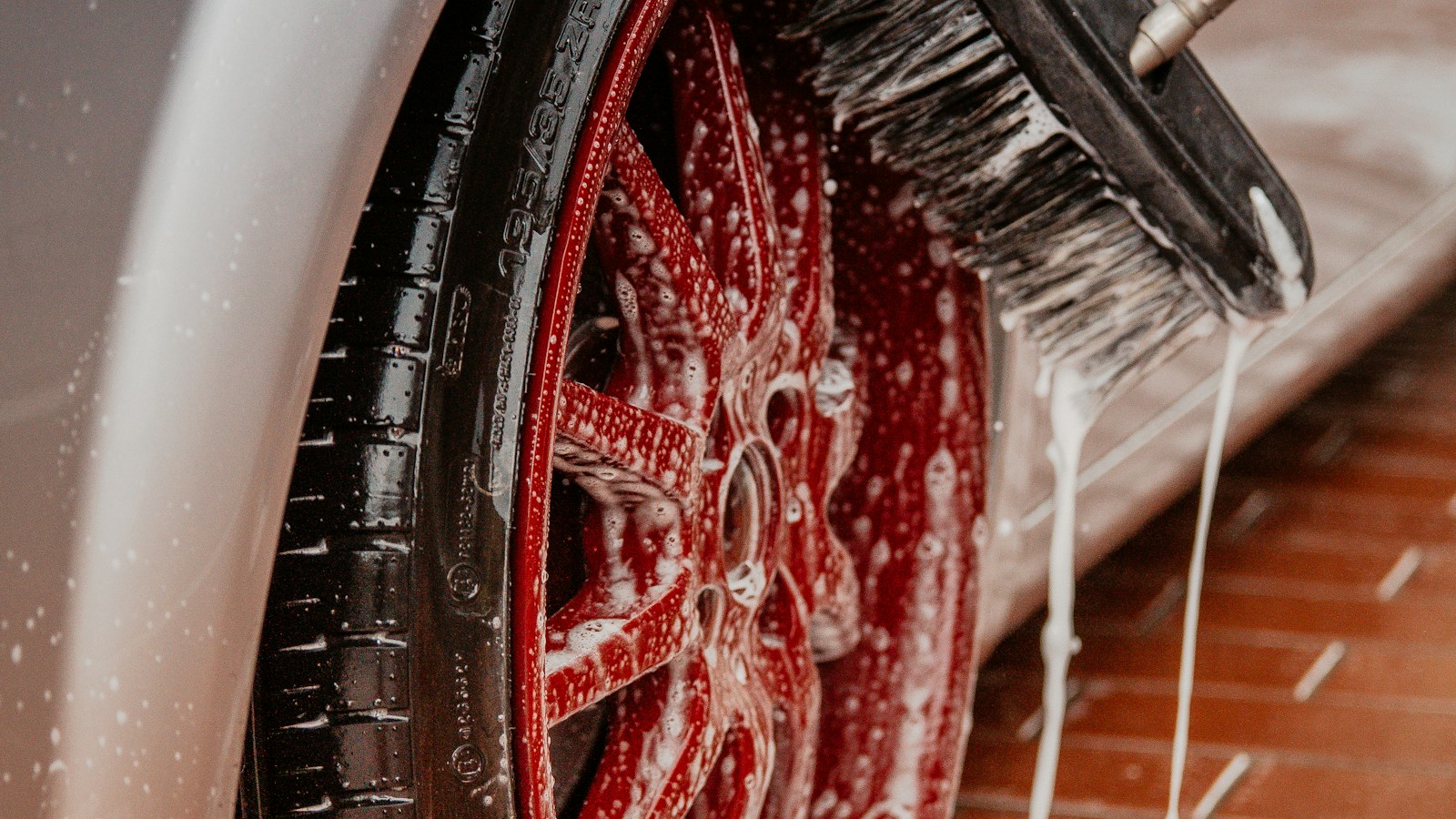
Graphene coatings excel in high-heat areas. Graphene handles temperatures up to 800 degrees Celsius. Applying graphene to alloy wheel faces and inner barrels stops brake dust from burning into the wheel finish. Road grime washes off with simple car shampoo and water. Exhaust tips also stay clean, resisting black carbon buildup and yellow heat tarnish.
Quarterly Decontamination Washes and Coating Reset
Even the slickest coatings pick up road grime over time. Fine road tar, industrial iron fallout, and exhaust soot settle on top of the coating. This dirt layer reduces water beading.
Detailers perform a coating reset wash every three to six months. They use a pH-neutral iron remover spray to dissolve metal fallout. Then they wash with a gentle foam soap. This clears the surface film without harming the coating. Water immediately beads into tight round droplets again, restoring full hydrophobic performance.
Windscreen and Glass Coating Advantages
Coating vehicle glass brings huge driving safety perks. In heavy rain, water beads into tiny droplets and rolls off the windscreen at speeds above 60 kilometres per hour. Drivers often do not need wipers on open highways.
Glass coatings also cut night glare from oncoming headlights. They stop road film, bug splatter, and tree sap from baking onto the glass. Morning frost scrapes off easily with warm water. This keeps visibility clear in cold Tableland winter mornings, making driving safer for the whole family.
Coating Headlights Against UV Yellowing
Modern headlights use polycarbonate plastic lenses. Strong sun breaks down the factory UV shield. Clear lenses soon turn yellow and dim.
Applying ceramic or graphene coating over headlights adds a hard UV barrier. The coating stops sun rays from yellowing the plastic. Night driving stays bright and safe. Rinsing bugs off smooth lenses is easy and fast. This keeps lights crystal clear for years.
Brake Caliper and Wheel Barrel Protection
Brake calipers live in a hot, dirty space. Brake dust and road grime bake onto painted calipers, making them dull and pitted.
High-temperature coatings bond to caliper paint. The slick shield stops brake dust from burning into the surface. A simple pressure rinse clears away black dust. Calipers retain their vibrant colour and clean gloss through track days and daily road trips.
Scientific Testing Standards and Consumer Fair Trading Guidelines
Automotive nano-coatings use advanced chemical formulations that require strict adherence to Australian workplace safety guidelines. Directives from Safe Work Australia mandate that technicians wear protective respirators and nitrile gloves when applying volatile nano-coatings.
Scientific research published by the CSIRO highlights the unique material properties of graphene, including exceptional electrical conductivity and mechanical strength. In automotive applications, these carbon nanomaterials enhance resin flexibility and thermal dissipation.
Consumer standards are regulated under guidelines from the Australian Competition and Consumer Commission. Detailers must avoid misleading durability claims, ensuring vehicle owners receive honest warranties and clear maintenance advice.
If you want to protect your vehicle with proven, long-lasting surface protection, booking premium ceramic coating installations in Armidale ensures certified technicians prepare your paint and apply professional-grade coatings for lasting showroom gloss.
People Also Ask About Graphene vs Ceramic Coating
Is graphene really better than ceramic coating for cars?
Graphene coatings offer distinct advantages in thermal heat dissipation and water spot resistance. However, both graphene and ceramic coatings share the same silicon dioxide base and provide outstanding gloss, UV protection, and chemical shielding.
How long does graphene coating last in Australia?
Professional graphene coatings typically last between 3 and 7 years when washed regularly using pH-neutral shampoos and safe two-bucket washing techniques. Longevity depends on vehicle storage and annual booster care.
Can graphene coating prevent stone chips on the highway?
No. Graphene coatings are only two to three microns thick. While they resist fine wash swirl marks, they cannot stop high-speed gravel stone chips. High-impact protection requires physical paint protection film (PPF).
Can I apply ceramic or graphene coating over swirl marks?
You should never apply coatings over swirled paint. Coatings are optically clear like glass. Applying a coating over swirl marks permanently seals those scratches beneath the protective layer for years.
Frequently Asked Questions on Vehicle Coatings
Why are graphene coatings less prone to water spotting?
Graphene lowers surface friction and disperses heat across panels. Water beads slide off at lower angles, leaving less standing water to dry into white mineral rings under hot afternoon sun.
How long must a freshly coated car stay dry?
Fresh coatings need 24 to 48 hours to cross-link and cure. Avoid rain, morning frost, and washing for the first seven days to allow the coating to reach full chemical hardness.
Can graphene coatings be applied to wheels and glass?
Yes. Graphene coatings withstand temperatures up to 800°C, making them ideal for alloy wheels subjected to hot brake dust. Dedicated glass formulations also improve wet-weather windscreen visibility.
Do I need to wax a car after ceramic or graphene coating?
No. You should never apply traditional paste wax over modern coatings. Wax oils clog the coating's microscopic pores, reducing its natural hydrophobic water beading and self-cleaning ability.
How do I know when a coating needs a booster wash?
When water stops beading tightly into round droplets and begins sheeting sluggishly, traffic film has clogged the surface. A wash with a dedicated silica-based shampoo will restore full water beading.
Conclusion: Choosing the Right Protective Coating for Your Vehicle
Investing in paint protection is one of the smartest choices for preserving your vehicle's appearance and market value. Australian roads and weather are unforgiving, but modern surface chemistry provides powerful answers.
When comparing graphene vs ceramic coating, both deliver exceptional gloss, UV protection, and chemical resistance. Graphene offers extra benefits for dark vehicles parked outdoors, reducing heat and water spotting. Ceramic remains the proven global standard for durability and shine. Choose the coating that fits your vehicle storage and driving habits, and enjoy effortless cleaning and brilliant reflections for years.