Stepping out into bright midday sunlight only to see round spiderweb scratches covering your bonnet is immensely frustrating. When restoring vehicle gloss, pro car swirl mark removal provides the permanent answer to eliminate wash-induced marring rather than temporarily hiding it under oily fillers.In regional New England areas like Armidale. This country road silt, dry winds. Also, frequent dust settle on vehicle panels, improper wash methods quickly scour thousands of micro-fine round scratches into factory clear coat. knowing how dual-action machine polishing levels these tiny valleys restores optical clarity and deep mirror reflections.
car swirl mark removal is a mechanical paint repair process that uses precision dual-action machine polishers, specialised gritty compounds, and foam or microfibre pads to level the clear coat around round wash scratches. This permanently removes light-reflecting tiny valleys, restoring smooth optical clarity and true mirror gloss across paintwork.
- The Science of Swirl Marks: Optical Reflection Physics.
- What Causes Swirl Marks on Australian Cars?
- Armidale Regional Wash Hazards and Dust Scouring.
- Temporary Glaze Fillers vs Permanent Machine Polishing.
- Inspection Lighting and Swirl Finder Torches.
- Dual-Action Machine Correction Workflow.
- Pad and Compound Selection for Different Paint Types.
- Conducting an Effective Test Spot on Vehicle Panels.
- Comparison Table: Glaze Fillers vs Hand Polish vs Machine Correction.
- The 10-Point Swirl Mark Removal Checklist.
- The Two-Bucket Wash Routine to Prevent Future Swirls.
- Safety and Environmental Standards in Paint Polishing.
- People Also Ask About car swirl mark removal.
- Frequently Asked Questions on Swirl Removal.
- Conclusion: Maintaining a Flawless Mirror Finish.
The Science of Swirl Marks: Optical Reflection Physics
Many drivers believe swirl marks are round scratches created by round polishing motions. In reality, swirl marks are thousands of random multi-directional linear scratches etched into the upper clear coat.
When light from the sun or a streetlamp hits flat clear coat, the rays reflect evenly into your eyes like a calm mirror. But when light strikes thousands of random scratches, each scratch edge catches the light and scatters it outward.
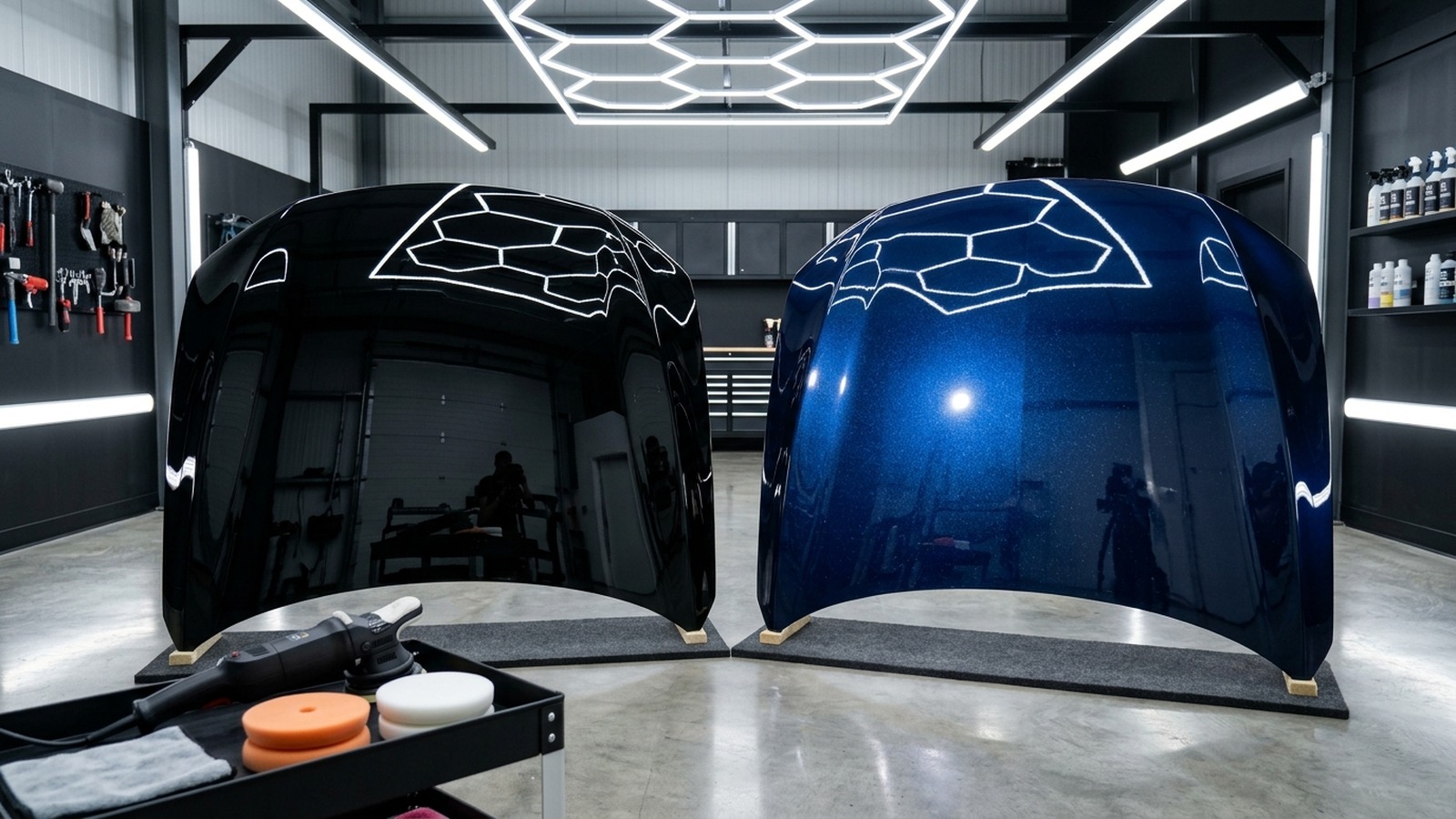
Because the sun is a single point light source, the round reflection you see is an optical illusion known as spiderwebbing. The round pattern centres wherever you focus your eyes. True car swirl mark removal levels the surrounding clear coat flat so light reflects in a single uniform direction.
Factory clear coat is transparent. However, scratching creates tiny jagged ridges that refract and scatter light beams. This light scattering turns deep glossy black paint into a faded grey haze, robbing metallic flake of its vibrant colour pop.
By using precision breaking grits, detailers smooth down these tiny jagged ridges. Once the ridges are flattened, light reflects directly off the colour base coat beneath, restoring pristine showroom gloss.
What Causes Swirl Marks on Australian Cars?
The vast majority of swirl marks originate from everyday washing and drying mistakes rather than road driving. Every time dirt particles are dragged across dry paint, scratching occurs.
The leading cause is the automated drive-through car wash.Commercial car wash brushes spin at high speeds, collecting grit, road tar. Also, brake dust from dozens of muddy vehicles before slapping against your paint.
older hand wash techniques also introduce severe swirling. Using a single bucket without grit guards recirculates trapped dirt back onto your sponge. Sponges are particularly destructive because their flat cellular surface traps grit against paint rather than pulling it deep into soft fibres.
Drying cars with old bath towels, synthetic chamois leathers, or silicone water blades is another primary cause. If a single speck of grit remains on the panel during drying, dragging a stiff towel across the bonnet cuts a long scratch trail.
Car covers can also inflict micro-marring. When wind blows against an outdoor car cover, the fabric flutters against dusty panels, creating uniform friction swirls across roof edges and boot lids.
Armidale Regional Wash Hazards and Dust Scouring
Living in Armidale and surrounding New England communities introduces specific environmental factors that speed up paint marring. Regional winds carry gritty volcanic basalt dust from farming paddocks across residential driveways.
During dry spring months, fine granite silt settles on parked vehicles within hours. If car owners attempt to dust off their panels using California duster mops or dry microfibre towels, the sharp mineral particles act like sandpaper.
Winter conditions present opposite challenges. Heavy overnight frosts freeze moisture against vehicle panels. When drivers use hot water or stiff ice scrapers to clear frosty windscreens and bonnets, thermal shock and gritty ice crystals scour the clear coat.
Hard country borehole water used for home washing also deposits high levels of calcium carbonate and magnesium. When this water dries under Armidale sun, it leaves sharp mineral crystals that drag across paint during subsequent drying passes.
These local conditions require extra care when pre-rinsing vehicles. Investing in touchless snow foam washes before touching the paint is crucial to float away heavy New England grit safely.
Temporary Glaze Fillers vs Permanent Machine Polishing
The car detailing market is filled with quick-fix products claiming instant scratch removal. It is critical to understand the difference between temporary glaze fillers and genuine mechanical paint correction.
Car glazes and cheap all-in-one waxes contain heavy silicone oils, kaolin clay. Also, polymer fillers. When rubbed onto paint, these oily fillers pack into the tiny scratch grooves, temporarily masking the defect from sunlight.
The vehicle appears glossy and scratch-free for several days. However, after two or three rain showers or a single wash with detergent shampoo, the fillers wash away. The underlying swirl marks reappear completely unchanged.
In contrast, permanent machine correction uses tiny aluminium oxide grits to gently level the upper clear coat. By shaving down the high ridges until they match the bottom of the scratch, the defect is physically removed forever.
Permanent correction permanently enhances gloss and light reflection without needing cosmetic cover-ups. Once corrected, maintaining the finish with proper washing ensures the paint stays mirror-like for years.
Inspection Lighting and Swirl Finder Torches
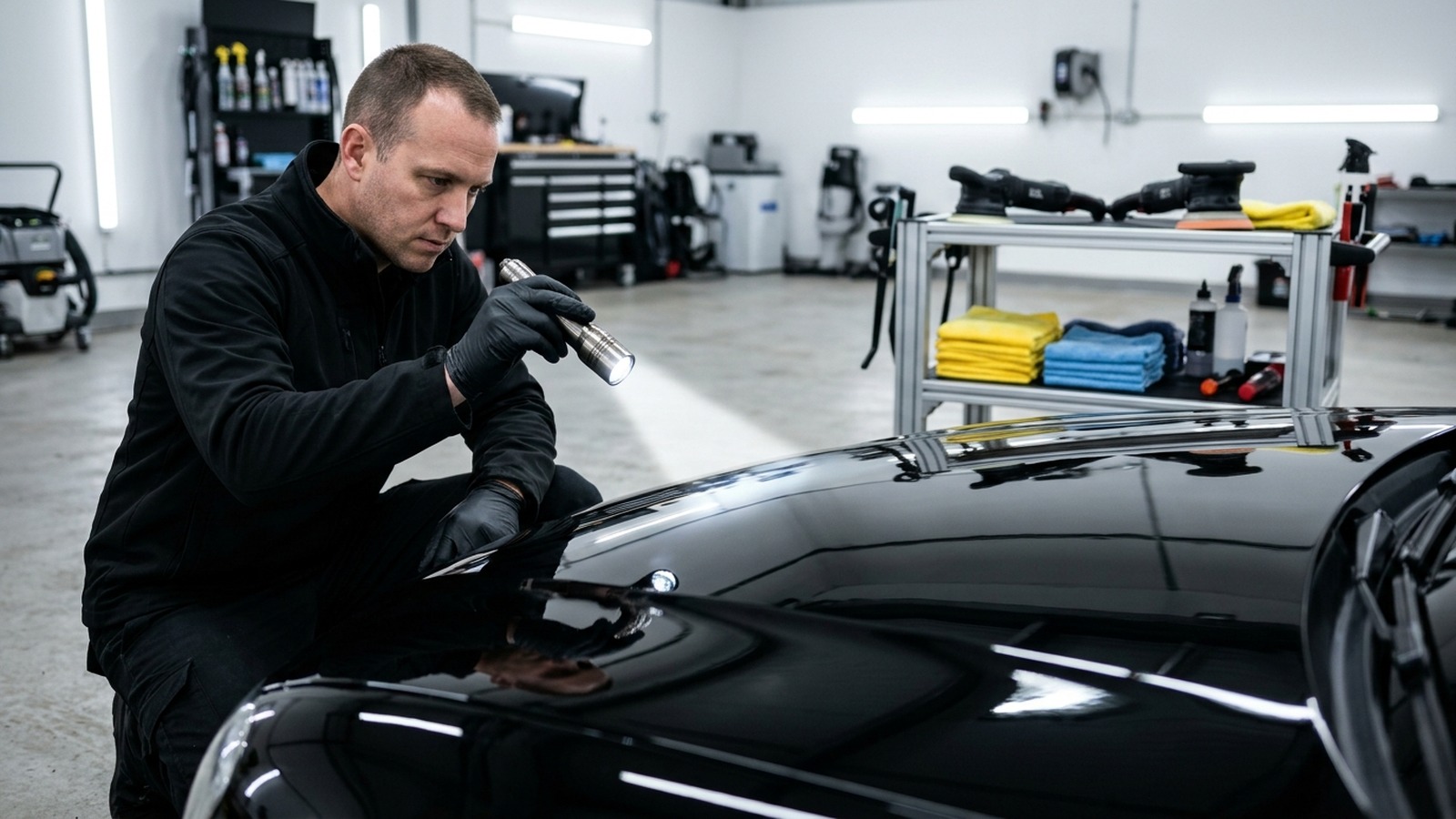
You cannot correct what you cannot clearly see. Standard overhead fluorescent garage tubes diffuse light broadly, effectively hiding up to 70% of clear coat swirl marks.
pro paint correction workshops rely on specialised high-CRI (Colour Rendering Index) LED inspection torches and mobile detailing work lights. High-CRI lighting mimics the direct spectrum of bright midday sunlight.
By shining a focused beam of 4000K to 5000K neutral light at a 45-degree angle against dark panels, detailers expose every micro-scratch, water mark. Also, buffer trail. Detailers inspect the paint from multiple viewing angles to assess depth accurately.
Panel wipe sprays containing isopropyl alcohol or dedicated solvent blends are sprayed onto the surface after each test pass. Wiping away compound slip lube oils reveals the true, unmasked clear coat surface beneath.
Checking paint under both warm and cool LED light sources ensures no lingering hazing remains hidden before applying long-term ceramic coatings.
Dual-Action Machine Correction Workflow
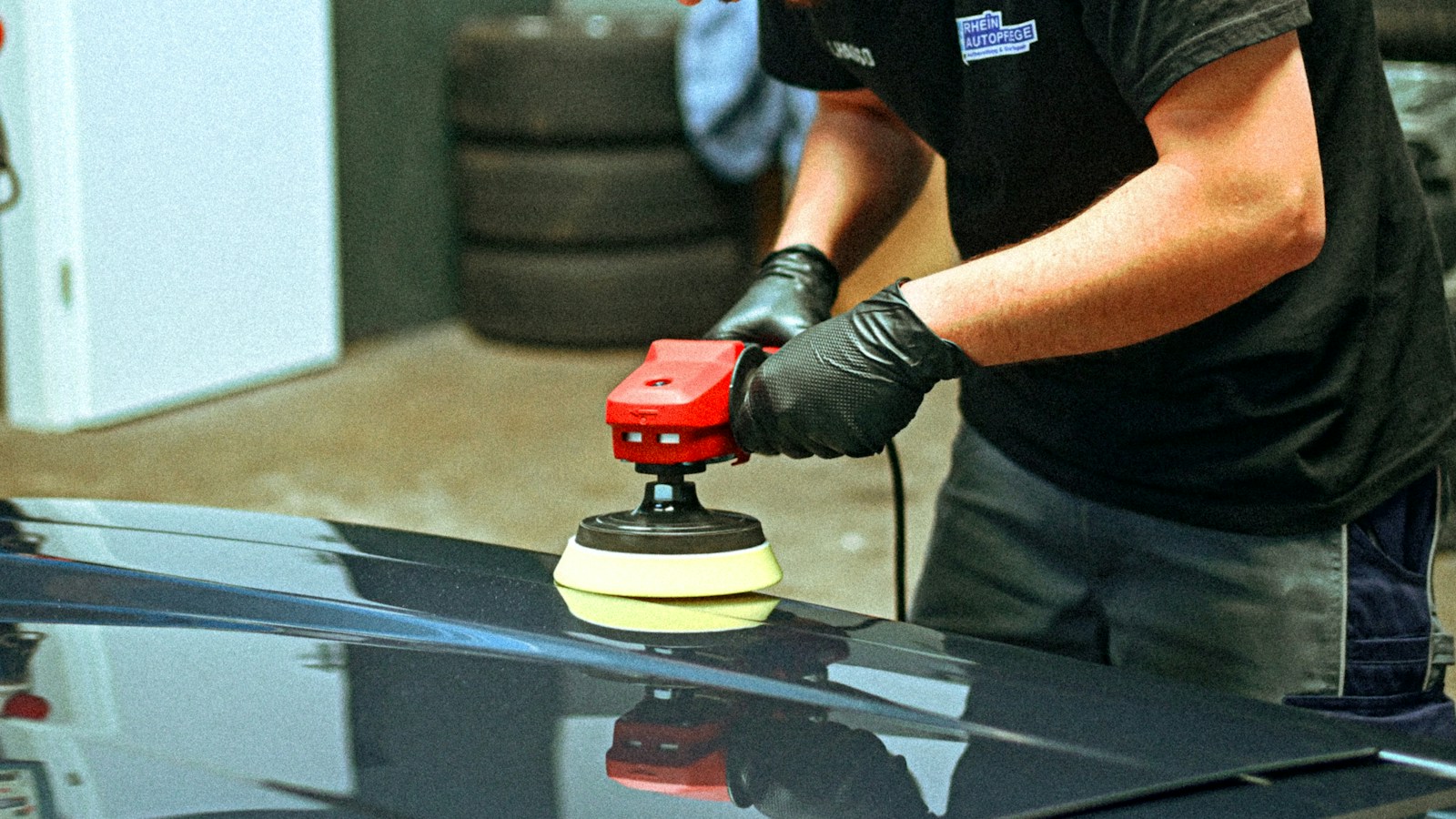
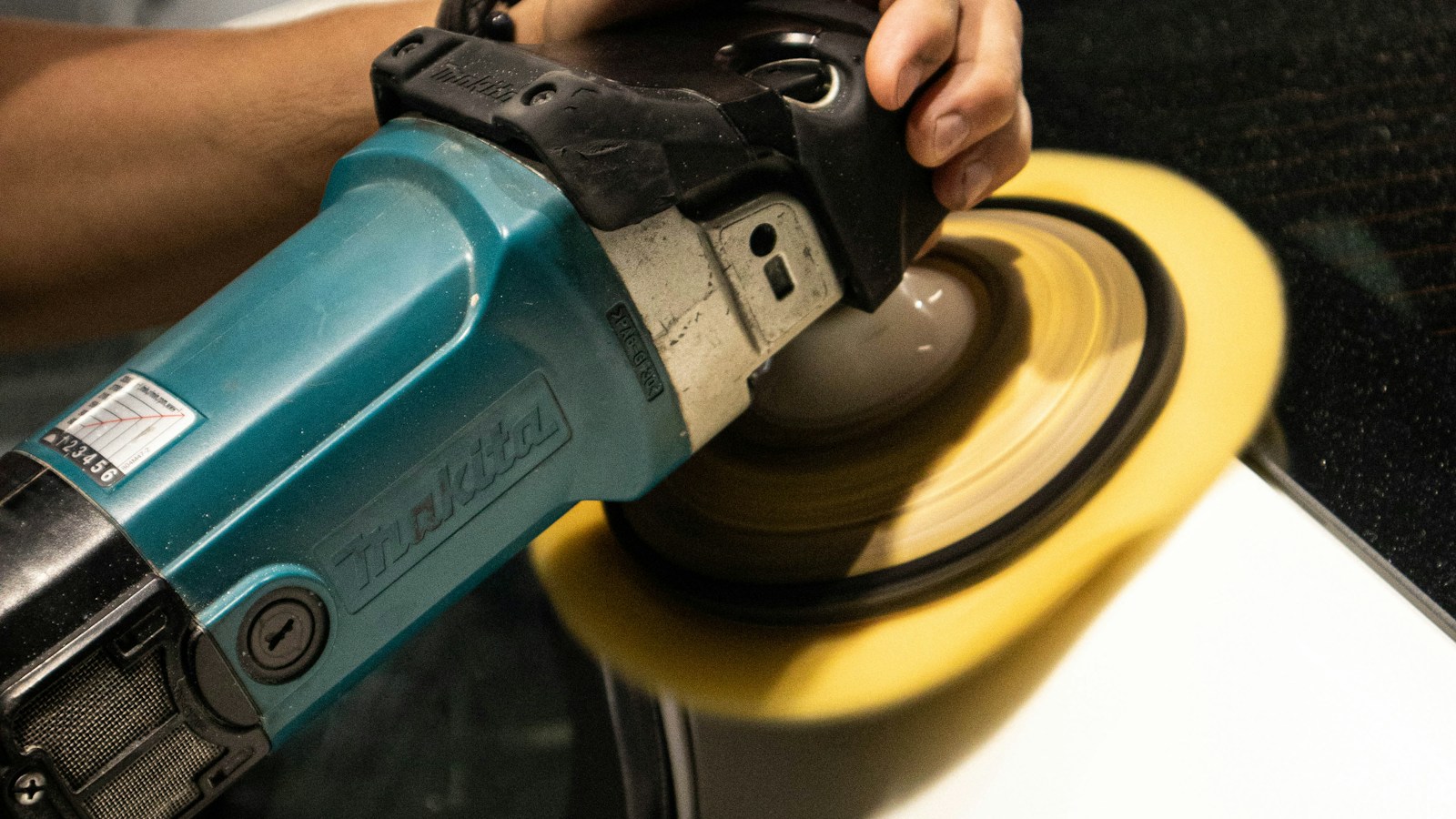
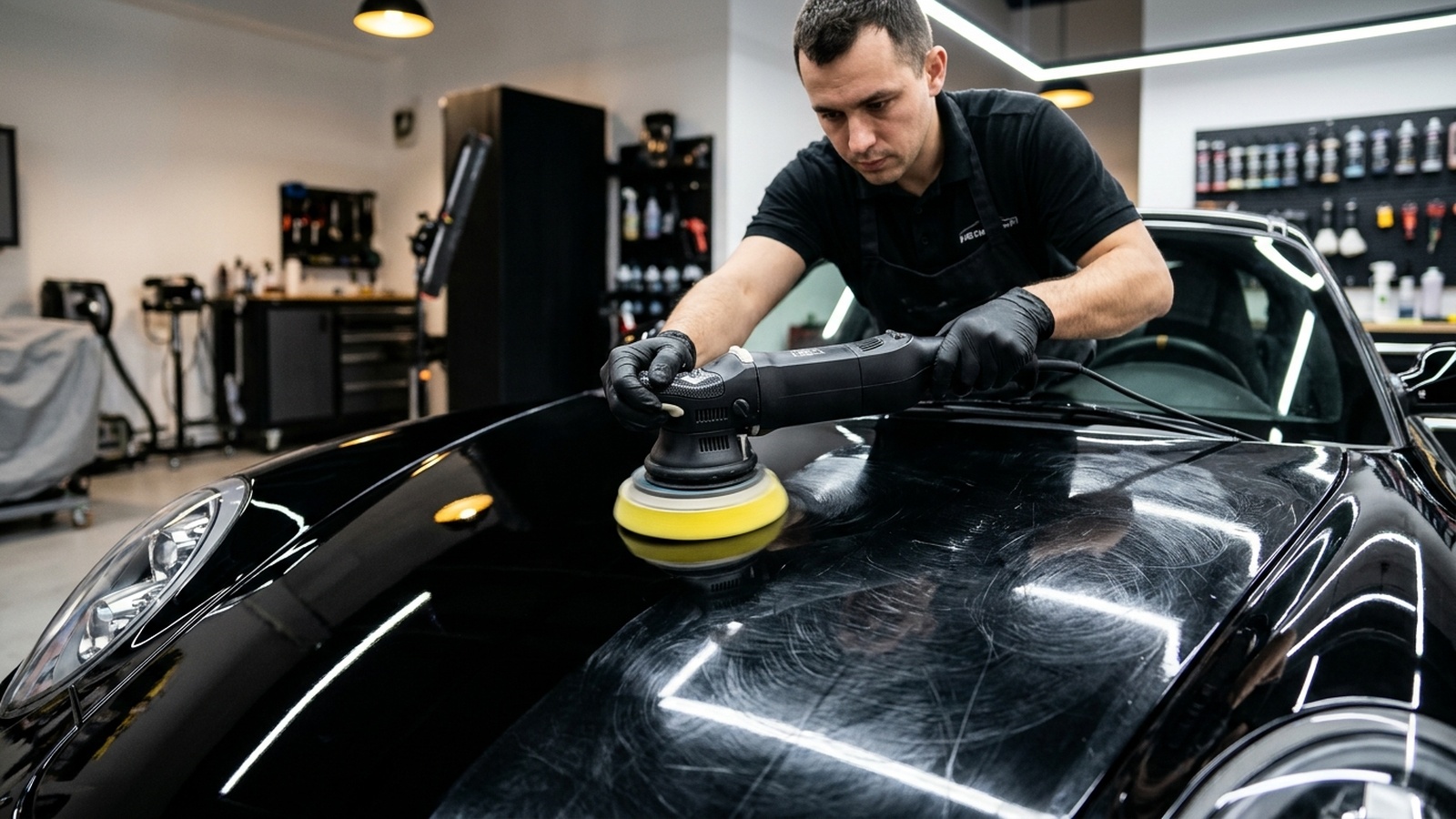
Dual-action (DA) orbital polishers are the modern tool of choice for swirl removal. A dual-action polisher spins its backing plate while at once orbiting in an offset orbit.
This dual motion prevents heat buildup in a single spot, dramatically reducing the risk of paint burn-through. The random orbital path also guarantees that grits never travel in repeating round lines, preventing machine holograms.
detailers work in controlled 50cm by 50cm working squares. After priming the pad with three pea-sized dots of gritty compound, the machine is spread across the section at low speed before ramping up to medium operating speed.
The detailer guides the machine using slow arm movements in overlapping cross-hatch passes: first horizontally, then vertically. A slow, steady arm speed allows the gritty particles enough time to level clear coat ridges evenly.
Keeping the pad completely flat against the panel ensures constant spin. Tilting the machine can cause the backing plate to stall, halting cutting action and making uneven friction.
Pad and Compound Selection for Different Paint Types
car paint hardness varies greatly between vehicle makers.Japanese cars such as Subaru, Mazda. Also, Honda typically feature very soft clear coats that scratch easily but polish out quickly.
In contrast, German vehicles from BMW, Audi. Also, Mercedes-Benz frequently use tough, scratch-resistant ceramic-infused clear coats. Correcting hard German clears requires aggressive microfibre cutting pads and dense aluminium oxide compounds.
Using an aggressive heavy-cut compound on soft Japanese paint will scour deep hazing into the clear coat. Conversely, using a soft finishing foam on hard German paint will fail to remove medium wash swirls even after multiple passes.
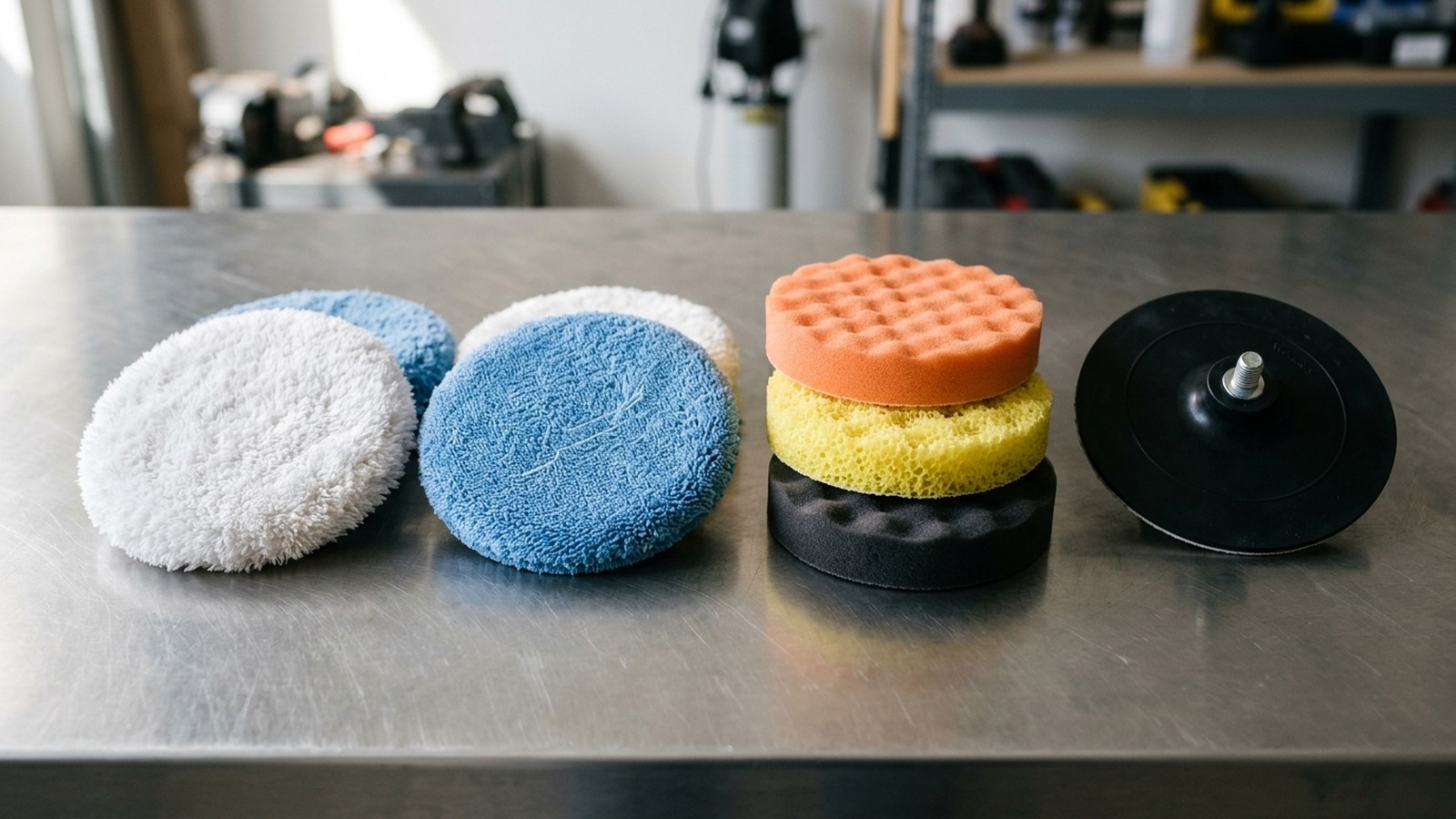
pro detailers categorise pads into three primary densities: heavy microfibre or wool for cutting, medium open-cell foam for polishing. Also, ultra-soft closed-cell foam for jewelling and final gloss refinement.
Matching the pad firmness, pore size. Also, compound gritty size to the specific vehicle paint system is the hallmark of master-level paint correction.
Conducting an Effective Test Spot on Vehicle Panels
Never polish an entire car without first carrying out a methodical test spot.A test spot is a small 40cm section, usually on the bonnet or boot lid. This different pad and polish combinations are tested.
The golden rule of paint correction is to always test the least aggressive combination first. If a medium foam pad paired with a fine finishing polish removes 85% of swirl marks, there is no need to use a harsh cutting compound.
Preserving factory clear coat thickness is essential for long-term paint health. Clear coat provides critical UV shield against harsh Australian solar radiation. stripping unnecessary microns weakens that defensive barrier.
Once the test spot achieves crystal clarity without hazing, the detailer wipes the area with panel wipe and inspects under high-CRI lighting. If the result meets client expectations, that exact combination is locked in for the rest of the car.
Documenting the pad type, compound, machine speed. Also, pass count ensures consistent defect removal across all panels of the vehicle.
Comparison Table: Glaze Fillers vs Hand Polish vs Machine Correction
The table below highlights the output, longevity. Also, clear coat impact of different swirl removal techniques:
| Comparison Attribute. | Cosmetic Glaze Fillers. | Hand gritty Polish. | Dual-Action Machine Correction. |
|---|---|---|---|
| Defect Elimination Rate. | 0% (purely conceals defects). | 20% to 35% reduction. | 85% to 95% permanent removal. |
| Result Longevity. | 1 to 3 car washes. | Permanent on removed marks. | Permanent (years with proper care). |
| Clear Coat Removal. | 0.0 microns. | 0.2 to 0.5 microns. | 1.0 to 2.5 microns (safe range). |
| Optical Gloss Level. | Artificial oily shine. | Moderate improvement. | Deep, true mirror reflection. |
| Labour Required. | 30 minutes. | 2 to 3 hours of tiring work. | 6 to 12 hours of skilled machine work. |
The 10-Point Swirl Mark Removal Checklist
pro detailers adhere to this structured 10-step protocol to achieve swirl-free paintwork safely:
- High-Foam Pre-Wash: Apply pH-neutral snow foam to encapsulate and rinse off loose surface road dirt.
- Two-Bucket Hand Wash: Wash vehicle with plush microfibre mitts and two wash buckets equipped with dirt filter grit guards.
- Chemical Iron Fallout cleaning: Spray acid-free iron remover to dissolve embedded brake dust and railway particles.
- Mechanical Clay Bar Treatment: Glide fine car detailing clay with lubricant to pull out bonded tree sap and industrial fallout.
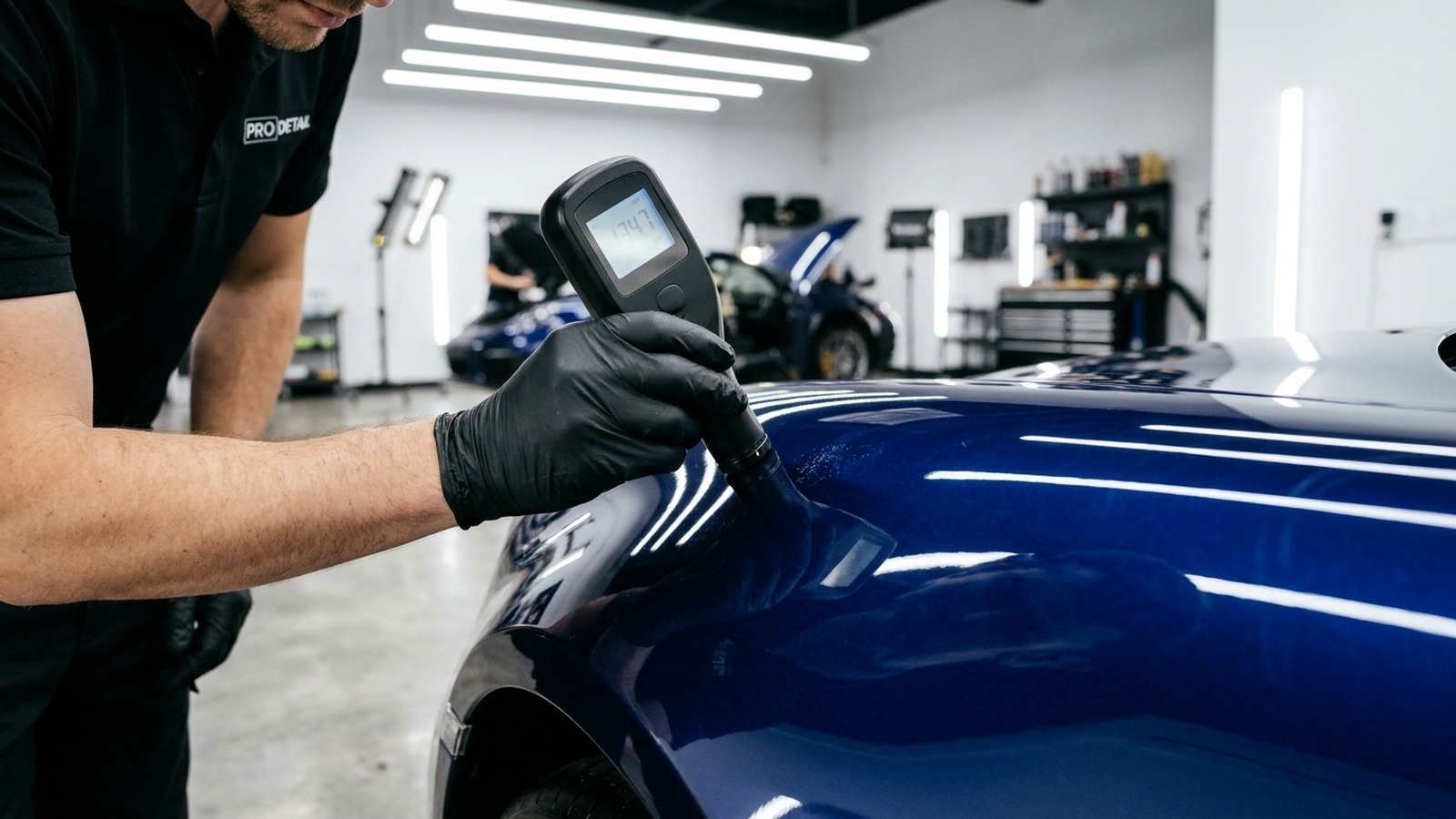
- Paint Thickness Audit: Measure clear coat depth across all panels with a digital gauge to check paint safety margins.
- soft Trim Masking:Seal plastic mouldings, rubber window seals. Also, badge emblems with low-tack shielding tape.
- High-CRI Lighting Inspection: Map out scratch patterns and identify swirl level areas under dedicated LED torches.
- Least-Aggressive Test Spot: Test pad and polish combinations on a 40cm section to determine the ideal cutting setup.
- Systematic Machine Passes: Complete overlapping cross-hatch passes across each section, cleaning pads frequently with compressed air.
- Solvent Panel Wipedown and Sealing: Wipe panels with alcohol inspection spray to verify true correction, then apply ceramic coating.
The Two-Bucket Wash Routine to Prevent Future Swirls
After investing in paint correction, maintaining the swirl-free finish requires adopting proper washing habits. The two-bucket wash method is the gold standard of paint maintenance.
The system uses two separate 20-litre buckets:one filled with car shampoo solution. Also, the second filled with clean rinse water.Both buckets must contain grit guards. This are slotted plastic grates sitting 5cm above the bucket base.
After washing one vehicle panel with your microfibre mitt, plunge the mitt into the rinse bucket first.Rub the mitt against the grit guard to release trapped grit. This sinks beneath the grate and stays trapped at the bottom.
Only after the mitt is clean do you dunk it back into the soapy wash bucket to collect fresh suds. This prevents grit from recirculating back onto vehicle paint.
Always wash panels in straight, overlapping lines rather than round motions. If accidental marring does occur, straight light scratches are far less noticeable to the human eye than round swirl webs.
Safety and Environmental Standards in Paint Polishing
car detailing workshops must balance paint aesthetics with strict workplace safety standards. Under guidelines established by Safe Work Australia, users must manage vibration exposure from long machine polisher use and wear appropriate hearing shield.
Detailing shops also face stringent environmental rules. The NSW Environment shield Authority mandates that commercial wash bays collect and treat all chemical runoff, preventing wash detergents and petrochemicals from reaching regional waterways.
Vehicle safety on public roads is administered by Transport for NSW. When restoring vehicle paint and windscreen surfaces, ensuring complete optical clarity without distorted glare guarantees optimal driver visibility during night journeys.
To eliminate paint marring safely and enjoy flawless gloss on your pride and joy, booking pro car swirl mark removal and machine paint correction gives your vehicle the highest level of care from trained detailers.
People Also Ask About car swirl mark removal
Can car swirl marks be removed by hand?
Hand polishing can reduce very light wash marring by 20% to 30%. However, human hands cannot produce the consistent orbit speed and friction heat needed to level clear coat evenly. Complete swirl removal requires a dual-action machine polisher.
Do swirl marks damage car paint permanently?
Swirl marks live in the transparent clear coat layer.While they do not immediately compromise metal panels, heavy swirling scatters light, creates a dull oxidized appearance. Also, allows dirt to collect in micro-grooves.
How much clear coat is removed during swirl removal?
A standard single-stage machine correction removes about 1 to 2 microns of clear coat out of 35 to 50 factory microns total. This leaves more than 95% of your shielding clear coat fully intact.
Why do swirl marks reappear after washing my car?
If swirls reappear immediately after washing, the detailer used an oily glaze or filler wax that simply washed away. If they return after several months, improper wash mitts or dirty drying towels have reintroduced fresh scratches.
Frequently Asked Questions on Swirl Removal
How often can a car undergo machine swirl removal?
Because modern factory clear coat is thin, heavy compounding should only be performed 2 to 3 times over a vehicle's entire lifetime. Once corrected, adopting a safe two-bucket wash routine preserves paint without needing frequent correction.
Do automatic brush car washes cause swirl marks?
Yes. Commercial brush car washes are the single biggest cause of car swirl marks. The coarse plastic bristles build up dirt and road grit from previous cars, scouring deep round scratch webs into clear coat.
Can ceramic coating prevent swirl marks from returning?
Ceramic coatings add a hard sacrificial quartz barrier that provides enhanced scratch resistance compared to bare clear coat. However, coatings are not scratch-proof. proper wash methods are still required to avoid wash marring.
Is a rotary polisher better than a dual-action polisher for swirls?
Rotary polishers cut faster on heavy defects. However, they carry a high risk of burning paint edges and leaving buffer holograms. Dual-action orbital polishers are much safer and finish out with superior hologram-free optical clarity.
How long does pro swirl mark removal take?
A full paint correction and swirl removal process typically takes between 6 and 14 hours depending on vehicle size, paint hardness. Also, defect severity, followed by curing time for shielding ceramic sealants.
Conclusion: Maintaining a Flawless Mirror Finish
Swirl marks may be common on Australian roads. However, they do not have to be permanent. With pro machine correction, even heavily marred paintwork can be restored to deep, head-turning reflections.
Investing in genuine car swirl mark removal permanently levels out micro-scratches, eliminating hazy light scattering and bringing out true paint depth. Paired with a ceramic coating and a disciplined two-bucket wash routine, your car will maintain its showroom shine for years of driving pleasure.